

U.S. Coal Capacity to Drop by 27 Gigawatts by 2028: EIA
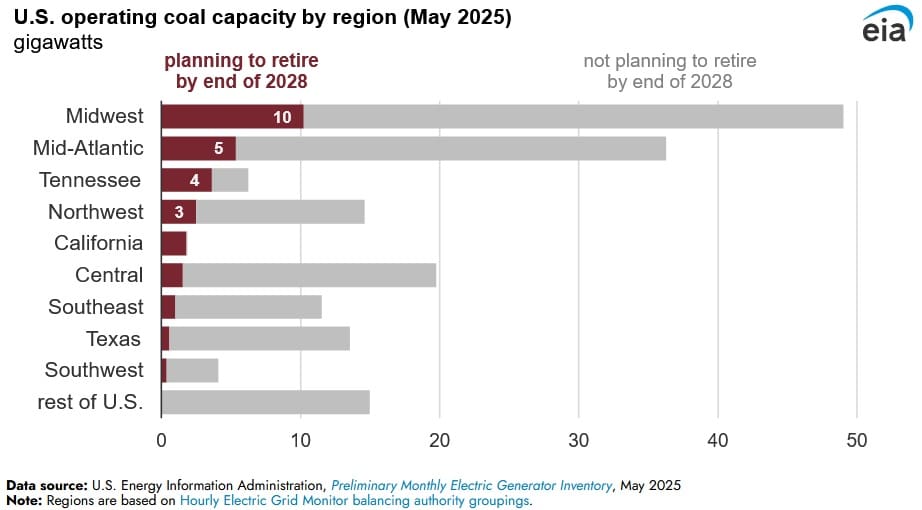
The total operating capacity of U.S. coal-fired power stations is set to decrease from 172 gigawatts (GW) during May 2025 to 145 GW by the end of 2028, according to a July 14 report published by the U.S. Energy Information Administration.
Coal usage in the U.S. electric power sector has declined significantly over the last 15 years, largely due to growing competition from alternative energy sources, particularly renewables and natural gas. Additionally, coal-fired power assets have faced emissions regulations that require them to install new equipment, alter operations, or shut down entirely. Older coal fired power facilities are the focus of phase outs, since they are inefficient and face high operating and maintenance costs.
The number of planned coal plant retirements may shift as operators adapt to evolving environmental regulations, policy changes, and power market conditions. For example, Talen Energy recently agreed to postpone the phaseout of its Brandon Shores plant in Maryland until 2029. The facility was initially slated to close in June 2025.
Possible regulatory changes are introducing uncertainty into decisions about power plant operations and retirements. Specifically, the U.S. Environmental Protection Agency is reviewing a number of regulations that could impact coal-fired plants. The EPA recently issued updated steam electric effluent limitation guidelines (ELGs) that impose stricter limits on toxic metals and other pollutants discharged in wastewater from coal-fired power plants. Although these tighter standards are scheduled to take effect in 2028, they are currently under EPA reconsideration.
Meanwhile, developers plan to add 18.7 GW of combined-cycle capacity to the grid by 2028, with 4.3 GW already under construction, according to the agency. Although natural gas-fired generators provided more electricity in the U.S. than any other source since 2016, hardly any new gas capacity came online in 2024.
EnerKnol Pulses like this one are powered by the EnerKnol Platform—the first comprehensive database for real-time energy policy tracking. Sign up for a free trial below for access to key regulatory data and deep industry insights across the energy spectrum.
ACCESS FREE TRIAL