

California Commission Adopts New Rules for Electric Line Undergrounding in High Wildfire-Risk Areas
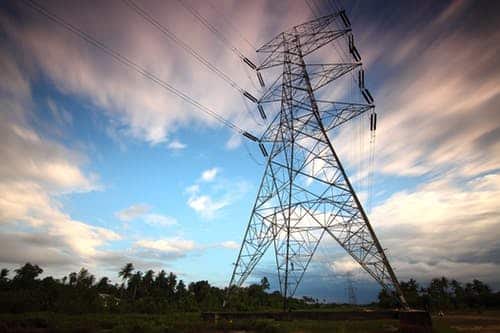
The California Public Utilities Commission on Nov. 19 adopted new rules establishing statewide standards for prioritizing electric grid undergrounding projects in areas facing the greatest wildfire risk. The decision implements Senate Bill 884, which created a voluntary, expedited 10-year undergrounding program for Pacific Gas and Electric Company, Southern California Edison, and San Diego Gas & Electric. The framework aims to accelerate grid hardening while ensuring that investments deliver measurable safety and reliability benefits without placing unnecessary costs on ratepayers.
The rules require utilities to prioritize proposed projects in Tier 2 and Tier 3 high fire-threat districts and wildfire rebuild areas based on their potential to reduce wildfire risk and improve electric reliability. Given the substantial expense associated with undergrounding, utilities must compare the approach with alternative mitigation measures, including covered conductors and advanced protection technologies. Proposed projects must demonstrate that their benefits at least equal their costs and that undergrounding performs at least as well as the most effective alternative for the same power line.
The regulator also established a standardized benefit-cost methodology for evaluating projects across utilities. Assessments must account for wildfire risk reduction, avoided power outages, and lower operations and maintenance expenses, alongside the full costs of construction, operation, and maintenance over a project’s useful life. The framework is intended to improve consistency in investment decisions and direct funding toward the most cost-effective mitigation options.
To strengthen oversight, the decision introduces independent audits, project-level reviews, and additional conditions for cost recovery. Utilities must compare actual project expenditures with updated forecasts prepared after projects are fully scoped. These requirements address the uncertainty associated with reviewing investment plans before detailed engineering and cost estimates are available, while ensuring that expenses passed on to customers remain reasonable.
Implementation of the program involves three phases. The Office of Energy Infrastructure Safety first evaluates each utility’s 10-year plan and its expected wildfire risk reduction benefits. The commission subsequently reviews the costs and benefits of plans approved by the office and establishes conditions for potential cost recovery within nine months. Utilities then proceed with implementation and undergo independent audits.
The decision establishes a framework in which utilities must justify undergrounding against less expensive alternatives, potentially reshaping investment priorities while balancing wildfire protection, grid reliability, and ratepayer affordability.
EnerKnol Pulses like this one are powered by the EnerKnol Platform—the first comprehensive database for real-time energy policy tracking. Sign up for a free trial below for access to key regulatory data and deep industry insights across the energy spectrum.
ACCESS FREE TRIAL