Discussions around carbon markets reflect the growing emphasis on collaborative efforts to advance climate solutions. Despite gaining prominence as an efficient market-based solution to reduce emissions, carbon trading initiatives face obstacles due to concerns of higher energy prices.
Carbon management is emerging as an important component of regulatory strategies to progress towards a net-zero economy. Recent actions range from…Read the full report…...
Carbon management is emerging as an important component of regulatory strategies to progress towards a net-zero economy. Recent actions range from funding for the first direct air capture facilities to establishing an action committee to advance marine carbon dioxide (CO2) removal.
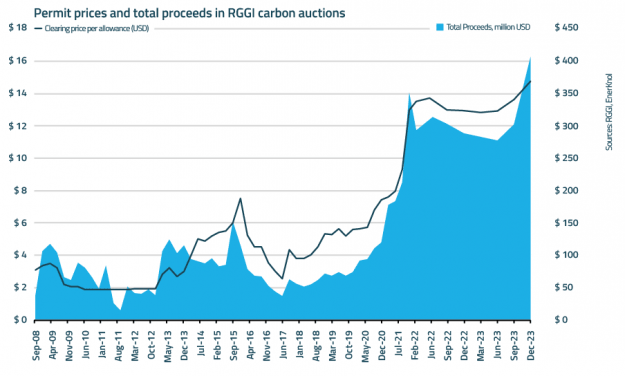
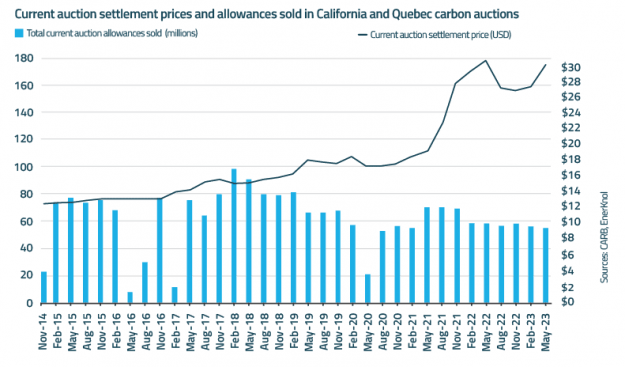
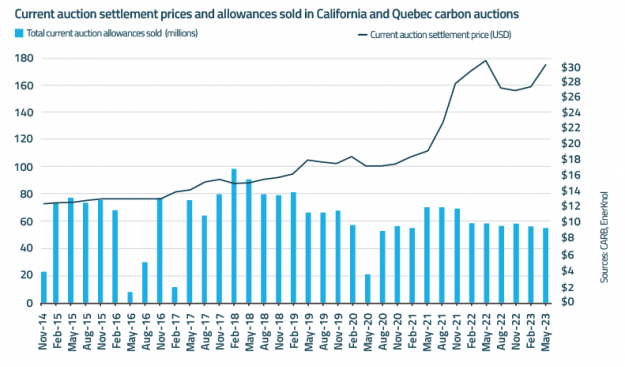
U.S. carbon markets demonstrated robust participation in recent auctions including Washington’s two consecutive auctions that sold out of carbon permits and raised over $850 million under…Read the full report …...
U.S. carbon markets demonstrated robust participation in recent auctions including Washington’s two consecutive auctions that sold out of carbon permits and raised over $850 million under the state’s cap-and-invest program launched this year. However, carbon-trading programs continue to face opposition in some jurisdictions over concerns of higher ratepayer bills.
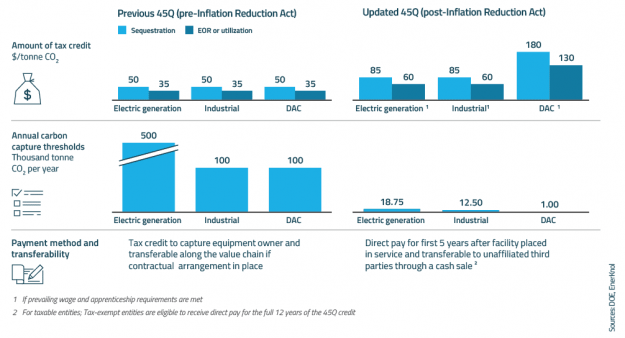
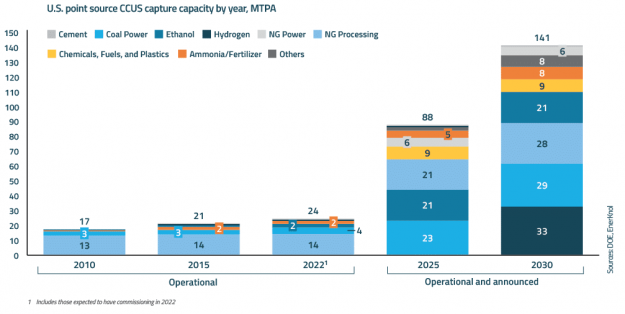
The deployment of carbon capture, utilization and storage (CCUS) technologies is expected to increase in the U.S., driven by federal and state initiatives to meet emissions reduction targets. Supportive policies, including $12 billion in funding from the…Read the full report …...
The deployment of carbon capture, utilization and storage (CCUS) technologies is expected to increase in the U.S., driven by federal and state initiatives to meet emissions reduction targets. Supportive policies, including $12 billion in funding from the Infrastructure Investment and Jobs Act (IIJA) of 2021 and enhanced tax credits under the Inflation Reduction Act (IRA) of 2022, are driving carbon capture projects across the U.S. Initiatives to expand carbon dioxide (CO2) pipelines to connect to sequestration sites have also gained momentum.
The U.S. Environmental Protection Agency (EPA) has proposed new limits on carbon dioxide emissions from coal- and gas-fired power plants, the latest in a string of actions to further the Biden administration’s ambitious climate agenda including proposals to strengthen vehicle emission standards and curb methane leaks from oil and gas wells.
Heightened activity around carbon pricing mechanisms reflects the need for expedited measures to align with ambitious emissions reduction trajectories.
Stringent climate policies have prompted discussions around comprehensive cap-and-invest programs to address emissions across multiple sectors. Several U.S. states have devised bold climate action plans that call for transformations across industry, energy, and transportation sectors.
Discussions about carbon pricing continue to evolve as the strategy is increasingly viewed as a policy tool that can play an expanded role in a broader policy mix to meet ambitious climate goals.
The increasing focus on reducing carbon dioxide (CO2) and other greenhouse gas emissions to achieve climate goals has drawn renewed attention to the deployment of carbon capture, utilization, and storage (CCUS) technologies. Federal investments in carbon management through the 2021 Infrastructure Investment and Jobs Act (IIJA) have provided a near-term opportunity to scale commercial carbon capture projects.