The U.S. Senate last week approved President Biden’s three nominees to serve on the Federal Energy Regulatory Commission (FERC) bringing the agency to its full complement of five commissioners. Industry and clean energy groups welcomed the move saying that a fully staffed commission is crucial to address challenges posed by an aging electric grid, the…...
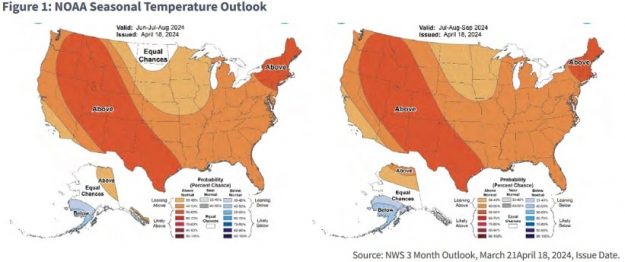
The Federal Energy Regulatory Commission has released its annual summer market and reliability report, providing an outlook for energy markets and electric reliability for the period of June-September 2024. The report forecasts warmer-than-average summer temperatures that increase electricity demand and adequate generating availability, although extreme conditions could challenge specific regions. Data center consumption has been…...
Regulators and lawmakers across the U.S. are increasingly exploring the possibilities of deploying virtual power plants (VPPs) as a cost-effective means to provide grid services. VPPs have garnered attention as fossil fuel-fired power plants retire and renewable energy resources continue to grow amid increasing electricity demand.
The U.S. electric grid is undergoing a significant transformation, with renewable energy sources accounting for an increasing share of the nation's electricity supply. To support this transition, the U.S. Department of Energy (DOE) and various state regulatory commissions have recently announced a series of initiatives aimed at streamlining the deployment of clean energy technologies and improving grid reliability and resilience. Renewable generation accounted for as much as 21 percent of the U.S. electricity supply in 2023, according to the U.S. Energy Information Administration.