The Michigan Public Service Commission on Dec. 9 initiated a study to examine the potential of renewable natural gas (RNG) development. The study aims to identify existing and potential sources of RNG in Michigan and any barriers to development, in order for the state to provide a carbon neutral energy solution, using the existing natural…...
The Virginia State Corporation Commission is seeking comment on Dominion Energy’s proposal to construct an offshore wind facility off the coast of Virginia Beach. The Coastal Virginia Offshore Wind Commercial Project, estimated to cost about $9.8 billion, would consist of 176 turbines each having a capacity of 14.7 megawatts. Once fully built, the offshore wind…...
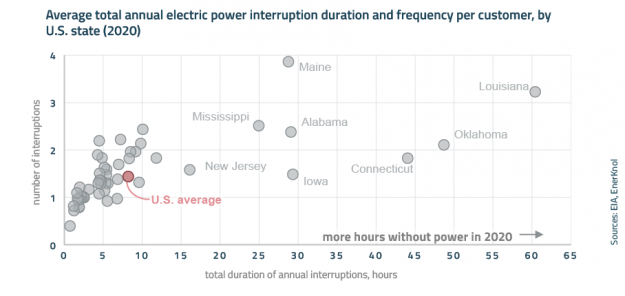
The growing incidence of extreme weather events has triggered regulatory and legislative efforts across the U.S. to improve the reliability and resilience of the energy system. Winter Storm Uri, which caused widespread outages in the South Central U.S. in February, prompted a regulatory upheaval in Texas, which suffered the brunt of the storm, leaving more than 4.5 million people without power. California has adopted measures to ensure reliability in the event of extreme weather in the summers of 2022 and 2023. Federal regulators have approved new cold weather electric reliability standards.
The U.S. Energy Department on Dec. 2 announced $35 million in funding for technologies that aim to reduce methane emissions in the coal, oil, and natural gas sectors. The department selected 12 projects for the grants under a new program called “Reducing Emissions of Methane Every Day of the Year,” or REMEDY, a three-year research…...
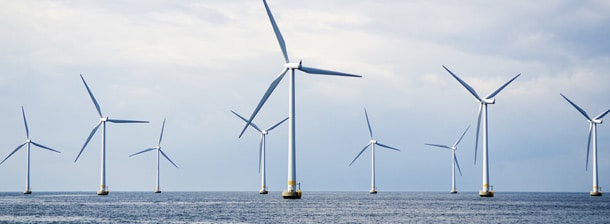
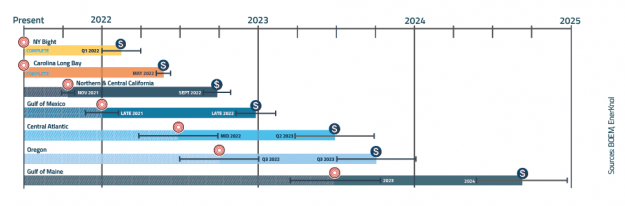
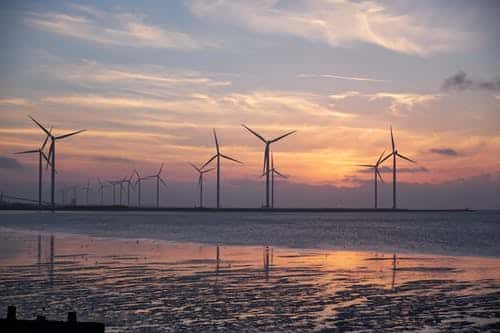
Interest in offshore wind energy has reached new levels driven by supportive federal action, ambitious state procurement targets, and evolving technology. Recent developments include federal approval of the second commercial-scale project, and plans to hold up to seven new lease sales by 2025 in the East Coast, as well as the West and Gulf Coasts. Despite the progress, the industry faces opposition with recent lawsuits challenging the approval of the nation’s first major offshore project, the 800-megawatt (MW) Vineyard Wind I venture, over its potential impact to the fishing industry and endangered species.
The U.S. Interior Department on Nov. 24 approved the construction and operation of the 130-megawatt South Fork Wind Project, a joint venture of Denmark-based Ørsted A/S and Eversource Energy, offshore Rhode Island. The decision marks the second federal approval of a commercial-scale offshore project, following the 800-megawatt Vineyard Wind I development off Massachusetts approved earlier…...
The Biden administration is walking a tightrope on climate action as recent moves in the oil and gas industry challenge its aggressive climate agenda, which calls for net-zero emissions by 2050.
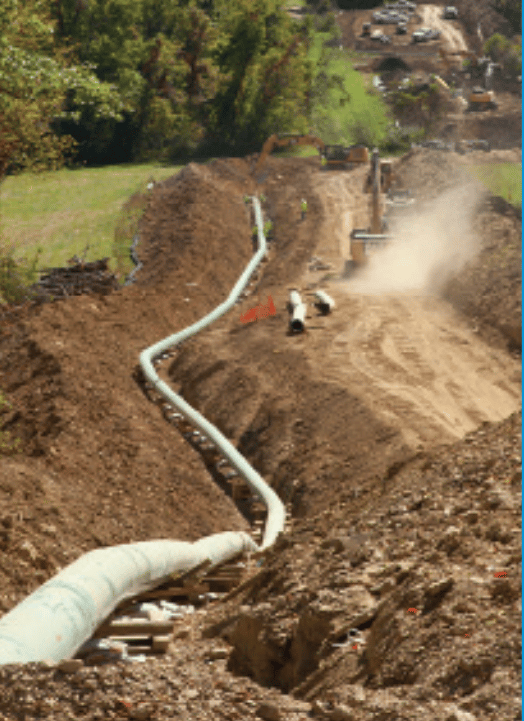
The Pipeline and Hazardous Materials Safety Administration on Nov. 15 issued a final rule expanding federal safety oversight to onshore gas gathering pipelines, representing over 425,000 additional miles of pipelines that will be subject to federal reporting guidelines. Gathering lines typically transport gas from the production site to interstate transmission pipelines. The agency expects that…...
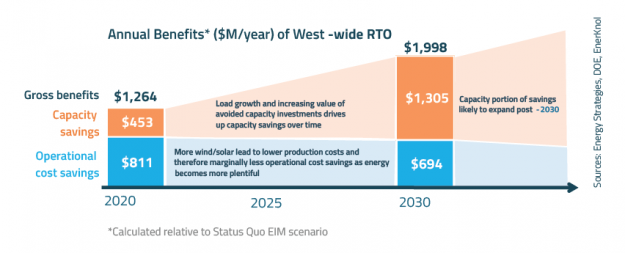
Western U.S. states are evaluating options to join or form a regional transmission organization (RTO) as regional coordination would strengthen electric system resilience and reliability, enhance clean energy adoption, and address transmission challenges.