Eversource Adopts Performance-Based Ratemaking in Massachusetts to Meet Clean Energy Goals

EnerKnol’s Visual Primer – Eversource Adopts Performance-Based Ratemaking in Massachusetts to Meet Clean Energy Goals

The Massachusetts Department of Public Utilities has approved a performance-based ratemaking (PBR) mechanism for Eversource Energy to balance infrastructure funding with avoiding rate case expenses and rate redesign that create uncertainty for consumers. PBRs adjust utility revenues based on their measurable performance, and they have been gaining popularity nationwide as grid technology keeps evolving.

Mid-Atlantic Grid Operator Seeks to Accommodate State Subsidies

EnerKnol’s Visual Primer – Mid-Atlantic Grid Operator Seeks to Accommodate State Subsidies

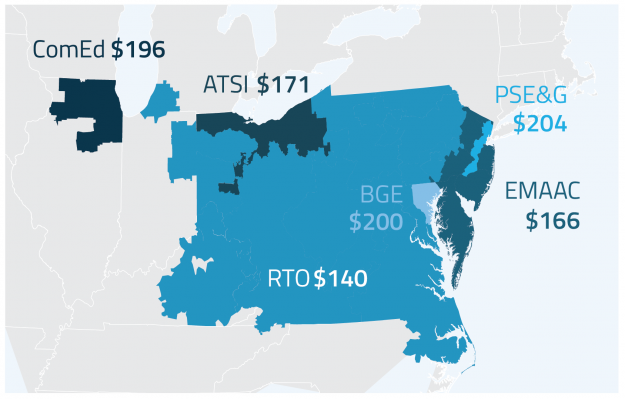
PJM Interconnection has unveiled its capacity repricing proposal aimed at accommodating subsidized resources while preserving price integrity in the capacity market. The grid operator said its proposal would meet state goals, unlike an alternative plan that would extend the minimum offer price rule to both new and existing resources (MOPR-Ex), in effect cancelling out the state subsidies. The move echoes a national trend towards reforming competitive electricity markets to ease tensions between their resource adequacy constructs and state policies.

Historic Federal Tax Cuts Bring Utility Rates Under Scrutiny

EnerKnol’s Visual Primer – Historic Federal Tax Cuts Bring Utility Rates Under Scrutiny

Dozens of states want utilities to lower rates for electricity and natural gas services following the recently enacted federal tax law which slashed the corporate income tax rate to 21 percent from 35 percent at the start of the year. Sixteen states and consumer advocates wrote to the Federal Energy Regulatory Commission requesting prompt action for the cuts to be extended to customers, while 20 states are mulling rate changes tied to the new tax law.

Five Power Industry Trends to Watch in 2018

EnerKnol’s Visual Primer – Five Power Industry Trends to Watch in 2018

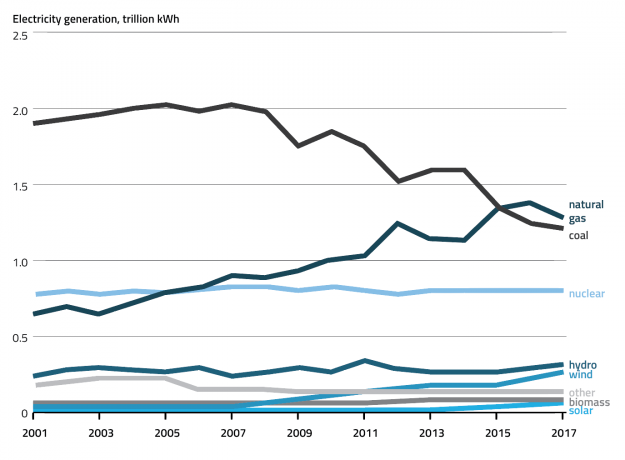
Over the past five years, the power industry has evolved at a faster pace because of several simultaneous trends reflecting a broader shift from coal to natural gas and renewables. The changing fuel mix, growth in renewables, and evolution of distributed energy resources are among the key causes catalyzing this transformation. In 2018, most of these trends are expected to continue or accelerate.

New York Grid Operator Counts on Natural Gas to Replace Indian Point Nuclear Capacity

EnerKnol’s Visual Primer – New York Grid Operator Counts on Natural Gas to Replace Indian Point Nuclear Capacity

The New York Independent System Operator says the deactivation of the Indian Point nuclear plant in 2021 will not affect system reliability if approximately 1,800 MW of gas-fired generation come online as planned. Competition from cheap natural gas and Westinghouse reactor design failure have caused nuclear operators and developers to retire their plants early and cancel new projects. Amid state and federal actions to help nuclear power plants remain operational in the face of financial pressures, it remains to be seen whether advanced technologies bring a resurgence and expansion.

New York Grid Operator Unveils Plan for Energy Storage Participation in Wholesale Markets

EnerKnol’s Visual Primer – New York Grid Operator Unveils Plan for Energy Storage Participation in Wholesale Markets

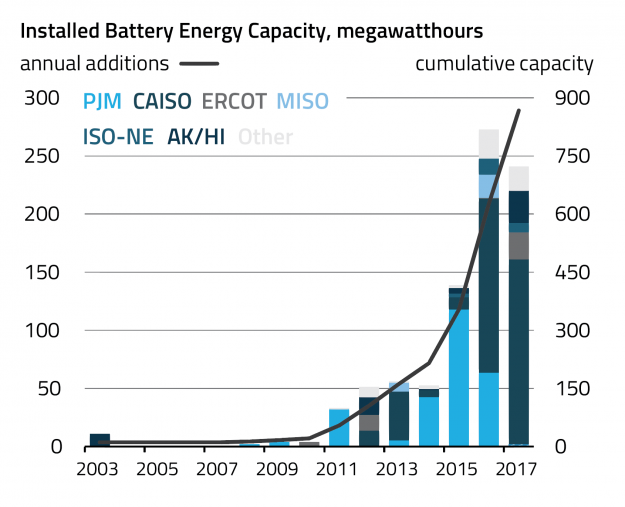
The New York Independent System Operator has unveiled a proposal for full participation of energy storage in the state's wholesale electricity markets by 2023. The grid operator envisions storage as a vital tool for managing the growing penetration of intermittent and distributed energy resources (DERs). Recently, several other states have turned to storage as a way of solving the intermittency of DERs, delivering more dynamic energy services, and addressing peak demand challenges.

Texas Grid Operator Looks to Bolster Energy Prices Amid Renewables Influx

EnerKnol’s Visual Primer – Texas Grid Operator Looks to Bolster Energy Prices Amid Renewables Influx

The Public Utility Commission of Texas is examining reforms to price formation in the Electric Reliability Council of Texas (ERCOT) energy-only market over concerns of low prices. The proceeding stems from a whitepaper on shortcomings caused by subsidized renewables and other factors expected to interfere with investment decisions and undermine market sustainability. ERCOT proceeding highlights the ongoing national discussion over the role of organized electricity markets in ensuring fuel diversity and system reliability through pricing mechanisms.

Solar Set to Grow under Michigan's New Avoided Cost Rules for Consumers Energy

EnerKnol’s Visual Primer – Solar Set to Grow under Michigan’s New Avoided Cost Rules for Consumers Energy

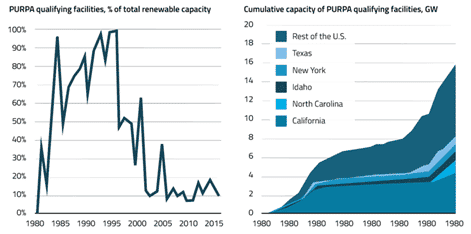
The Michigan Public Service Commission has finalized a formula to determine the avoided cost that Consumers Energy Co. must pay to buy power from qualifying facilities under the federal Public Utilities Regulatory Policies Act (PURPA) of 1978. The new methodology extends the power purchase contract period to up to 20 years, and boosts the capacity of eligible projects to 2 megawatts, up from 100 kilowatts. While current contracts are based on the costs of running a coal plant, new contracts will be based on the energy and capacity costs of natural gas-fueled plants. The ruling, which marks the first update to avoided cost payments in almost 30 years, is expected to increase certainty for distributed energy resources, such as solar.

Virginia Approves Cap-and-Trade Plan and Moves to Join RGGI

EnerKnol’s Visual Primer – Virginia Approves Cap-and-Trade Plan and Moves to Join RGGI

The Virginia Air Pollution Control Board has approved a proposal to reduce power sector carbon dioxide emissions by 30 percent between 2020 and 2030. The proposal would link Virginia with the Regional Greenhouse Gas Initiative (RGGI), the nation’s first mandatory cap-and-trade program. The proposal is consistent with RGGI’s recently announced proposed improvements that caused a rebound in allowance prices in the September auction. With member states in agreement over the program's post-2020 path, RGGI is likely in for a boost that could see both price increases in future auctions and additional states joining the group.

Ohio Net Metering Update Limits System Size but Opens Doors to Energy Marketers

EnerKnol’s Visual Primer – Ohio Net Metering Update Limits System Size but Opens Doors to Energy Marketers

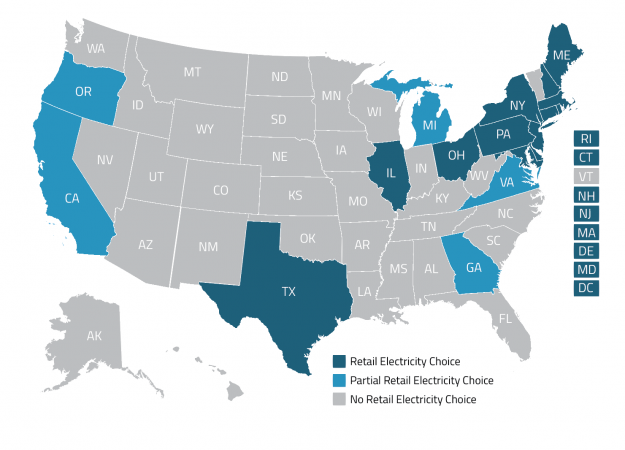
The Public Utilities Commission of Ohio has revised its net metering rules requiring regulated electric utilities to offer a standard tariff to standard service offer customers, while competitive retail electric service providers can offer diverse net metering products and service to shopping customers. The Ohio rule comes after months of review and seeks to address the interests of distributed generation customers, electric utilities, and competitive providers. Importantly, the ruling opens doors to energy marketers, some of which might be able to offer better rates than the utilities.

Connecticut Passes Bill Paving Way to Subsidize Dominion Nuclear Plant

EnerKnol’s Visual Primer – Connecticut Passes Bill Paving Way to Subsidize Dominion Nuclear Plant

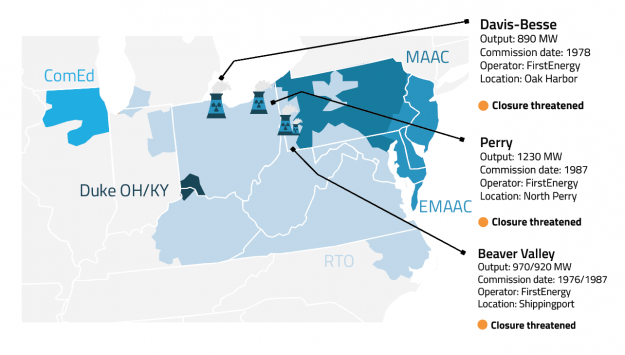
The Connecticut Governor has signed legislation that could allow the state’s only nuclear plant to compete for long-term contracts with renewables provided such rule change is corroborated by a currently ongoing study into the plant's viability. Recently, additional states including Pennsylvania and Ohio have joined in with policies supporting their nuclear facilities. These actions coincide with the Department of Energy’s recently-proposed grid resiliency pricing rule offering hope for financially struggling nuclear power plants.

New York Leads the Nation in Exploring Wholesale Market Design for Distributed Energy Resources

EnerKnol’s Visual Primer – New York Leads the Nation in Exploring Wholesale Market Design for Distributed Energy Resources

The New York Independent System Operator has launched a pilot program to examine how the integration of emerging distributed energy resource (DER) technologies will affect wholesale market systems. The pilot program aligns with the state’s objectives under the Reforming the Energy vision (REV) to expand retail markets for DER. Access to wholesale markets will be critical in integrating the growing share of DERs, and state and ISO-level policies will play a key role in this regard.