Alternative energy

New York Grid Operator Counts on Natural Gas to Replace Indian Point Nuclear Capacity

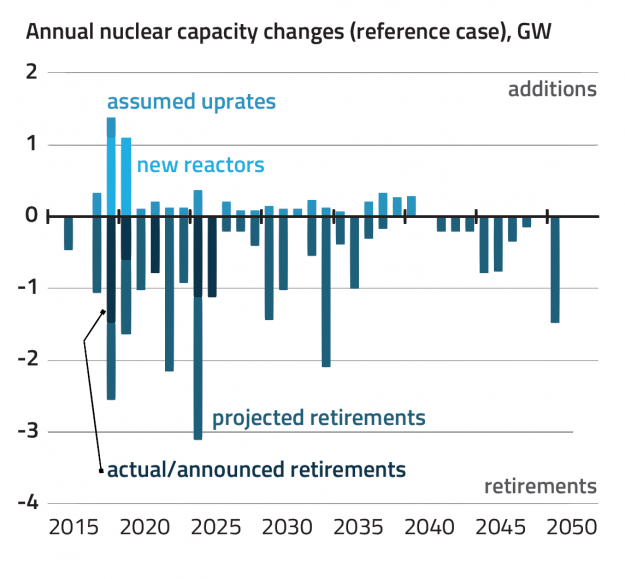
EnerKnol’s Visual Primer – New York Grid Operator Counts on Natural Gas to Replace Indian Point Nuclear Capacity

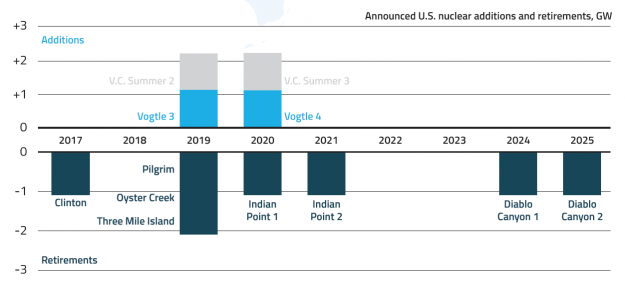
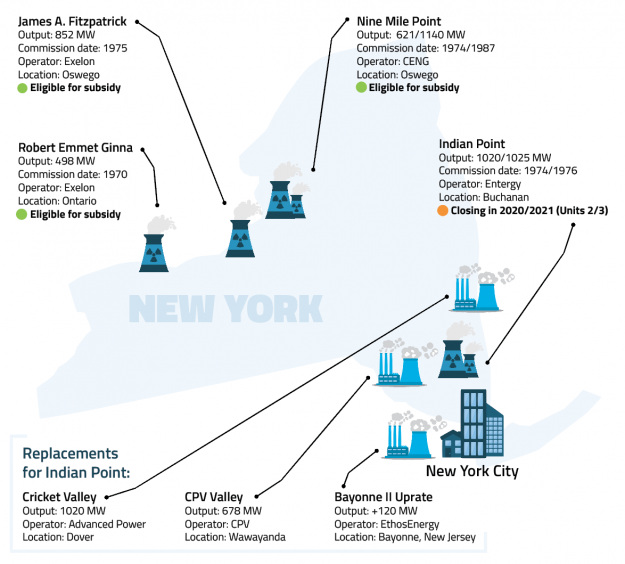
The New York Independent System Operator says the deactivation of the Indian Point nuclear plant in 2021 will not affect system reliability if approximately 1,800 MW of gas-fired generation come online as planned. Competition from cheap natural gas and Westinghouse reactor design failure have caused nuclear operators and developers to retire their plants early and cancel new projects. Amid state and federal actions to help nuclear power plants remain operational in the face of financial pressures, it remains to be seen whether advanced technologies bring a resurgence and expansion.

Solar Set to Grow under Michigan's New Avoided Cost Rules for Consumers Energy

Solar Set to Grow under Michigan’s New Avoided Cost Rules for Consumers Energy

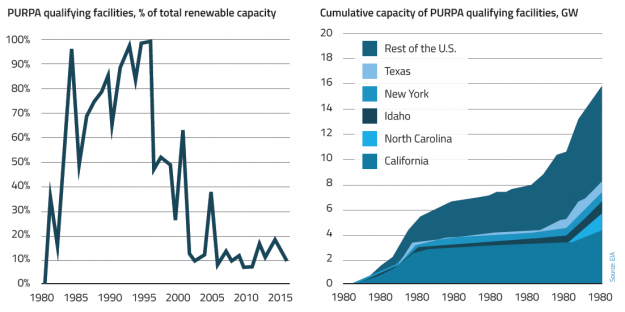
The Michigan Public Service Commission has finalized a formula to determine the avoided cost that Consumers Energy Co. must pay to buy power from qualifying facilities under the federal Public Utilities Regulatory Policies Act (PURPA) of 1978. The new methodology extends the power purchase contract period to up to 20 years, and boosts the capacity of eligible projects to 2 megawatts, up from 100 kilowatts. While current contracts are based on the costs of running a coal plant, new contracts will be based on the energy and capacity costs of natural gas-fueled plants. The ruling, which marks the first update to avoided cost payments in almost 30 years, is expected to increase certainty for distributed energy resources, such as solar.

Solar Set to Grow under Michigan's New Avoided Cost Rules for Consumers Energy

EnerKnol’s Visual Primer – Solar Set to Grow under Michigan’s New Avoided Cost Rules for Consumers Energy

The Michigan Public Service Commission has finalized a formula to determine the avoided cost that Consumers Energy Co. must pay to buy power from qualifying facilities under the federal Public Utilities Regulatory Policies Act (PURPA) of 1978. The new methodology extends the power purchase contract period to up to 20 years, and boosts the capacity of eligible projects to 2 megawatts, up from 100 kilowatts. While current contracts are based on the costs of running a coal plant, new contracts will be based on the energy and capacity costs of natural gas-fueled plants. The ruling, which marks the first update to avoided cost payments in almost 30 years, is expected to increase certainty for distributed energy resources, such as solar.

Ohio Net Metering Update Limits System Size but Opens Doors to Energy Marketers

Ohio Net Metering Update Limits System Size but Opens Doors to Energy Marketers

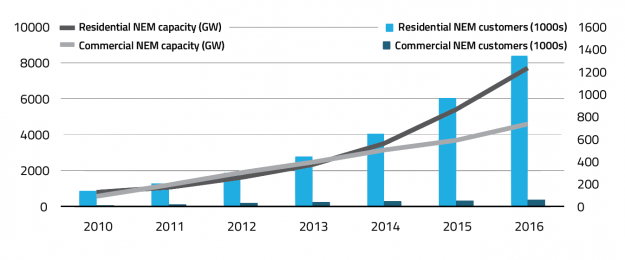
The Public Utilities Commission of Ohio has revised its net metering rules requiring regulated electric utilities to offer a standard tariff to standard service offer customers, while competitive retail electric service providers can offer diverse net metering products and service to shopping customers. The Ohio rule comes after months of review and seeks to address the interests of distributed generation customers, electric utilities, and competitive providers. Importantly, the ruling opens doors to energy marketers, some of which might be able to offer better rates than the utilities.

Ohio Net Metering Update Limits System Size but Opens Doors to Energy Marketers

EnerKnol’s Visual Primer – Ohio Net Metering Update Limits System Size but Opens Doors to Energy Marketers

The Public Utilities Commission of Ohio has revised its net metering rules requiring regulated electric utilities to offer a standard tariff to standard service offer customers, while competitive retail electric service providers can offer diverse net metering products and service to shopping customers. The Ohio rule comes after months of review and seeks to address the interests of distributed generation customers, electric utilities, and competitive providers. Importantly, the ruling opens doors to energy marketers, some of which might be able to offer better rates than the utilities.

Connecticut Passes Bill Paving Way to Subsidize Dominion Nuclear Plant

Connecticut Passes Bill Paving Way to Subsidize Dominion Nuclear Plant

The Connecticut Governor has signed legislation that could allow the state’s only nuclear plant to compete for long-term contracts with renewables provided such rule change is corroborated by a currently ongoing study into the plant's viability. Recently, additional states including Pennsylvania and Ohio have joined in with policies supporting their nuclear facilities. These actions coincide with the Department of Energy’s recently-proposed grid resiliency pricing rule offering hope for financially struggling nuclear power plants.

Connecticut Passes Bill Paving Way to Subsidize Dominion Nuclear Plant

EnerKnol’s Visual Primer – Connecticut Passes Bill Paving Way to Subsidize Dominion Nuclear Plant

The Connecticut Governor has signed legislation that could allow the state’s only nuclear plant to compete for long-term contracts with renewables provided such rule change is corroborated by a currently ongoing study into the plant's viability. Recently, additional states including Pennsylvania and Ohio have joined in with policies supporting their nuclear facilities. These actions coincide with the Department of Energy’s recently-proposed grid resiliency pricing rule offering hope for financially struggling nuclear power plants.

Hurricane-Battered U.S. Gives Momentum to Sweeping Push for Microgrids

Hurricane-Battered U.S. Gives Momentum to Sweeping Push for Microgrids

Panelists at a House Energy and Commerce subcommittee hearing concurred that having more diversified resources would help the authorities manage outages in the wake of hurricanes such as Irma, Harvey, and Maria. The catastrophic storms have emphasized the need for significant investments in the nation’s grid to protect it from a major, long-lasting outage that has affected Puerto Rico. Policymakers are turning to battery storage and microgrids as they do not just strengthen the grid against inclement weather but bring an array of other benefits.

This content requires that you purchase additional access. The price is $99.00.

Click here to checkout

New York Approves Utility Proposals for Setting the Value of DER

New York Approves Utility Proposals for Setting the Value of DER

The New York State Public Service Commission (NY PSC) has issued an order approving utility proposals to implement its Value of Distributed Energy Resources (VDER) compensation mechanism, a structure that values DER in a more accurate manner including locational and environmental benefits that were previously not quantified. However, solar advocates that have so far commended New York’s reforms said the approval was inadequately reviewed and could undercompensate DER. While studies on the costs and benefits of solar and other types of DERs will help states set their policies, New York will provide invaluable real-life lessons for other states with emerging solar markets.

This content requires that you purchase additional access. The price is $99.00.

Click here to checkout

New York Approves Utility Proposals for Setting the Value of DER

EnerKnol’s Visual Primer – New York Approves Utility Proposals for Setting the Value of DER

The New York State Public Service Commission (NY PSC) has issued an order approving utility proposals to implement its Value of Distributed Energy Resources (VDER) compensation mechanism, a structure that values DER in a more accurate manner including locational and environmental benefits that were previously not quantified. However, solar advocates that have so far commended New York’s reforms said the approval was inadequately reviewed and could undercompensate DER. While studies on the costs and benefits of solar and other types of DERs will help other states set their policies, New York will provide invaluable real-life lessons for other states with emerging solar markets.

DOE's Sunshot Initiative Reaches Utility Solar Cost Target Three Years ahead of Schedule

DOE’s Sunshot Initiative Reaches Utility Solar Cost Target Three Years ahead of Schedule

The U.S. Department of Energy has announced new priorities for its SunShot Initiative after it met the utility-scale solar cost target three years ahead of schedule. The new funding programs will prioritize research on grid reliability, reflecting the growing role of solar in the generation mix. In addition, over the coming years, DOE would examine the costs and benefits of net energy metering to utilities, ratepayers, and the grid.

This content requires that you purchase additional access. The price is $99.00.

Click here to checkout

DOE's SunShot Initiative Reaches Utility Solar Cost Target Three Years ahead of Schedule

EnerKnol’s Visual Primer – DOE’s SunShot Initiative Reaches Utility Solar Cost Target Three Years ahead of Schedule

The U.S. Department of Energy has announced new priorities for its SunShot Initiative after it met the utility-scale solar cost target three years ahead of schedule. The new funding programs will prioritize research on grid reliability, reflecting the growing role of solar in the generation mix. In addition, over the coming years, DOE would examine the costs and benefits of net energy metering to utilities, ratepayers, and the grid.