Virginia Regulator Approves $650 Million Grid Transformation Plan for Dominion Energy

Infrastructure Bill Provides Over $62 Billion for U.S. Energy Department Initiatives

U.S. President Joe Biden signed the Infrastructure Investment and Jobs Act into law on Nov.15, unlocking $62 billion for U.S. Energy Department initiatives, including revitalizing domestic manufacturing, expanding access to energy efficiency and clean energy, modernizing the power grid, and advancing next-generation technologies. Among the major provisions, the legislation allocates $6 billion for a Civilian…...

Missouri Regulator Launches Probe into Winter Storm Event

Texas Commission Adopts Weatherization Rules for Power Generators

The Texas Public Utilities Commission on Oct. 21 adopted a rule addressing weather emergency preparedness of power generators and utilities, the first of a two-part process in the development of reliability standards in the wake of the mid-February winter storm event.  The rule requires affected companies to implement winter weather readiness recommendations identified in a…...

California Commission Approves Nearly $6.9 Billion Revenue Requirement for SCE

California Commission Approves Nearly $6.9 Billion Revenue Requirement for SCE

The California Public Utilities Commission has authorized a 7.63 percent increase to Southern California Edison’s revenue requirement for 2021, down from the utility’s initial request of a 19.03 percent hike. The decision authorizes a $6.899 billion revenue requirement for operations and capital investment in 2021, about $730 million less than what the utility requested. This…...

Widespread Power Outages from Winter Storms Draw Attention to Cold Weather Reliability

Widespread Power Outages from Winter Storms Draw Attention to Cold Weather Reliability

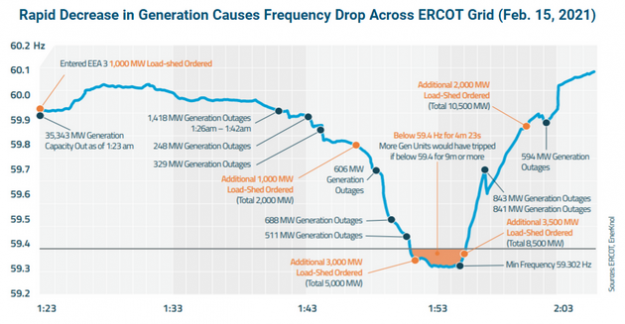
The mid-February Winter Storm Uri, which caused widespread power outages across the south-central U.S., has sharply brought cold weather reliability standards to the forefront of regulatory and market attention. Texas, which experienced the worst power outages resulting from the storm, has passed legislation and initiated investigations to address the impacts of the grid event. The…...

Policy Primer: U.S. Offshore Wind Industry August 2021 Update

Policy Primer: U.S. Offshore Wind Industry August 2021 Update

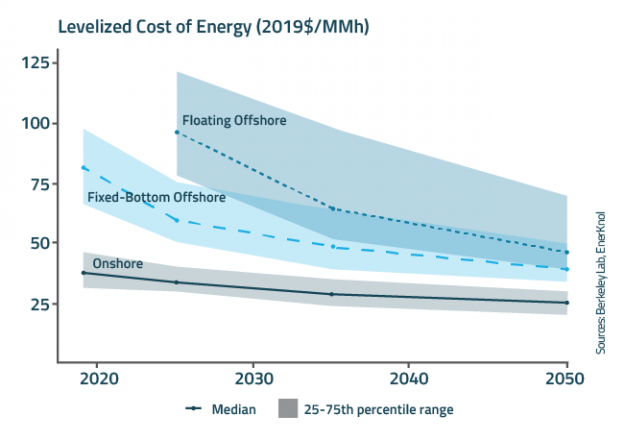
The U.S. offshore wind industry is making strides with significant milestones including approval of the first large-scale project in federal waters, federal efforts to advance permitting processes, and actions towards potential development in the Pacific.

Southwest Power Pool Proposes Rules to Implement Western Power Market

Bonneville Power Administration Moves Closer to Join Western Power Market to Enhance Transmission Reliability, Resource Utilization

The Bonneville Power Administration on July 29 released a draft decision to join the Western Energy Imbalance Market, or EIM, operated by the California Independent System Operator Corp., in March 2022 after a three-year evaluation of the market opportunity. The federal power marketing administration, which sells electricity from 31 federal dams and one nuclear plant…...

State Policy Playbook: Oregon Embarks on Ambitious Agenda to Decarbonize Power Grid by 2040

State Policy Playbook: Oregon Embarks on Ambitious Agenda to Decarbonize Power Grid by 2040

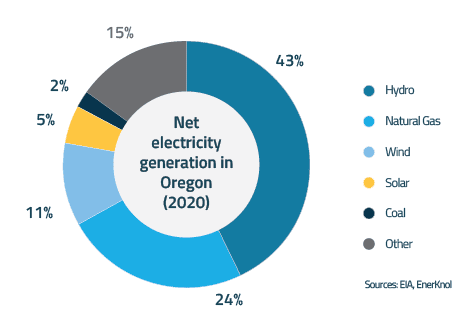
Oregon has embarked on a clean energy transition with the enactment of sweeping legislation that mandates carbon-free power by 2040, setting one of the most ambitious decarbonization timelines in the nation. The state’s carbon reduction efforts range from legislative measures to study renewable hydrogen and expand transportation electrification, to rulemaking for a climate protection plan, and investigation into resource adequacy.

President Biden Supports Bipartisan Infrastructure Plan Including $73 Billion in Power Grid Investment

President Biden Supports Bipartisan Infrastructure Plan Including $73 Billion in Power Grid Investment

U.S President Joe Biden on June 26 announced an agreement with a bipartisan group of senators on a $1.2 trillion infrastructure framework including $73 billion for power infrastructure. Among the key initiatives, the plan would create a new Grid Development Authority at the Department of Energy, deploy long distance, high voltage transmission, integrate the highest…...

California Regulator Approves Utility Wildfire Plans, Proactive Power Shutoffs

California Commission Updates Guidelines for Execution of Utility Power Shutoffs

The California Public Utilities Commission on June 24 set new guidelines and rules adding to existing directives to improve preparation and access to resources during utilities’ Public Power Shutoff, or PSPS, events ahead of the wildfire season. The commission requires electric investor-owned utilities to take a results-based approach to PSPS events, which involves proactive de-energization…...

Visual Primer: States Oblige Utilities to Join Regional Transmission Organizations to Accommodate More Renewables

Visual Primer: States Oblige Utilities to Join Regional Transmission Organizations to Accommodate More Renewables

Clean energy mandates and goals adopted by U.S. states and utilities are driving efforts to plan and build out the transmission infrastructure needed to accommodate the exponential growth of wind and solar to facilitate power sector decarbonization.

Utility Power Shutoffs

FERC, NARUC Announce Joint Task Force to Address Electric Transmission Issues

The Federal Energy Regulatory Commission (FERC) and the National Association of Regulatory Utility Commissioners (NARUC) have formed a joint-federal state task force to explore transmission-related issues. The first-of-its-kind task force will identify barriers inhibiting planning and development of transmission infrastructure, which is key to facilitating the transition towards clean energy resources, and potential solutions to…...

State Policy Playbook: Washington Expedites Measures to Fulfill Clean Energy Policy Agenda

State Policy Playbook: Washington Expedites Measures to Fulfill Clean Energy Policy Agenda

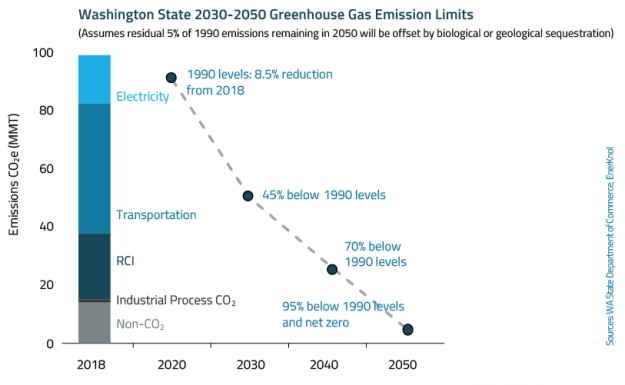
Washington is moving expeditiously to implement rules and strategies as the state seeks to achieve carbon-free electricity by 2045 and reduce emissions to net zero by 2050. The state is advancing multiple measures ranging from resource planning rules to establishing a carbon cap-and-trade program, and strengthening auto-emission standards.