U.S. Energy Department Picks Kentucky University for $120 Million Battery Science Program

U.S. Energy Department Picks Kentucky University for $120 Million Battery Science Program

The U.S. Energy Department will partner with the University of Kentucky to explore breakthrough energy storage technologies in the second phase of the Joint Center for Energy Storage Research, the agency’s innovation hub dedicated to battery science. Established in 2012, the mission of the hub is to create next-generation technologies that can transform the transportation…

Avista, Hydro One's $5.3 Billion Merger Faces Setback as Washington Regulator Denies Rehearing

Central Maine Power Imposes 7-Percent Electric Rate Hike Amid Gas Supply Constraints

The Maine Public Utilities Commission on Dec. 10 approved Central Maine Power Company’s competitive solicitation to procure electricity for customers receiving standard offer supply service – representing 49 percent of sales in the company’s sales territory – for one-year period starting Jan. 1, 2019. For residential and small business customers, the supply price is 13.7…

Minnesota Power Wins Approval for 10-Megawatt Power Purchase Contract to Meet Solar Energy Standard

Virginia Regulators Turn Down Dominion’s Long-Term Resource Plan for ‘Forcing in Higher Cost Resources’

The Virginia Corporation Commission on Dec. 7 directed Dominion Energy Inc. to refile its 2018 integrated resource plan finding that the company failed to establish that the proposal is reasonable and in the public interest. The commission found that the plan includes resources that were not subject to modeling on a least-cost basis. The company…

U.S. Power Sector Emissions of Sulfur Oxide Fell by Nearly 90 Percent Over Last Two Decades Due to Coal Decline, Clean Air Regulations: EIA

U.S. Power Sector Emissions of Sulfur Oxide Fell by Nearly 90 Percent Over Last Two Decades Due to Coal Decline, Clean Air Regulations: EIA

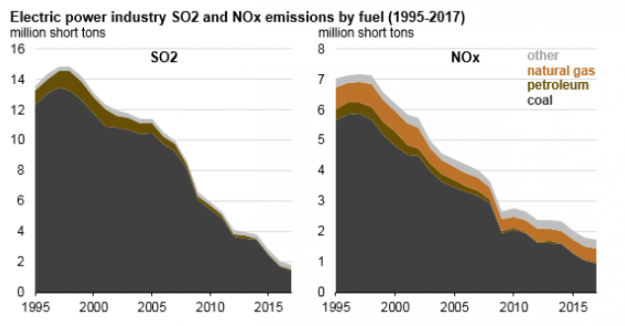
Annual emissions of sulfur dioxide and nitrogen oxides in the U.S. power sector dropped by 88 percent and 76 percent, respectively, between their peaks in 1997 and 2017, according to a Dec. 11 report from the U.S. Energy Information Administration. Coal’s share of generation declined to 30 percent in 2017 from more than 50 percent…

Time-Based Rates Pick Up Pace as Grid Modernization Efforts Rise

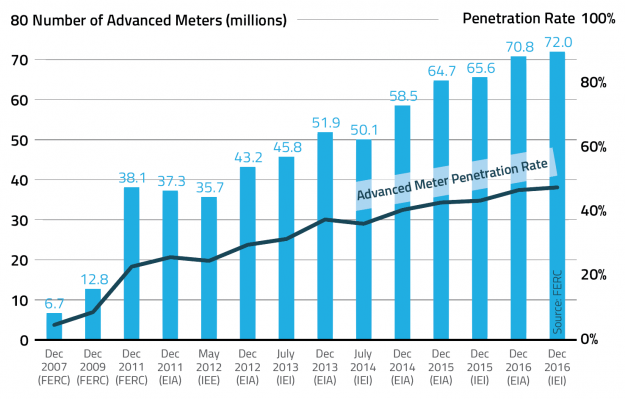
EnerKnol’s Visual Primer – Time-Based Rates Pick Up Pace as Grid Modernization Efforts Rise

The move towards time-varying rates is on the rise as electric utilities seek rate designs that better align with the changing energy landscape. Utilities are increasingly experimenting with time-of-use rates (TOU) – which price electricity higher when peak demand drives up system costs –as customer-sited generation eats into revenues needed to maintain the grid and amid a widening disparity between average and peak demand.

U.S. House Approves Bill That Would Facilitate Offshore Wind Projects in U.S. Territories

U.S. House Approves Bill That Would Facilitate Offshore Wind Projects in U.S. Territories

The U.S. House of Representatives on Dec. 10 passed legislation that would authorize offshore wind energy development in the exclusive economic zone adjacent to all five U.S. territories extending 200 nautical miles seaward, while state waters extending 3 nautical miles would continue to remain under territorial jurisdiction. The bill would provide each territory with state-equivalent…

PJM Proposes Market Design to Integrate Battery Storage

PJM Proposes Market Design to Integrate Battery Storage

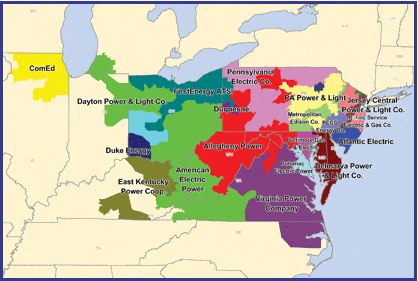
PJM Interconnection LLC filed revisions with the Federal Energy Regulatory Commission for market rules that would provide greater flexibility for energy storage resources participating in the wholesale market to manage system operations when charging, discharging or providing continuous electrical service across their full dispatchable range. PJM said the proposal includes modifications, where necessary, to the capacity, energy…

PJM Finds ‘No Imminent Threat’ to Fuel Security, Seeks Market-Based Solutions to Address Long-Term Concerns

New York Unveils Plan to Incorporate Carbon Price into Wholesale Power Markets

The New York Independent System Operator Inc. on Dec. 7 released a plan outlining a design to internalize the social cost of carbon dioxide emissions in the wholesale electricity markets. The plan would use a carbon price in dollars per ton of emissions, proposing a net cost of $40.74 per ton in 2020. The proposal would require suppliers to include the charges in their energy offers, allowing the price to…