Log in


Lost your password?
EnerKnol
  • Home
  • About
  • EK Research
  • News
  • Platform
  • Coverage
  • Case Studies
  • EnerKnol Calendar
  • Press
Log on To EnerKnol Platform Book Demo
  • Home
  • About
  • EK Research
  • News
  • Platform
  • Coverage
  • Case Studies
  • EnerKnol Calendar
  • Press
Login Book Demo
Advanced Energy Projects

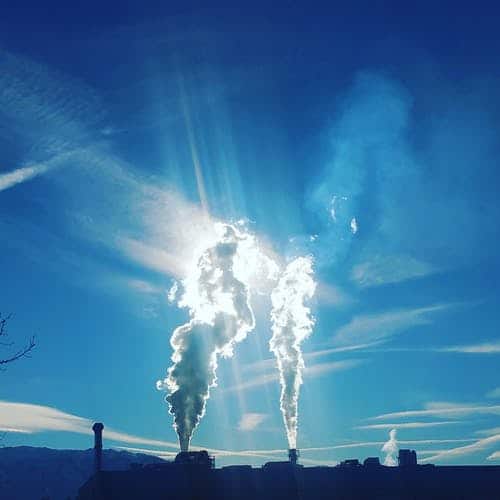
The Joint Committee on Carbon Reduction unveiled legislation on Feb. 4 that would establish the Oregon Climate Action Program to place a cap on greenhouse gas emissions for entities whose annual emissions exceed 25,000 metric tons of carbon dioxide equivalent. The bill would set an annually declining emissions budget, starting in 2021 to put the state on a path to achieving a reduction of 45 percent by 2035 and 80 percent by 2050, relative to 1990 levels. If the legislation is approved, Oregon will become the second jurisdiction, after California, to implement an economy-wide carbon cap-and-trade system. Democratic Governor Kate Brown commended the measure expressing support for a comprehensive market-based program to reduce emissions and transition to a clean energy economy. (HB 2020)

The legislation would create a Carbon Policy Office to adopt the program by rule. Electric companies would be entitled to direct distribution of allowances at no cost for an amount equal to 100 percent of their forecast emissions to serve retail customers until 2030, after which, the amount would decline proportionate to the allowances available in the annual budgets. Manufacturing entities engaged in “emissions-intensive, trade-exposed processes,” would receive allowances at no cost during the calendar year 2021.

The bill would provide exemption for certain sources including emissions from fuel used for aviation, watercraft and railroad locomotives, from combustion of municipal solid waste to generate renewable energy, and emissions attributable to certain consumer-owned utilities. Fluorinated greenhouse gases generated during the manufacture of semiconductors and related devices would be exempted through 2025.

Under the bill, covered entities would be allowed to meet up to 8 percent of their compliance obligation using offset credits and up to 4 percent using credits sourced from offset projects that do not provide direct environmental benefits in the state.

February 5, 2019
Share
TweetShare on Twitter Share on FacebookShare on Facebook Share on LinkedInShare on LinkedIn

Post navigation

PreviousPrevious post:EnerKnol Week Ahead: ISO New England’s Capacity Auction, FERC’s Energy Storage Push, California’s Wildfire Mitigation PlansNextNext post:Michigan Electric Choice Program Shows 8 Megawatt Higher Consumption Amid Drop in Enrollees

Related Research

Modern server corridor with blue LEDs
PJM Board Approves Grid Reliability Plan to Address Surging Data Center Demand
July 29, 2026
VPP
New Jersey Regulator Examines Framework for Statewide Virtual Power Plant Program
July 28, 2026
EnerKnol Research PU Visual Primer Energy Storage 2026 07 28 Blog preview
Energy Storage Gains Strategic Importance as Grid Needs Evolve
July 27, 2026
EnerKnol Research PU Visual Primer Energy Storage 2026 07 28 Blog preview
Visual Primer: Energy Storage Gains Strategic Importance as Grid Needs Evolve
July 27, 2026
61
New York Grid Operator Highlights Long-Term Investment Needs to Meet Growing Demand, Clean Energy Goals
July 24, 2026
Week Ahead: NRC’s Security Regulations, Oregon Reviews Ratemaking Framework, CA Examines Distributed Energy Policies
July 24, 2026
Genesis Mission
U.S. Energy Department Awards First Genesis Mission Projects to Advance Nuclear Energy and AI Research
July 23, 2026
1 1
New England Grid Operator Outlines Plan to Comply With FERC Order on Large Loads
July 22, 2026
  • Renewables
    • Biofuels
    • Electric Vehicles
    • Hydropower
    • Nuclear Power
    • Solar Power
    • Wind Power
  • Environmental Markets
    • Carbon Markets
    • Emissions
  • Fossil Fuels
    • Coal Power
    • Natural Gas
    • Oil
  • Power & Utilities
    • Energy Efficiency
    • Energy Storage
    • Retail Power & Gas
    • Smart Grid
    • Wholesale Markets

Subscribe To Our Research Newsletter!


First Name *
Last Name *
Email Address *
Phone *
Company *
Job Title *
Select any sectors you're interested in

Submit Form
EnerKnol

The most comprehensive platform for energy and environmental regulatory intelligence, powered by cutting-edge AI and machine learning technology.

sales@enerknol.com
212-537-4797
175 Greenwich St, FL-38, New York, NY 10007

Product

  • Platform Overview
  • EKAI Assistant
  • Coverage Areas

Resources

  • Case Studies
  • API Documentation

Company

  • About Us
  • Careers
  • New York Energy Week

Legal

  • Terms of Service
© 2026 EnerKnol. All rights reserved.
Book a Demo