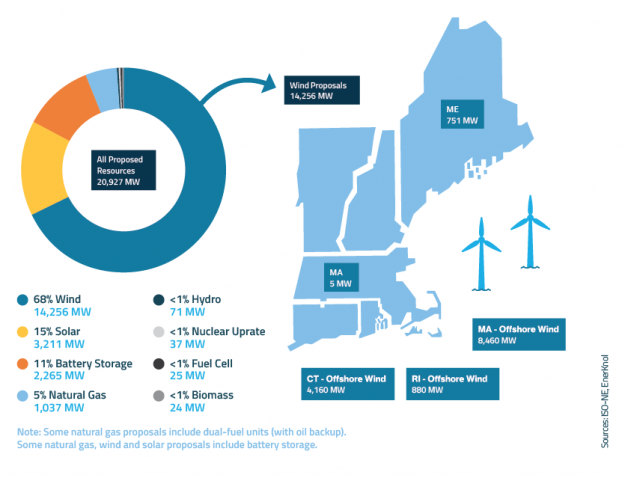
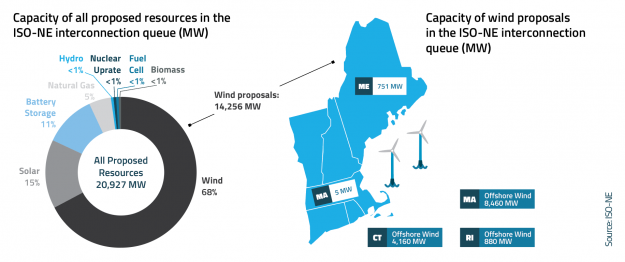
The New England region relies on imported liquefied natural gas (LNG) in the winter to meet natural gas demand due to an inadequate gas pipeline network. The reliance on imports is increasingly fraught as the region competes in the global market where high and volatile prices pose supply risk and pricing uncertainty.
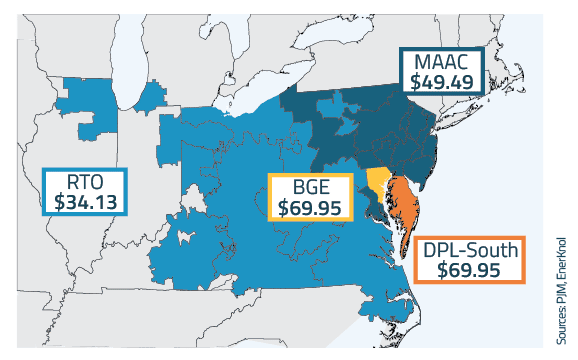
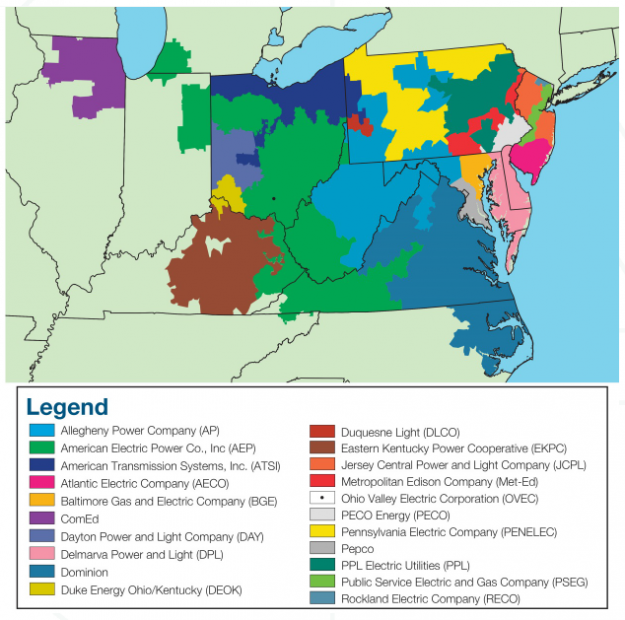
PJM Interconnection LLC’s capacity market auction for the 2023-2024 delivery year cleared at $34.13 per megawatt-day (MW-day), which is nearly 32 percent lower compared to the 2021 auction and the lowest in almost a decade. The auction results reflect a low-carbon resource mix, with a growth of more than 5,000 cleared megawatts of carbon-free resources, according to the grid operator, which operates across 13 states and the District of Columbia.
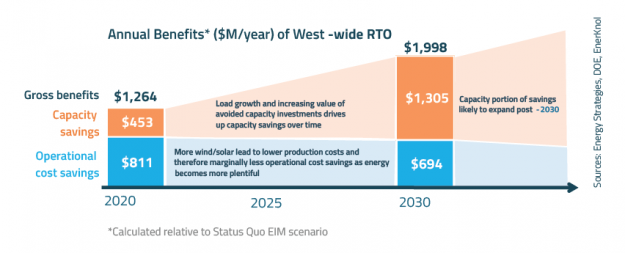
Western U.S. states are evaluating options to join or form a regional transmission organization (RTO) as regional coordination would strengthen electric system resilience and reliability, enhance clean energy adoption, and address transmission challenges.
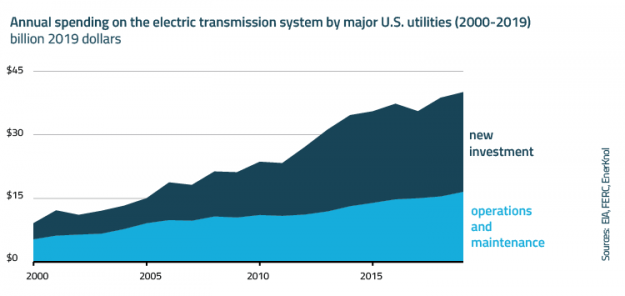
Clean energy mandates and goals adopted by U.S. states and utilities are driving efforts to plan and build out the transmission infrastructure needed to accommodate the exponential growth of wind and solar to facilitate power sector decarbonization.
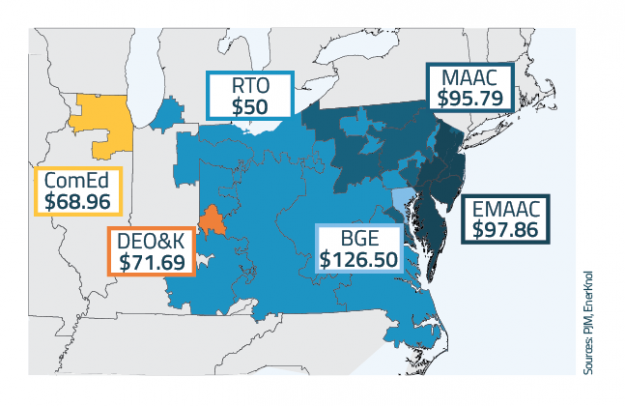
The long-awaited capacity market auction of PJM Interconnection LLC for the 2022-2023 delivery year cleared at $50 per megawatt-day, which is 64 percent lower than the 2018 auction and the lowest in almost a decade. This is the first auction to be conducted by the nation’s largest grid operator under the expanded minimum offer price rule (MOPR) resulting from a 2019 order by the Federal Energy Regulatory Commission.
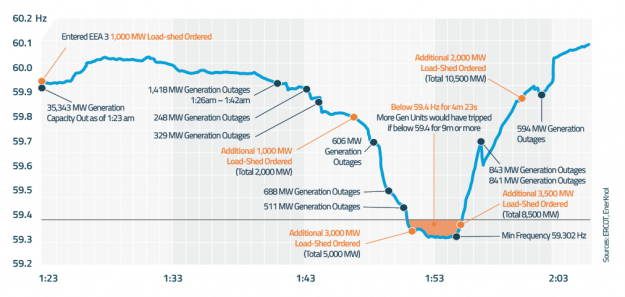
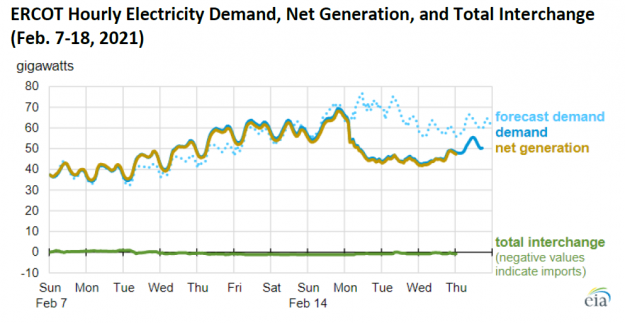
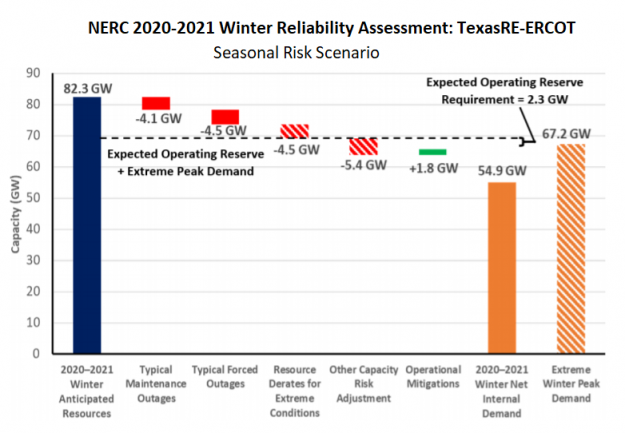
The widespread power outages across Texas during the extreme winter weather conditions brought about by a polar vortex in mid-February has raised questions about the reliability of the power grid operated by the Electric Reliability Council of Texas Inc. (ERCOT). The grid operator, which manages about 90 percent of the state’s electric load, reported that 48.6 percent of generation was forced out at the highest point due to the winter storm.
EnerKnol is committed to providing real-time transparency of the fragmented and highly technical landscape of energy regulation. With this as our guiding principle we are examining our database of over 35,000,000 regulatory records for insights into last week's Texas outages.
EnerKnol is committed to providing real-time transparency of the fragmented and highly technical landscape of energy regulation. With this as our guiding principle we are examining our database of over 35,000,000 regulatory records for insights into last week's Texas outages.
The Federal Energy Regulatory Commission has issued an order on implementing reforms that expand the minimum offer price rule (MOPR) to most state-subsidized resources participating in the regional capacity market administered by PJM Interconnection LLC, which operates across 13 states and the District of Columbia. The ruling has sparked concerns over its potential to harm renewable generation seeking to participate in the capacity market and frustrate state clean energy policies.
The New England grid operator has proposed a long-term, market-based solution to the region’s energy security problem as the power generation fleet moves towards a mix of energy-limited resources. With the retirement of resources with stored fuel, the system is increasingly reliant on facilities that run on just-in-time natural gas deliveries and weather-dependent wind and solar energy. To address the ensuing challenge, the grid operator proposes to improve the current market structure by creating incentives for the region’s fleet to invest in the energy supply arrangements and technologies on which the region depends.
PJM Interconnection LLC on March 29 filed a proposal with the Federal Energy Regulatory Commission to revise its energy and reserve market rules to properly value the energy reserves that support grid reliability by providing the flexibility needed to accommodate the evolving resource mix. The grid operator said that the growing variability of power demand…...
Natural gas accounted for nearly 31 percent of power generation in PJM Interconnection LLC’s footprint in 2018, surpassing coal’s share of about 29 percent, according to a March 18 report from the grid operator’s market monitor. Nuclear power dominated the region’s generating sector representing about 34 percent of the generation mix last year. Renewables had…...