New York Governor Kathy Hochul has announced a plan to increase the state’s energy storage deployment target by twofold to reach at least 6 gigawatts by 2030, as part of the 2022 State of the State. This marks the largest state-level target intended to facilitate New York’s transition to a low-carbon future, providing a pathway…...
Federal and state government agencies across the U.S. are advancing climate measures for effective implementation of emissions-reduction strategies to progress towards ambitious goals. Federal actions include an executive order directing the federal government to use its procurement power to achieve net-zero emissions, stronger auto fuel standards, and a methane reduction proposal. Recent state actions range from New York’s plan to implement its landmark climate law to Colorado’s oil and gas emission standards, and a cap-and-invest program in Oregon.
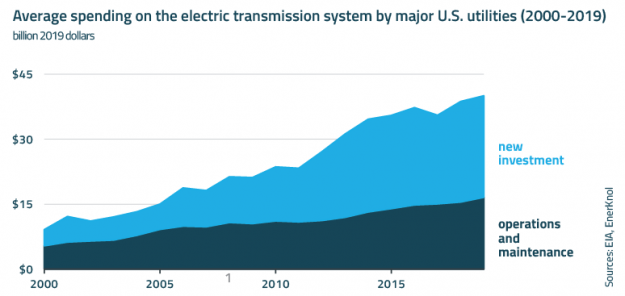
Regulators across the U.S. are accelerating electric transmission projects worth tens of billions of dollars to bring renewable power to consumers and make the grid more resilient against extreme weather events. Infrastructure updates have also garnered bipartisan support on the federal level, with more than $65 billion allocated for clean energy transmission and grid development in the Infrastructure Investment and Jobs Act enacted by the Congress last month.
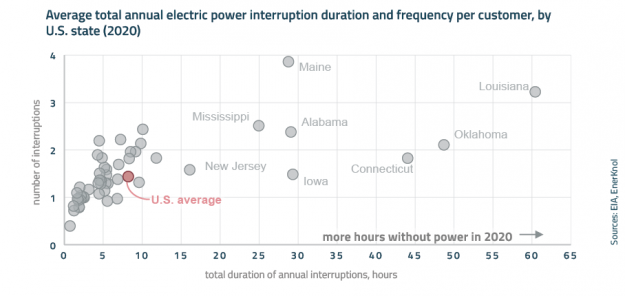
The growing incidence of extreme weather events has triggered regulatory and legislative efforts across the U.S. to improve the reliability and resilience of the energy system. Winter Storm Uri, which caused widespread outages in the South Central U.S. in February, prompted a regulatory upheaval in Texas, which suffered the brunt of the storm, leaving more than 4.5 million people without power. California has adopted measures to ensure reliability in the event of extreme weather in the summers of 2022 and 2023. Federal regulators have approved new cold weather electric reliability standards.
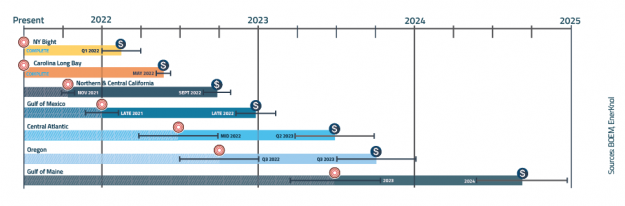
Interest in offshore wind energy has reached new levels driven by supportive federal action, ambitious state procurement targets, and evolving technology. Recent developments include federal approval of the second commercial-scale project, and plans to hold up to seven new lease sales by 2025 in the East Coast, as well as the West and Gulf Coasts. Despite the progress, the industry faces opposition with recent lawsuits challenging the approval of the nation’s first major offshore project, the 800-megawatt (MW) Vineyard Wind I venture, over its potential impact to the fishing industry and endangered species.
The Biden administration is walking a tightrope on climate action as recent moves in the oil and gas industry challenge its aggressive climate agenda, which calls for net-zero emissions by 2050.
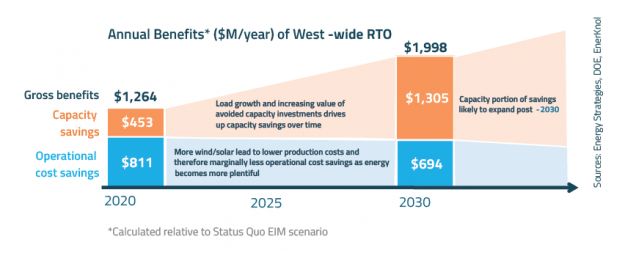
Western U.S. states are evaluating options to join or form a regional transmission organization (RTO) as regional coordination would strengthen electric system resilience and reliability, enhance clean energy adoption, and address transmission challenges.
U.S. President Joe Biden signed the Infrastructure Investment and Jobs Act into law on Nov.15, unlocking $62 billion for U.S. Energy Department initiatives, including revitalizing domestic manufacturing, expanding access to energy efficiency and clean energy, modernizing the power grid, and advancing next-generation technologies. Among the major provisions, the legislation allocates $6 billion for a Civilian…...
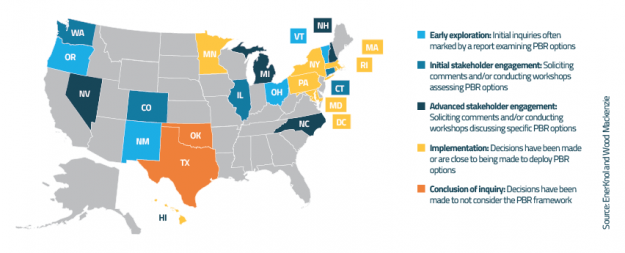
Discussion around performance-based regulation (PBR) continues to evolve as utilities and regulators explore a framework aimed at strengthening the connection between utility returns and performance.
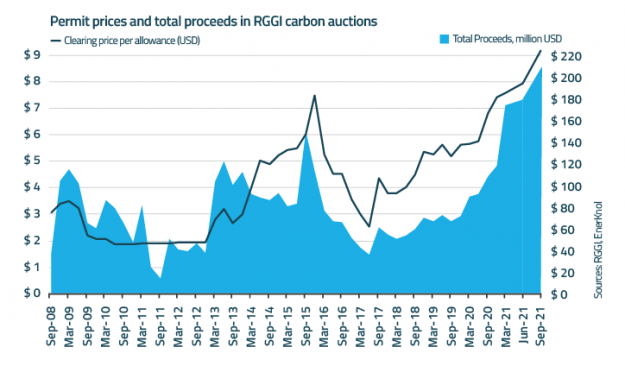
Interest in carbon pricing mechanisms has deepened as lawmakers and regulators explore policy tools to address emissions reductions in order to reach ambitious clean energy and climate goals. Cap-and-trade is figuring more prominently as an efficient market-based means to achieve significant carbon reductions and create an incentive to invest in non-emitting technologies.
Carbon reduction goals are driving policy support to keep financially-struggling nuclear generation plants operating and encourage new reactors. The fuel diversity and zero-carbon attributes of the resource are fueling the policy debate over its role in meeting state and federal energy and environmental goals.
The Texas Public Utilities Commission on Oct. 21 adopted a rule addressing weather emergency preparedness of power generators and utilities, the first of a two-part process in the development of reliability standards in the wake of the mid-February winter storm event. The rule requires affected companies to implement winter weather readiness recommendations identified in a…...