As carbon pricing gains traction as a policy tool to combat climate change and achieve net-zero emissions, regulatory attention on U.S. carbon markets has been on the rise. Recent developments in state-level emissions trading programs have yielded mixed results…Read the full report …...
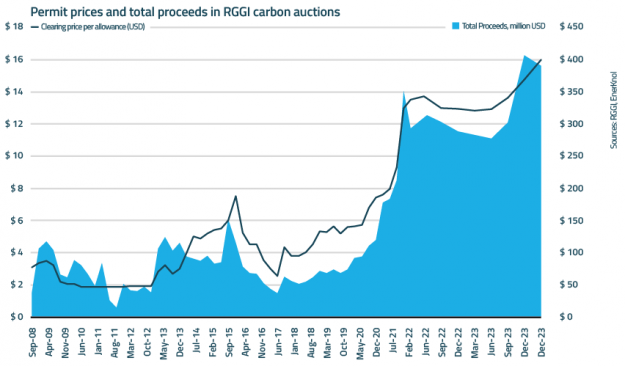
As carbon pricing gains traction as a policy tool to combat climate change and achieve net-zero emissions, regulatory attention on U.S. carbon markets has been on the rise. Recent developments in state-level emissions trading programs have yielded mixed results, with Washington's latest allowance auction seeing a significant price drop, while California, Quebec, and the Regional Greenhouse Gas Initiative (RGGI) cleared at record high prices.
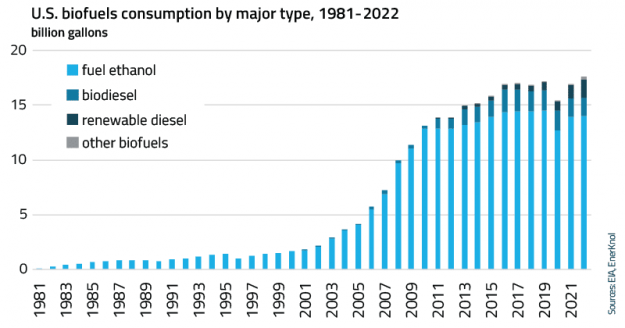
A growing number of states across the U.S. are considering clean fuel programs to limit the carbon intensity of transportation fuels and to incentivize the production of low-carbon and renewable alternatives.
Multiple states in the U.S. have initiated long-term proceedings to examine the operations of natural gas utilities, aiming to incorporate the implications of electrification goals and…Read the full report …...
Multiple states in the U.S. have initiated long-term proceedings to examine the operations of natural gas utilities, aiming to incorporate the implications of electrification goals and emissions reduction requirements into the planning processes of distribution utilities.
The net metering policy landscape continues to change as customer-sited generation expands. More states are shifting from traditional net metering to implement new rate structures. Over the last year, California, Arkansas, and North Carolina have adopted revisions to…Read the full report …...
The net metering policy landscape continues to change as customer-sited generation expands. More states are shifting from traditional net metering to implement new rate structures. Over the last year, California, Arkansas, and North Carolina have adopted revisions to the policy. Net energy metering (NEM), which credits customer generators for grid-exported power, has been a key component of the policy framework to spur investment in customer-sited renewable energy facilities, including solar and energy storage systems.
The Biden administration has made significant strides in climate change action, particularly through the enactment of the Inflation Reduction Act of 2022 (IRA), which represents the single largest investment in climate and energy in the U.S. Actions to further the administration’s climate agenda include proposals to limit emissions from power plants and vehicles, finalizing methane emission rules, and advancing environmental justice.
Federal actions are paving the way to build out new transmission capacity at the pace required to accommodate shifts in power generation and achieve decarbonization goals while enhancing grid reliability.
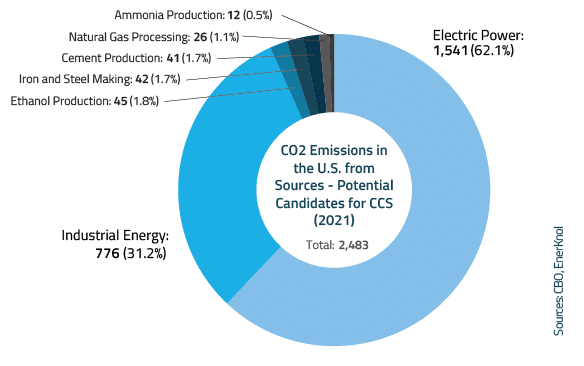
The growing interest in carbon capture and sequestration (CCS) projects driven by supportive policies and tax incentives has prompted state efforts to streamline permitting requirements, including securing primacy to regulate Class VI injection wells to sequester carbon dioxide. CCS involves the capture of carbon dioxide (CO2) emissions from power plants or industrial processes before they are released into the atmosphere for storage in subsurface geological formations.
As renewables continue to grow in the move towards a low-carbon future, energy storage is critical to mitigate the variability of wind and solar resources and enhance reliability and resiliency of the electric grid. Federal and state actions continue to facilitate the adoption of storage as a key solution…Read the full report …...
As renewables continue to grow in the move towards a low-carbon future, energy storage is critical to mitigate the variability of wind and solar resources and enhance reliability and resiliency of the electric grid. Federal and state actions continue to facilitate the adoption of storage as a key solution in this transition. U.S. utility-scale battery storage capacity is expected to increase from 1.5 gigawatts (GW) in 2020 to 30 GW in 2025, according to the U.S. Energy Information Administration.