Time-Based Rates Pick Up Pace as Grid Modernization Efforts Rise

EnerKnol’s Visual Primer – Time-Based Rates Pick Up Pace as Grid Modernization Efforts Rise

The move towards time-varying rates is on the rise as electric utilities seek rate designs that better align with the changing energy landscape. Utilities are increasingly experimenting with time-of-use rates (TOU) – which price electricity higher when peak demand drives up system costs –as customer-sited generation eats into revenues needed to maintain the grid and amid a widening disparity between average and peak demand.

Utilities Seek Demand Charges as States Tussle with Net Metering Policies

EnerKnol’s Visual Primer – Utilities Seek Demand Charges as States Tussle with Net Metering Policies

The proliferation of customer-sited generation has prompted utilities to push for demand charges – a fee based on a customer’s peak consumption during a billing period – to recover fixed costs and address cross-subsidies. Utilities face the conundrum of losing revenue as customers installing distributed generation, such as rooftop solar, rely less on the utility for power needs while also shifting costs to other customers. Solar advocates argue that these fees impact customers’ ability to control their bill, potentially wiping out the incentive to install solar.

Rapid EV Growth Prompts Focus on Rate Design for Charging Services

EnerKnol’s Visual Primer – Rapid EV Growth Prompts Focus on Rate Design for Charging Services

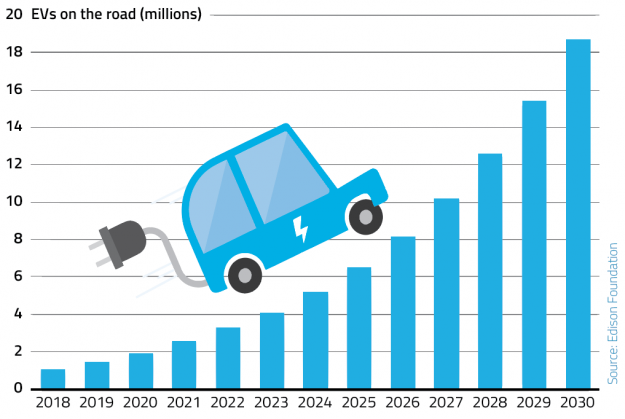
The continued growth in electric vehicle (EV) adoption has led state regulators to pay more attention to business models and rate designs that facilitate wider availability of charging infrastructure. Most recently, Pennsylvania took a big step towards innovative and dynamic pricing by clarifying that third party EV charging is not considered resale or redistribution of power. California is considering a utility proposal to replace demand charges with new subscription pricing, allowing customers to select the required amount of power for their stations. New York is analyzing the characteristics of charging systems to foster EV participation as a distributed resource. Iowa is examining business models for EV charging, while Illinois is exploring rate structures and charging practices to guide efficient integration of electric vehicles.

Ohio Seeks to Modernize Grid via Electric Vehicles, Non-wires Alternatives, and Data Accessibility

EnerKnol’s Visual Primer – Ohio Seeks to Modernize Grid via Electric Vehicles, Non-wires Alternatives, and Data Accessibility

The Public Utilities Commission of Ohio established the PowerForward Collaborative, a utility workgroup charged with monitoring the marketplace to propel the state along its roadmap of grid modernization. The collaborative will examine issues related to electric vehicles and deployment of non-wires alternatives. In addition, its two workgroups will consider integrated distribution planning and data access issues associated with grid modernization. The PowerForward roadmap aims to create a regulatory paradigm that will allow innovation to reach all customers. The plan envisions the modern grid as an open-access platform that helps applications interface seamlessly as they evolve and a marketplace that advances organically, allowing customers to buy innovative products and services from entities of their choice.

Mid Atlantic Power Market Gears Up for Reforms as Debate Over Subsidized Resources Intensifies

EnerKnol’s Visual Primer – Mid Atlantic Power Market Gears Up for Reforms as Debate Over Subsidized Resources Intensifies

PJM Interconnection LLC is at the crossroads for capacity market reforms as participation of sources receiving out-of-market state revenues continues to grow. Significant debate around the issue of price suppression from subsidized resources culminated in the Federal Energy Regulatory Commission's invalidation of PJM’s capacity market rules. Several states have opposed the premise arguing that the threat from subsidies is overstated and sweeping changes would unlawfully intrude on state energy policies. Following the FERC directive which rejected PJM’s changes proposed in April, the grid operator on Oct. 2 unveiled a plan which would address price distortion while advancing state policy interests.

U.S. Natural Gas is Reshaping Global Markets and Domestic Power Generation

EnerKnol’s Visual Primer – U.S. Natural Gas is Reshaping Global Markets and Domestic Power Generation

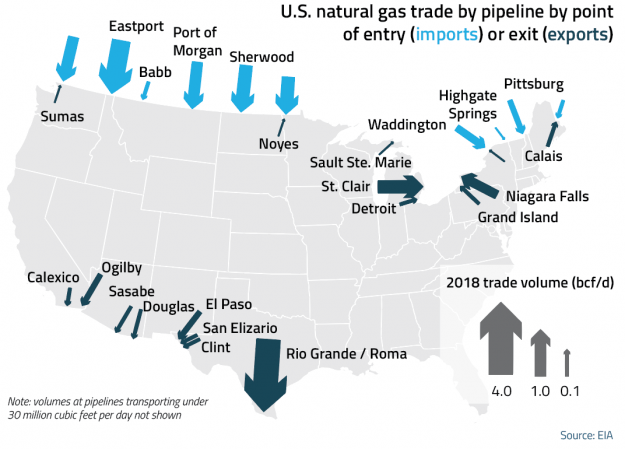
The U.S. shale revolution which kicked off a decade ago ushered in a new era for natural gas which has reshaped the power grid overtaking coal as the dominant source of electricity generation and established a thriving market for liquefied natural gas exports. The U.S. has remained the world's top producer of natural gas since 2009, and natural gas accounts for a third of all U.S. electricity generation. Last year, the U.S. became a net natural gas exporter for the first time in almost 60 years. The trend is expected to continue with growing production, increasing export capacity, and expanding gas infrastructure.

Expanding Retail Electricity Market Prompts Tighter Oversight From States

EnerKnol’s Visual Primer – Expanding Retail Electricity Market Prompts Tighter Oversight From States

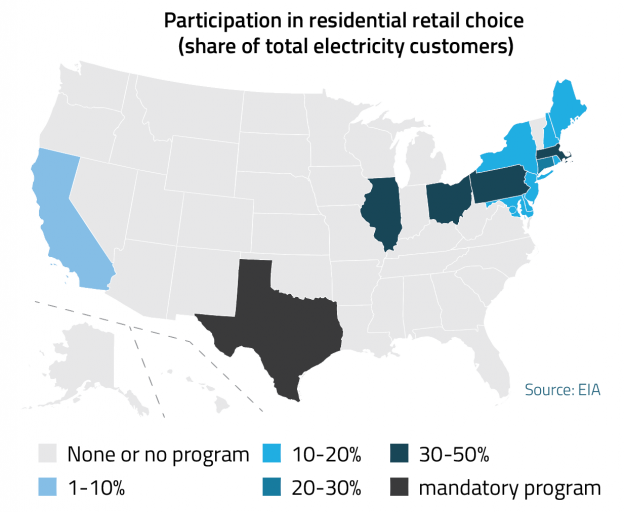
An increasing number of electricity customers are gaining access to the competitive retail market, giving them a broader range of choices in suppliers of electric power. In a bid to ensure a more competitive and transparent market, states are strengthening rules on marketing by suppliers. Among recent actions, New York is examining the status of cybersecurity in the retail access industry, while Maryland is considering enhancements to the competitive market and customer choice framework.

Surging Crude Exports Boost U.S. Role in Global Market

EnerKnol’s Visual Primer – Surging Crude Exports Boost U.S. Role in Global Market

U.S. crude oil exports are growing and reaching an increasing number destinations since the removal of the export ban in December 2015. Exports almost doubled from 2016 to 2017, thanks to growing U.S. production, expansions in pipeline and export infrastructure, and a wider discount of the domestic crude oil prices to international prices. U.S. production surpassed that of Russia in June and August, for the first time since 1999, after beating Saudi Arabia in February. Several pro-oil policies implemented recently by the Trump Administration seek to continue the bullish trend.

California’s 100 Percent Zero-Carbon Goal Hinges on Energy Storage

EnerKnol’s Visual Primer – California’s 100 Percent Zero-Carbon Goal Hinges on Energy Storage

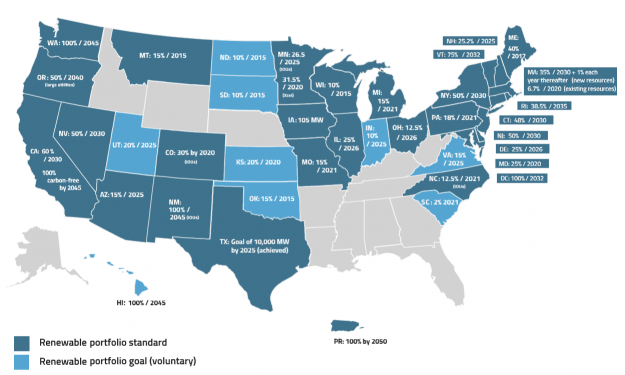
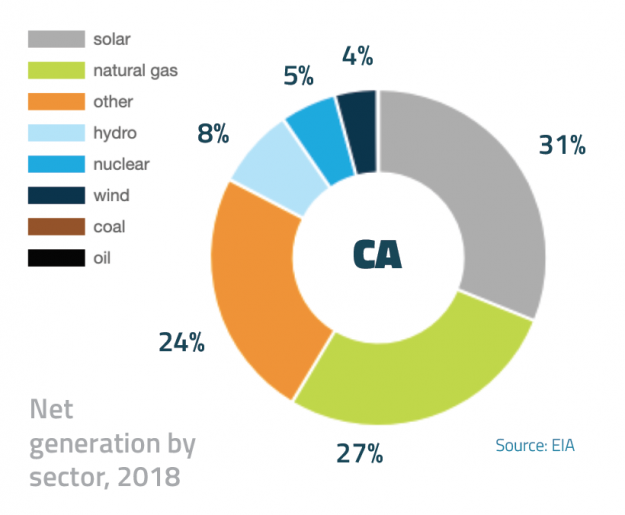
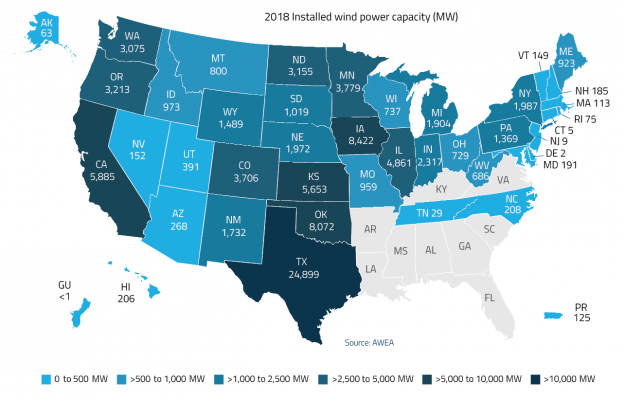
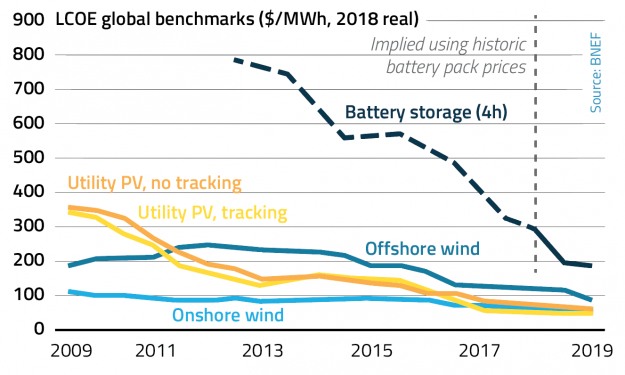
California has enacted legislation that reinforces the state’s clean energy leadership with a goal of procuring 100 percent of the state’s electricity from renewable and zero-carbon resources by 2045. California’s move is historic in that it represents the world’s fifth-largest economy having established a renown in the international climate arena. The Golden State has accelerated the growth of its solar and wind industries but success likely depends on whether storage systems can supplant natural gas that provides about a third of the state’s electricity. Earlier this year, California became the first U.S. state to mandate solar rooftop panels on new homes. To achieve its 2030 goal of five million zero emission vehicles, California recently enacted a law to assess charging infrastructure buildout.

Massachusetts Solar Credit Market Overhaul Signals Predictability, Revenue Certainty

EnerKnol’s Visual Primer – Massachusetts Solar Credit Market Overhaul Signals Predictability, Revenue Certainty

All six states in New England have Renewable Portfolio Standards (RPS) that drive the market for solar renewable energy credits (SRECs). Massachusetts installed 1.6 GW of solar as of December 2017, the most in the New England region, largely thanks to its SREC I and II programs. The state is currently implementing a long-term, sustainable solar incentive called the Solar Massachusetts Renewable Target (SMART) program, replacing the SREC II program set to conclude in 2018.

Illinois Gears up for Gigawatt-Scale Solar Market

EnerKnol’s Visual Primer – Illinois Gears up for Gigawatt-Scale Solar Market

The Illinois Power Agency finalized its first long-term renewable procurement plan, mapping an ambitious path to reach the goal of 25 percent by 2025, following structural changes to the state’s Renewable Portfolio Standard to enable a reliable funding mechanism. The plan lays out a framework for a new adjustable block program, community solar generation, and a low-income solar program, outlining procurement of 666 megawatts of solar.

New England Power Grid Sees No End to Worsening Winter Fuel Shortages

EnerKnol’s Visual Primer – New England Power Grid Sees No End to Worsening Winter Fuel Shortages

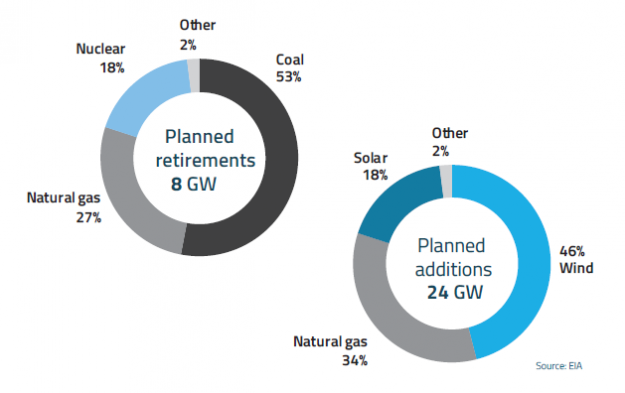
The New England grid operator has identified fuel security as the most pressing issue affecting regional reliability and energy affordability. Growing dependence on natural gas for power generation has been a concern, particularly during winter when natural gas is largely used for heating. The retirement of nuclear, coal, and oil powered plants has pushed the region to rely on costly, carbon-intensive oil-fired units to meet peak demand.