Idaho Power Proposes to Create a Solar Rate Class to Avoid Cost-Shifting

EnerKnol’s Visual Primer – Idaho Power Proposes to Create a Solar Rate Class to Avoid Cost-Shifting

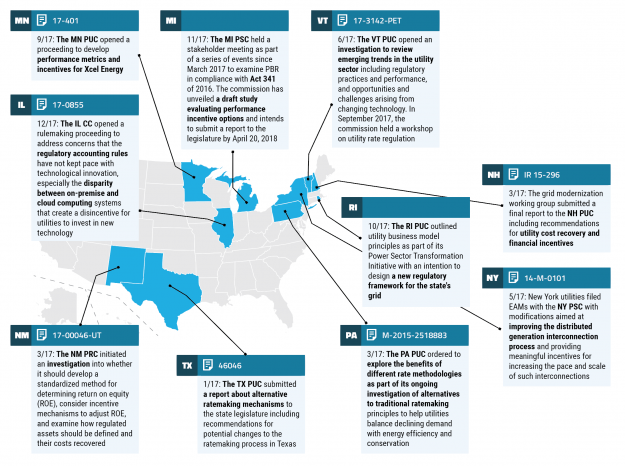
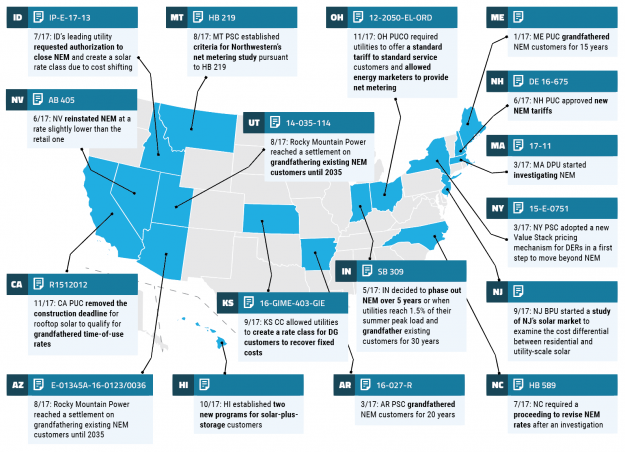
Idaho Power is seeking permission to close the current net metering schedule and create two rate classes for residential and small general service customers from 2018. The move echoes a national trend towards reforming net metering policy to address cost shifts from net metered to standard customers. As rooftop solar and other forms of distributed generation spread, debates over NEM will intensify leading states to seek alternative models such as New York's Value of DER rate.

North Carolina Governor Signs Solar Bill and Executive Order Abating Impact of Wind Moratorium

EnerKnol’s Visual Primer – North Carolina Governor Signs Solar Bill and Executive Order Abating Impact of Wind Moratorium

North Carolina Gov. Roy Cooper has approved legislation that will significantly expand solar, and issued an executive order mitigating the effects of a temporary wind energy moratorium included in the legislation. While the moratorium deals a setback for North Carolina which recently completed its first utility-scale wind project, Gov. Cooper’s move shows his commitment to the nascent wind industry, bringing some consolation to wind developers as projects can undergo the lengthy preliminary processes during the ban and quickly come online afterward.

Hawaii Regulators Approve HECO's 100 Percent Renewables Plan

EnerKnol’s Visual Primer – Hawaii Regulators Approve HECO’s 100 Percent Renewables Plan

The Hawaii Public Utilities Commission has accepted the Hawaiian Electric Companies' near-term action plan towards meeting the state’s target of 100 percent renewables by 2045. California’s proposal to match Hawaii's goal has garnered more attention given the complexity of implementing such goals in a large and diverse economy. As states increase their renewable portfolio standards, utilities will have to be more proactive in charting paths of compliance. Hawaii may offer some early lessons for other states but California's experience could be more applicable.

California Legislature Approves Cap-and-Trade Extension until 2030 with Concessions

EnerKnol’s Visual Primer – California Legislature Approves Cap-and-Trade Extension until 2030 with Concessions

The California legislature has passed legislation extending the cap-and-trade program, the centerpiece of the state’s efforts against climate change. The extension aligns the program with the state’s 2030 emissions reduction targets. It cements California's role as a leading state in climate policy nationwide at a time when federal climate policy remains uncertain.

Halt of Kemper Coal Gasification Project Deals Blow to Carbon Capture and Storage

EnerKnol’s Visual Primer – Halt of Kemper Coal Gasification Project Deals Blow to Carbon Capture and Storage

Mississippi regulators require the Kemper coal plant – hailed as the first large-scale clean coal facility – to run only on natural gas ending a seven year effort to demonstrate the viability of clean coal technology. The project's failure is a major setback for carbon capture and storage (CCS), particularly given the interest to save the coal industry under the Trump administration. The Kemper plant’s switch to natural gas is part of a broader trend caused by low-cost, low-carbon natural gas, making it difficult for expensive technologies to compete. Faced with adverse economics, the prospects of CCS will likely depend on the policy environment.

North Carolina to Revise PURPA Implementation

EnerKnol’s Visual Primer – North Carolina to Revise PURPA Implementation

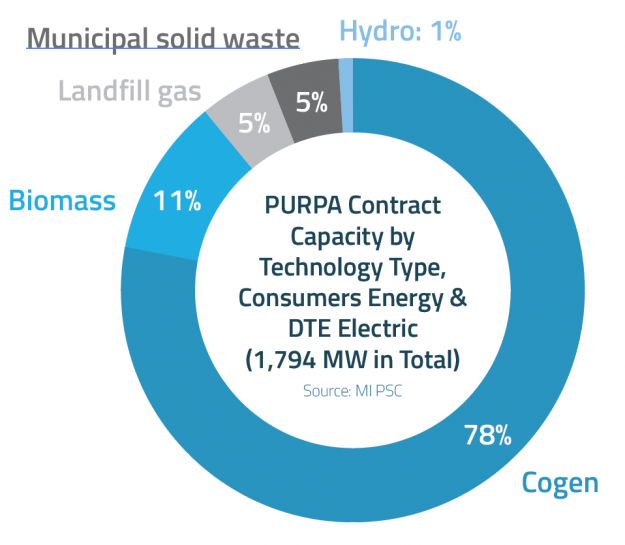
North Carolina has passed legislation that would reform implementation of PURPA, the key policy that helped the state become the second largest solar market in the U.S. PURPA has gained relevance in recent years due to the significant decline in renewable energy costs which has made solar and wind increasingly cost-competitive. However, utilities across states disagree over rates and contract lengths pertaining to projects under PURPA. The ongoing debate over PURPA will likely prompt reforms by modifying implementation terms or pushing legislation for future changes.

New York to Set Energy Storage Targets by Next Year

EnerKnol’s Visual Primer – New York to Set Energy Storage Targets by Next Year

The New York state legislature has passed legislation to establish storage procurement targets through 2030. New York joins a growing list of states discussing energy storage targets and incentives driven by the prolific growth of distributed generation. The legislation will support the state's push towards its 50 percent renewables goal which provides opportunities for a diverse range of storage technologies.

DOE Grid Reliability Study to Examine Impact of Renewables on Baseload Generation

EnerKnol’s Visual Primer – DOE Grid Reliability Study to Examine Impact of Renewables on Baseload Generation

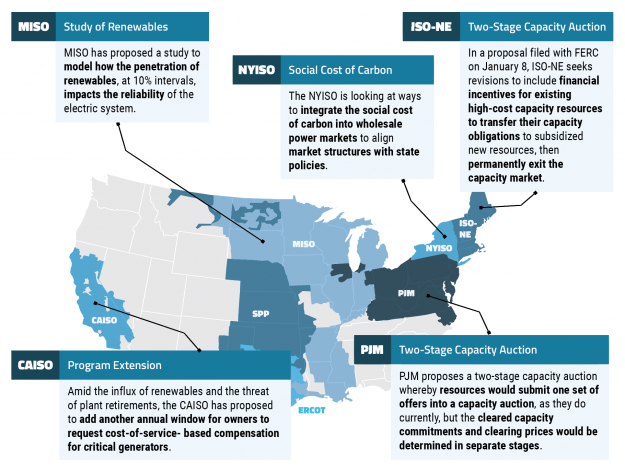
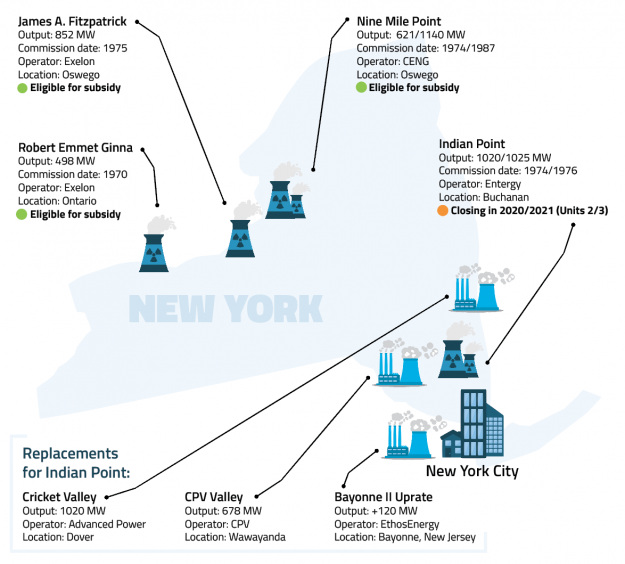
Energy Secretary Rick Perry’s upcoming grid reliability study is examining whether renewables are accelerating coal and nuclear retirements, while the trend is primarily driven by low natural gas prices and slow growth in electricity demand. Renewable energy growth is increasingly driven by costs, as these technologies have matured and attained scale.

Nevada Enacts Multiple Clean Energy Bills Preparing for Deregulation

EnerKnol’s Visual Primer – Nevada Enacts Multiple Clean Energy Bills Preparing for Deregulation

Nevada Governor Brian Sandoval has vetoed legislation that would have increased the state’s renewable portfolio standard (RPS) and created a community solar program. However, he approved a suite of nine clean energy bills, pushing the state policy towards clean energy. The legislation comes in anticipation of energy market restructuring through a ballot measure in 2018.

FERC Warns about Tighter Supplies in New England and Texas for Meeting Summer Demand

EnerKnol’s Visual Primer – FERC Warns about Tighter Supplies in New England and Texas for Meeting Summer Demand

FERC’s 2017 summer assessment forecasts tighter supplies in New England and Texas while anticipating adequate summer capacity in most regions. Increased hydroelectric generation from heavy snowpack levels is expected to mitigate risks from limitations at the Aliso Canyon natural gas storage facility in Southern California. Natural gas futures prices are expected to rise due to lower storage inventories, decrease in production rates, and above normal temperatures.

Carbon Prices in RGGI Auction Slump to Lowest in Over Four Years, Reflecting Need for Reform

EnerKnol’s Visual Primer – Carbon Prices in RGGI Auction Slump to Lowest in Over Four Years, Reflecting Need for Reform

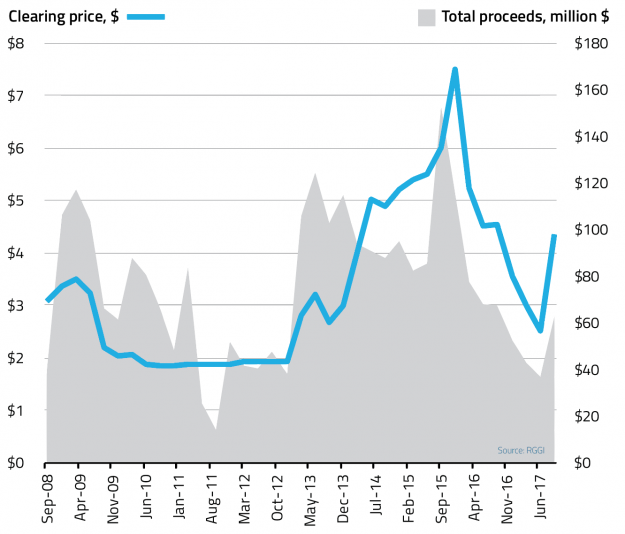
Clearing prices in the June 2017 RGGI auction dropped to their lowest level in over four years, marking a sharp turn from the December 2015 auction which had reached a record high. The decline in prices can be attributed to uncertainty about the RGGI program after 2020 with regard to the future value of emissions allowances, as well as uncertainty over the future of the Environmental Protection Agency's Clean Power Plan. RGGI’s emission cap must extend at least until 2030 to provide certainty for market participants who are bracing for the end of the program currently slated for the end of 2020.

State Legislation Update: 6/2017

EnerKnol’s Visual Primer – State Legislation Update: 6/2017

Legislation enacted across states in 2017 calls for greater diversity in power sources—from expanding renewables to supporting nuclear and natural gas infrastructure. However, there is a clear trend showing the intent to prioritize clean energy and climate policy. States in the forefront of grid modernization plans continue to support renewable development while others are following their models as a way to emulate effective policies.