Log in


Lost your password?
EnerKnol
  • Home
  • About
  • EK Research
  • News
  • Platform
  • Coverage
  • Case Studies
  • EnerKnol Calendar
  • Press
Log on To EnerKnol Platform Book Demo
  • Home
  • About
  • EK Research
  • News
  • Platform
  • Coverage
  • Case Studies
  • EnerKnol Calendar
  • Press
Login Book Demo
PG&E Power Lines Caused Deadly Camp Fire According to California Investigator

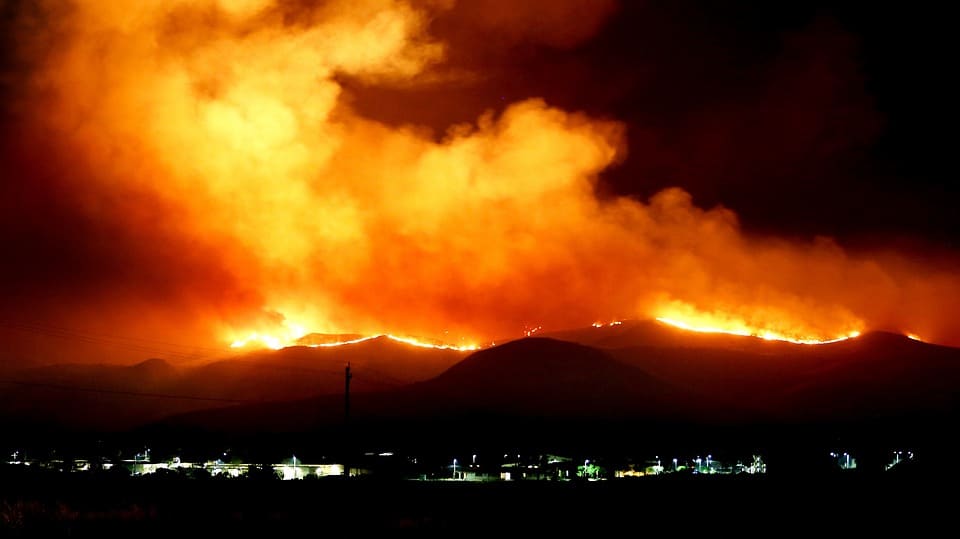
The California Department of Forestry and Fire Protection has determined that Camp Fire, the deadliest and most destructive fire in California history, was caused by electrical transmission lines owned and operated by Pacific Gas and Electric, according to a May 15 press release.

The Camp Fire started in Butte County on the morning of November 8, 2018. Dry vegetation, as well as strong winds, low humidity and warm temperatures, meant the fire spread quickly and was difficult to control. It took 17 days to put out, resulting in 85 deaths, 150 thousand acres of burnt land and more than 18 thousand structures destroyed. Cal Fire’s investigation concluded that the fire had two ignition sites, the first near Pulga and the second in a different part of the county, which started when vegetation came into contact with PG&E’s transmission lines and was later consumed by the initial blaze. The agency has forwarded its full report to the Butte County district attorney’s office.

In February, Pacific Gas & Electric had already admitted that it was “probable”, based on the company’s own investigation, that its equipment would ultimately be determined to have been the ignition point of the 2018 Camp Fire. Later that month, the company assumed an $11.5 billion pre-tax charge related to third-party claims in connection with this and other devastating wildfires that hit the state in the last two years. The utility has already stated that resolving the issues stemming from past wildfires will be “enormously complex,” involving thousands of victims and others who have made or are expected to make claims. The potential liability for the 2017 and 2018 Northern California wildfires, estimated to exceed $30 billion, prompted PG&E in January to file for reorganization under Chapter 11 of the U.S. bankruptcy code.

Last month, PG&E requested a 16 percent rate of return on equity for 2020, up from the current 10.25 percent, to attract the new investment needed to upgrade and modernize its infrastructure in the face of wildfire risks, according to the company’s cost of capital proposal filed with the California Public Utilities Commission. PG&E plans to invest up to $28 billion in energy infrastructure upgrades over the next four years, with about 75 percent of the amount earmarked for safety, reliability, and system hardening.



May 20, 2019
Share
TweetShare on Twitter Share on FacebookShare on Facebook Share on LinkedInShare on LinkedIn

Post navigation

PreviousPrevious post:National Grid Stops Accepting New Gas Service Requests in New York Following Williams Pipeline DenialNextNext post:FERC Approves Train 4 Texas Freeport LNG Expansion Despite Contentious Emission Standards

Related Research

EnerKnol Research PU Visual Primer Coal 2026 04 28 Blog preview
Policy Actions Delay Planned U.S. Coal Plant Retirements Over Reliability Concerns
April 27, 2026
EnerKnol Research PU Visual Primer Coal 2026 04 28 Blog preview
Visual Primer: Policy Actions Delay Planned U.S. Coal Plant Retirements Over Reliability Concerns
April 27, 2026
6 1
New York Grid Operator Warns of Record-Low Summer Reliability Margin
April 27, 2026
Week Ahead: WA Examines Data Center Impacts, DOE Advances Genesis Mission, Cross-Border Pipeline Expansion
April 24, 2026
Image3
New York Approves 343 Megawatts of Wind and Solar to Boost Clean Energy and Local Investment
April 23, 2026
Image14
Trump Invokes Defense Production Act to Expand Energy Production, Infrastructure, Supply Chains
April 21, 2026
EnerKnol Research PU Visual Primer Oil and Gas Permitting 2026 04 21 Blog preview
Federal Actions Signal Reforms to Streamline Oil and Gas Permitting
April 20, 2026
EnerKnol Research PU Visual Primer Oil and Gas Permitting 2026 04 21 Blog preview
Visual Primer: Federal Actions Signal Reforms to Streamline Oil and Gas Permitting
April 20, 2026
  • Renewables
    • Biofuels
    • Electric Vehicles
    • Hydropower
    • Nuclear Power
    • Solar Power
    • Wind Power
  • Environmental Markets
    • Carbon Markets
    • Emissions
  • Fossil Fuels
    • Coal Power
    • Natural Gas
    • Oil
  • Power & Utilities
    • Energy Efficiency
    • Energy Storage
    • Retail Power & Gas
    • Smart Grid
    • Wholesale Markets

Subscribe To Our Research Newsletter!


First Name *
Last Name *
Email Address *
Phone *
Company *
Job Title *
Select any sectors you're interested in

Submit Form
EnerKnol

The most comprehensive platform for energy and environmental regulatory intelligence, powered by cutting-edge AI and machine learning technology.

sales@enerknol.com
212-537-4797
175 Greenwich St, FL-38, New York, NY 10007

Product

  • Platform Overview
  • EKAI Assistant
  • Coverage Areas

Resources

  • Case Studies
  • API Documentation

Company

  • About Us
  • Careers
  • New York Energy Week

Legal

  • Terms of Service
© 2026 EnerKnol. All rights reserved.
Book a Demo