

U.S. Battery Storage Capacity Rose By 66 Percent During 2024: EIA
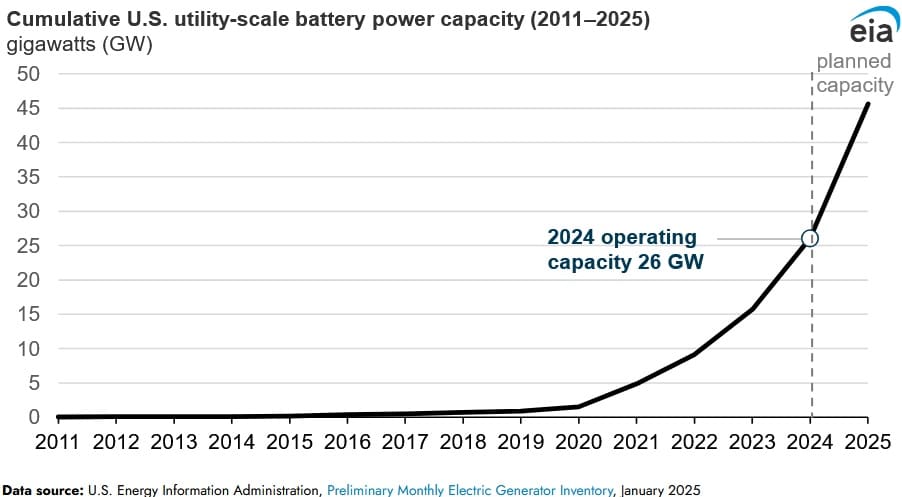
Cumulative utility-scale battery storage capacity in the U.S. surpassed 26 gigawatts (GW) during 2024, according to a March 12 report published by the U.S. Energy Information Administration. Operators increased battery storage capacity by 10.4 GW during 2024, the second largest generation capacity addition, after solar. Despite the significant increase, battery storage accounts for only two percent of the total 1,230 GW of U.S. utility scale electricity generating capacity.
The U.S. is expected to add 63 GW of new utility scale electric generating capacity during 2025, about 30 percent higher compared to the 48.6 GW of capacity installed last year. Solar and battery storage are expected to lead new generating capacity additions. Solar is the fastest-growing renewable source due to larger capacity additions and favorable tax credits policies. U.S. solar capacity has risen significantly since 2010, with the exemption of 2022 when solar additions fell by 23 percent year on year due to supply chain interruptions and other COVID-19 associated challenges. The previous administration incentivized solar technological advancements. In September 2024, the U.S. Energy Department announced $40 million to bolster solar manufacturing, expand photovoltaic recycling, and foster new markets for solar technologies.
Capacity growth from battery storage is expected to hit a record high during 2025. Generators plan to add 19.6 GW of utility-scale battery storage to the electricity grid. Battery storage is helping operators balance demand and supply and improve grid stability, amid higher renewable energy growth. Wind and solar are both intermittent resources, and batteries serve to address this issue by storing extra energy produced for later use.
EnerKnol Pulses like this one are powered by the EnerKnol Platform—the first comprehensive database for real-time energy policy tracking. Sign up for a free trial below for access to key regulatory data and deep industry insights across the energy spectrum.
ACCESS FREE TRIAL