

U.S. Retail Gasoline Prices at a Multi-Year Low Going into Memorial Day Weekend: EIA
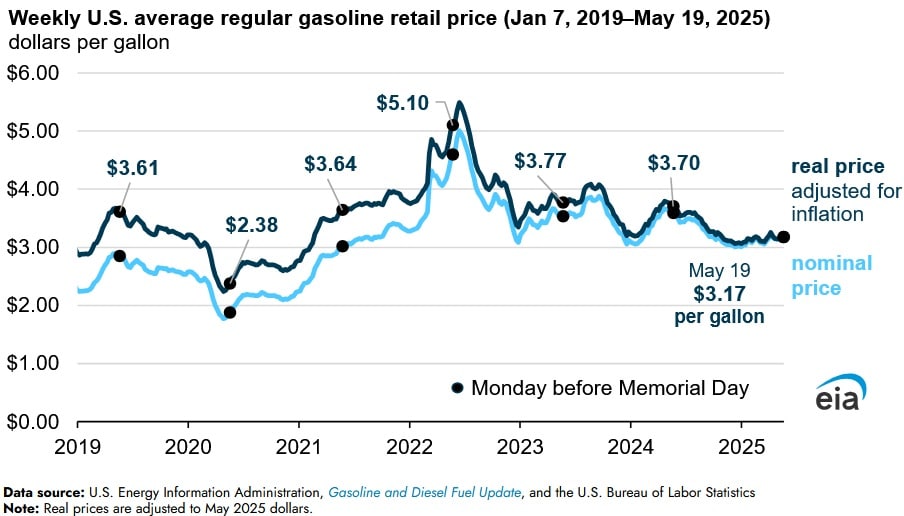
The retail price for U.S. regular grade gasoline as of May 19, averaged $3.17 per gallon (gal), down 11 percent from last year, according to a May 22 report published by the U.S. Energy Information Administration. U.S. gasoline prices heading into Memorial Day weekend are 14 percent lower in real terms compared to last year due largely to lower crude oil prices.
Travel by car over the Memorial Day weekend is expected to increase by three percent to 39.4 million people this year in comparison to last year, according to the American Automobile Association. Despite the increase in the number of people travelling prices remain lower this year as a key component of retail gasoline prices. Brent crude oil prices are significantly lower than usual heading into spring. During the May 1 to May 19 period, Brent crude oil prices averaged $64 per barrel (b), 20 percent lower in real terms compared to January and 26 percent lower than during May 2024. Brent crude oil prices have been lower due to announcements that OPEC+ will step up crude oil production increases, record high U.S. crude oil production and concerns surrounding future economic growth.
Retail gasoline prices are generally highest in the West Coast, as a result of tight demand and supply fundamentals, the region’s inadequate interconnections with other major refining centers, elevated state taxes and gasoline specification in California making gasoline more expensive to produce. Gasoline prices are lowest usually in the Gulf Coast, due to more than 50 percent of U.S. refining capacity being produced in this region and demand being lower than production. Gulf Coast prices averaged $2.79/gal on May 19, 13 percent lower compared to this point last year. Gasoline prices on the East Coast averaged $2.99/gal, down 17 percent compared to 2024. Rocky Mountains prices averaged $3.13/gal, down 12 percent from 2024 in real terms. Midwest prices averaged $3.03/gal, 15 percent lower compared to the previous year.
EnerKnol Pulses like this one are powered by the EnerKnol Platform—the first comprehensive database for real-time energy policy tracking. Sign up for a free trial below for access to key regulatory data and deep industry insights across the energy spectrum.
ACCESS FREE TRIAL