

New York Proposes Regulations to Tighten Emissions Cap Under Regional Carbon Program
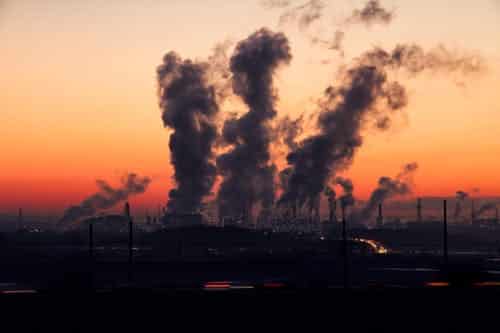
The New York State Department of Environmental Conservation and the New York State Energy Research and Development Authority on Dec. 10 released a proposal to update the state’s Regional Greenhouse Gas Initiative, or RGGI, regulations, aiming to secure deeper and more affordable cuts in power sector emissions. The measure underscores New York’s direction at a time when federal climate policies face uncertainty and signals a broader effort to maintain long-term affordability and climate resilience. The proposal follows a multi-state review designed to ensure that participating states have access to sufficient emissions allowances to meet expected electricity demand while reinforcing protections that guard consumers against cost volatility. In July, the 10 RGGI member states concluded their Third Program Review, updating the RGGI Model Rule, which forms the basis for each state’s carbon dioxide budget trading program.
The proposed updates would tighten the regional carbon cap to approximately 69.8 million tons of carbon dioxide in 2027, and decline by 89 percent through 2037, relative to the 2024 cap. The approach would produce annual emissions reductions of about 10 percent through 2033 and a slower decline through 2037. The new trajectory would lower the regional cap by over 60 million tons of carbon dioxide to approximately nine million tons in 2037. Program updates were shaped through a coordinated process among the RGGI states supported by modeling and stakeholder feedback. The first and second reviews were completed in 2013 and 2017, respectively, resulting in the 2017 Model Rule.
New York also proposed adjustments to the structure of the allowance market. The draft rule would increase the size of the Cost Containment Reserve and create a second tier of allowances to help ensure availability during periods when grid reliability or affordability concerns rise. The rule would remove the Emissions Containment Reserve, raising the minimum reserve price as an added safeguard against swings in market conditions. NYSERDA’s Board approved publication of the auction rule on Nov. 17.
State officials noted that RGGI has generated more than $3 billion for clean energy initiatives since launch, supporting energy efficiency, renewable resources, and electrification investments that are projected to yield almost $12 billion in net savings for ratepayers. An independent assessment found early public health gains across the region, including fewer premature deaths and respiratory illnesses, along with economic growth measured in tens of thousands of job-years.
Public comments will be accepted through Feb. 17, 2026, with two virtual hearings on Feb. 9. Final action is expected next year to align with the updated cap’s start date in 2027. The next multi-state program review is slated to begin no later than 2028.
EnerKnol Pulses like this one are powered by the EnerKnol Platform—the first comprehensive database for real-time energy policy tracking. Sign up for a free trial below for access to key regulatory data and deep industry insights across the energy spectrum.
ACCESS FREE TRIAL