

Rate of Solar Panel Output in Sunny U.S. Southwest Almost Double the Northeast: EIA
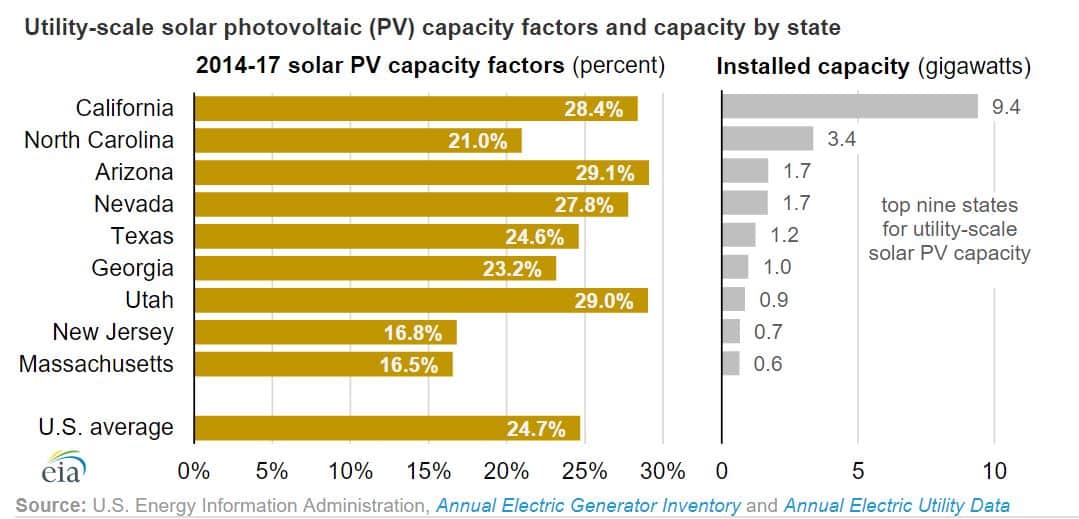
Utility-scale solar photovoltaic plants in Southwestern states like Arizona performed better than those in the Northeast in terms of capacity factor, a measure of a plant’s electricity generation as a percentage of its summer total capacity value for plants with a full year of operation.
According to the Energy Information Administration, on average, utility-scale solar photovoltaic power plants in the United States operated at about 25 percent of their electricity generating capacity, based on an average of annual values from 2014 through 2017. While states in the Southwest featured capacity factors in the high twenties, states like Massachusetts and New Jersey had utility capacity factors around 16 percent.
Arizona’s utility-scale solar photovoltaic plants performed better than those in any other state, achieving a 29.1 percent capacity factor from 2014 through 2017. Utah was ranked second with 29 percent, while California, which has the largest share of installed utility-scale solar power, ranked third with an average capacity factor of 28.4 percent.
The capacity factor for large-scale solar photovoltaic installations is largely determined by the quality of the panels, whether they have tracking capability and also inverter-sizing. On top of this, sunnier locations will naturally have more hours of direct, high-angle sunlight per year, contributing to a higher capacity factor.
EnerKnol Pulses like this one are powered by the EnerKnol Platform—the first comprehensive database for real-time energy policy tracking. Sign up for a free trial below for access to key regulatory data and deep industry insights across the energy spectrum.
ACCESS FREE TRIAL