

U.S. Per Capita CO2 Emissions from Primary Energy Down 30 Percent Since 2005: EIA
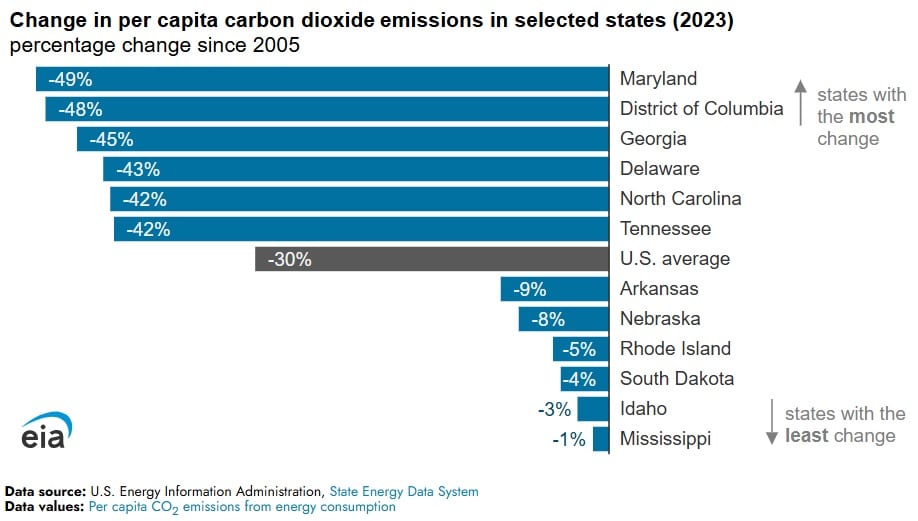
The U.S. Energy Information Administration reported that per capita carbon dioxide emissions from primary energy consumption declined in every state between 2005 and 2023, with overall U.S. energy-related CO2 emissions falling 20 percent during the same period. Population growth of 14 percent contributed to a 30 percent decrease in per capita emissions, the agency said in its State Energy Data System release.
The reductions were largely driven by steep declines in coal-fired generation in the electric power sector. Coal plants were replaced by natural gas, which emits about half as much CO2 per unit of energy, and by expanding wind and solar generation. Nationwide, CO2 emissions from power generation have dropped faster than transportation emissions since 2007 as the electricity mix shifted. The agency’s Short-Term Energy Outlook projects a modest 1 percent rise in total U.S. CO2 emissions in 2025 due to higher fossil fuel use for crude oil production and growing electricity demand.
Maryland posted the largest per capita reduction, down 49 percent since 2005, as the state cut overall emissions 43 percent while its population grew 11 percent. In 2023, Maryland recorded the lowest per capita emissions among states at 7.8 metric tons of CO2, while the District of Columbia reached a record-tying low of 3.6 metric tons of CO2. Maryland’s shift was driven by replacing coal with natural gas and renewables, cutting power sector emissions by 74 percent. Similar coal plant closures and renewable buildout shaped declines in other leading states.
By sector, transportation was the largest source of emissions in 28 states in 2023, overtaking power generation in many coastal regions where coal plants have shut down. The electric power sector remained the top source in 18 states, particularly major electricity exporters such as West Virginia and Wyoming that still rely heavily on coal. The industrial sector led emissions in four states with large oil, gas, or agricultural industries, including Texas, Louisiana, and Iowa.
Nationally, transportation overtook power generation as the largest emitter in 2016. Since then, power emissions have declined sharply, while transportation emissions have remained relatively steady, despite increased electric vehicle adoption.
EnerKnol Pulses like this one are powered by the EnerKnol Platform—the first comprehensive database for real-time energy policy tracking. Sign up for a free trial below for access to key regulatory data and deep industry insights across the energy spectrum.
ACCESS FREE TRIAL