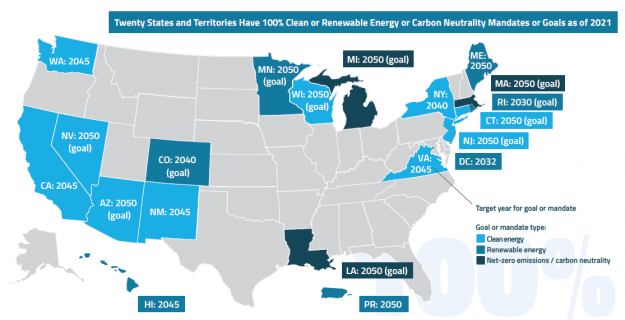
Massachusetts Governor Charlie Baker signed legislation on March 26, which commits the state to achieve net-zero emissions in 2050. The law allows Massachusetts to procure an additional 2.4 gigawatts of offshore wind energy, bringing the state’s total authorization to 4 gigawatts by 2027. The law – An Act Creating a Next-Generation Roadmap for Massachusetts Climate…...
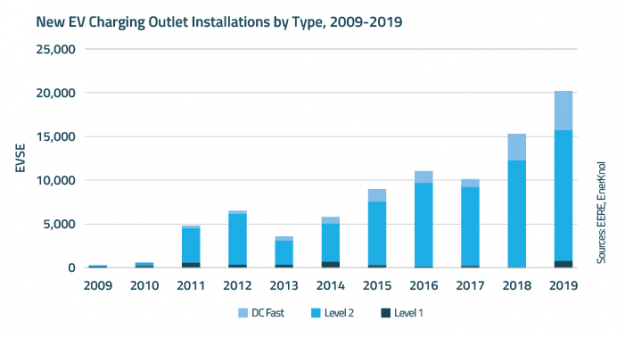
Transportation electrification is gaining momentum across the U.S. as states and utilities continue to implement measures to boost electric vehicle (EV) adoption and expand charging infrastructure. Recent actions range from California’s vehicle-grid integration strategy to Pennsylvania’s rulemaking proposal for a light-duty EV requirement, and a utility-coalition plan for a seamless charging network.
Innovations in energy planning continue to emerge as state regulators devise programs and explore solutions that effectively meet customer needs and support policy goals. Recent state initiatives range from New York’s efforts to align gas planning with climate goals, to Maine’s investigation into the future design of the grid to accommodate growing renewables, and California’s transmission planning guidance to achieve ambitious decarbonization goals.
Net metering policies continue to evolve as state regulators seek to make rate structures more equitable to address cross-subsidy issues arising from the growing penetration of distributed solar generation. Net energy metering (NEM), which credits customer generators for grid-exported power, has been a key component of the policy framework to spur investment in customer-sited renewable energy facilities, including solar and energy storage systems. Successors to original tariffs are considering a range of factors including avoided utility costs, value to the grid, cost-shifting, and energy demand.
The Connecticut Public Utilities Regulatory Authority on Feb. 10 established a residential renewable energy program that will replace current net metering, as well as the residential solar incentive program starting January 1, 2022. The initiative creates tariff options for residential customers to buy products generated from a Class I renewable energy source located on their…...
The Michigan Public Service Commission on Feb. 4 established a workgroup to analyze rate design options for distributed energy resources. The commission also adopted a definition for utility pilot projects and criteria for pilot program reviews under the MI Power Grid initiative, the state’s grid modernization effort intended to maximize the benefits of the shift…...
Energy storage initiatives are moving forward at a swift pace to complement clean energy policies as batteries can facilitate the integration of diverse generation technologies and address grid stability. With improving economics, there is a growing discussion on the role of energy storage as a grid asset to foster reliability and optimize renewables to meet ambitious clean energy goals.
The New York Public Service Commission on Jan. 21 approved tariffs filed by the state’s six major investor-owned electric utilities to allow recovery of contract costs for the procurement and deployment of energy storage systems. The move follows a 2018 order that established the state’s energy storage goal and deployment policy, directing cost recovery from…...
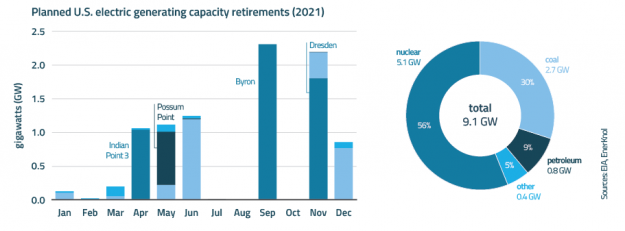
Several states are rethinking the resource adequacy paradigm as the electric resource mix changes through the addition of more intermittent resources to replace retiring coal-fired capacity and meet state decarbonization goals. Resource adequacy initiatives are intended to ensure that the planned resource mix is sufficient to meet the future system capacity needs and maintain grid reliability.
Distribution system planning is occurring across various states as utilities and regulators assess the growing need for grid integration of distributed energy resources (DER) and investments that have long-term implications for the power system.
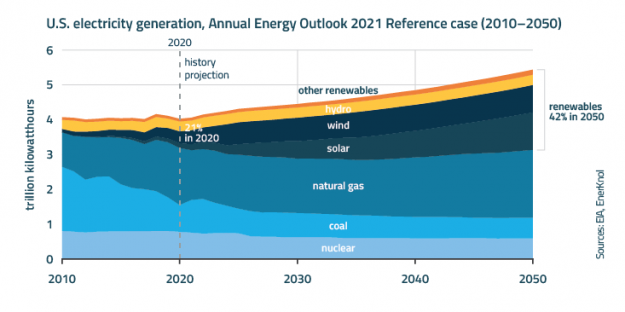
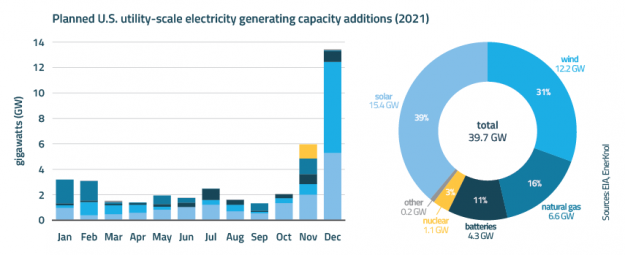
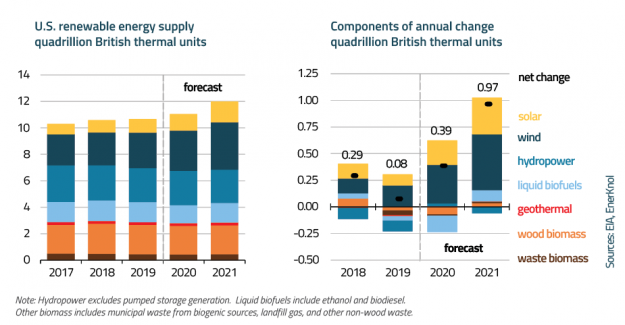
The shift in policy priorities of the incoming administration is expected to accelerate the transformation of the power sector towards clean energy and distributed grid, continuing its trajectory driven by market dynamics, technology, and customer preferences. The strong growth of renewable energy is expected to speed up, particularly with the extension of the federal tax…...
The Hawaii Public Utilities Commission approved a new performance-based regulation, or PBR, framework to govern Hawaiian Electric Company by better aligning the company’s interests with that of customers’ and the state’s clean energy goals. Hawaii is mandated by a 2018 law to implement PBR, establishing a financial link between utility revenues and performance in achieving…...