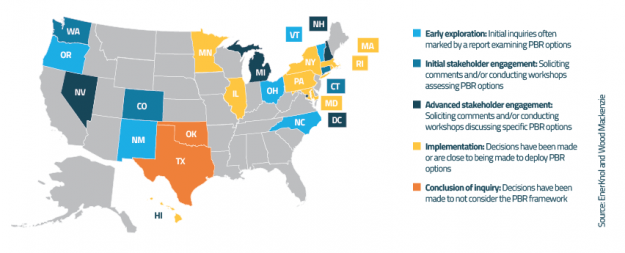
Visual Primer: Performance-Based Regulation Expands to Advance Clean Energy Transition, Serve Social Goals

Visual Primer: Performance-Based Regulation Expands to Advance Clean Energy Transition, Serve Social Goals

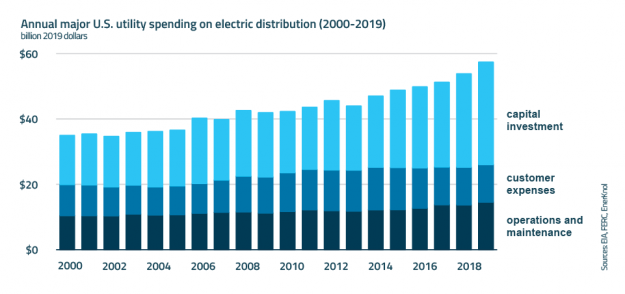
Performance-based regulation (PBR) continues to evolve in the face of transformational changes brought about by new technologies, changing customer preferences, and state policy mandates. Recent actions range from Hawaii’s approval of performance incentive mechanisms to accelerate clean energy goals, the District of Columbia’s ratemaking pilot that contains climate goals-driven tracking mechanisms, and Washington’s law to move towards PBR to help utilities adapt to rapidly changing societal expectations and public policy objectives.
renewable portfolio standard

U.S. Energy Department Awards $54 Million for Innovative Clean Energy and Climate Projects

The U.S. Energy Department on June 9 announced $54 million in critical seed funding for 266 clean energy and climate related projects headed up by small businesses. The awardees encompass 235 small businesses across 42 states for projects focused on proof-of-concept prototypes for technological solutions that could help achieve the goal of net-zero emissions by…

Visual Primer: Capacity Prices Fall by 64 Percent in First PJM Capacity Auction After Market Reforms

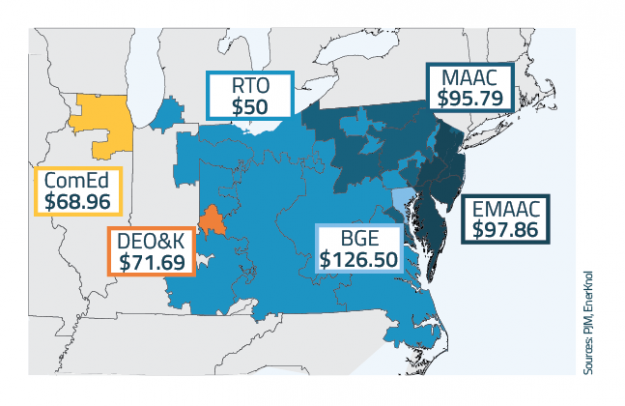
Visual Primer: Capacity Prices Fall by 64 Percent in First PJM Capacity Auction After Market Reforms

The long-awaited capacity market auction of PJM Interconnection LLC for the 2022-2023 delivery year cleared at $50 per megawatt-day, which is 64 percent lower than the 2018 auction and the lowest in almost a decade. This is the first auction to be conducted by the nation’s largest grid operator under the expanded minimum offer price rule (MOPR) resulting from a 2019 order by the Federal Energy Regulatory Commission.

Policy Primer: Grid Modernization

Policy Primer: Grid Modernization

Grid modernization endeavors are progressing at a fast pace as states explore solutions to advance clean energy and climate goals while effectively meeting customer needs. Modernizing the grid is necessary to support the integration of additional levels of renewables, leverage customer-sited resources to participate in grid operations, and empower consumers with more choices for electric service.

Visual Primer: Race for Carbon-Free Grid Puts Hydropower in New Light

Visual Primer: Race for Carbon-Free Grid Puts Hydropower in New Light

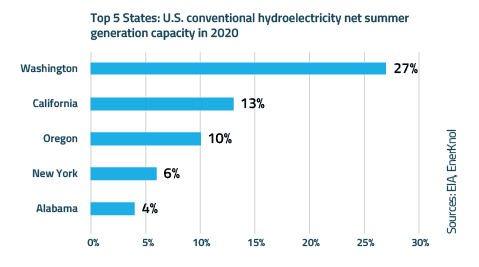
Changing power sector trends driven by mandates and goals to achieve carbon-free electricity have renewed interest in the future role of hydropower. As the target years draw near, large-scale hydropower offers an attractive solution to contribute to the evolving generation mix.

State Policy Playbook: Washington Expedites Measures to Fulfill Clean Energy Policy Agenda

State Policy Playbook: Washington Expedites Measures to Fulfill Clean Energy Policy Agenda

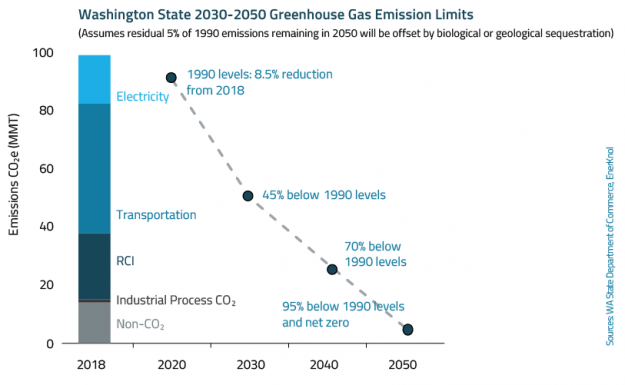
Washington is moving expeditiously to implement rules and strategies as the state seeks to achieve carbon-free electricity by 2045 and reduce emissions to net zero by 2050. The state is advancing multiple measures ranging from resource planning rules to establishing a carbon cap-and-trade program, and strengthening auto-emission standards.

U.S. Court Upholds New England Capacity Market Exemptions For State-Sponsored Renewables

Dominion Launches Solicitation for 1,000 Megawatts of Renewables, Storage

Dominion Energy Inc. on April 29 announced a solicitation seeking proposals to develop up to 1,000 megawatts of utility-scale solar and onshore wind generation facilities and 100 megawatts of energy storage projects in Virginia. The company issues solicitations annually to procure the resources needed to meet the targets of the 2020 Clean Economy Act, which…...

U.S. EPA Reverses Finding That Formed Basis for Obama-Era Power Plant Mercury Rules

Washington Lawmakers Pass Bill to Establish Cap-and-Trade Program

The Washington legislature on April 24 passed legislation aimed to reduce greenhouse gas emissions by implementing an economy-wide cap-and-invest system. Upon enactment, Washington will become the second state – next to California – to have a comprehensive carbon-pricing program. The state would auction carbon allowances starting in 2023, aligned with the 2030, 2040, and 2050…...

Visual Primer: Texas and California Blackouts - Comparison of Regulatory and Legislative Responses

Visual Primer: Texas and California Blackouts – Comparison of Regulatory and Legislative Responses

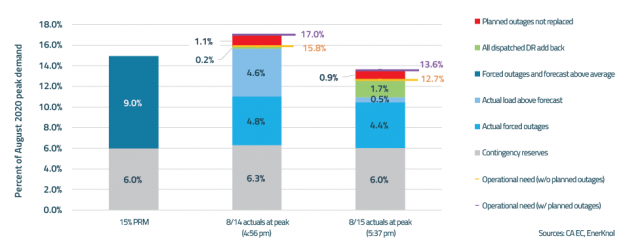
Texas state lawmakers are exploring solutions to address the issues faced during and after the mid-February winter storm event that caused widespread outages across the state. California, which faced a similar predicament due to an unprecedented heatwave in August 2020, albeit smaller in scale and severity, has advanced measures to ensure reliability this summer.

Utility Resource Planning

Policy Primer: Utility Resource Planning

Utility resource planning continues to evolve as state regulators take a holistic approach to evaluate the energy delivery process and strive to provide more transparency in the planning process. Carbon reduction is becoming a key component of integrated resource plans (IRPs) amid the influx of distributed energy resources and new renewable generation under various state programs. IRPs provide an evaluation of utilities’ future electricity needs and potential means to meet the requirements.

Visual Primer: Natural Gas Planning Being Reshaped by Policies Centered on Climate-Focused Energy Future

Visual Primer: Natural Gas Planning Being Reshaped by Policies Centered on Climate-Focused Energy Future

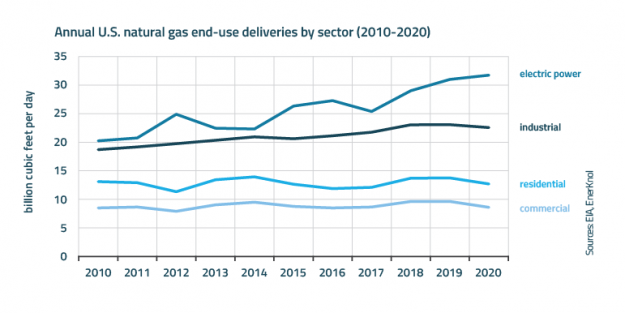
Ongoing state initiatives to transition to a low-carbon future and new actions from the federal level are impacting natural gas utilities’ long-term planning strategies. The challenge for utilities is to adapt to the changing policy landscape, evolving in ways that contribute to decarbonization.

U.S. Court Upholds New England Capacity Market Exemptions For State-Sponsored Renewables

Massachusetts Law Calls for Net Zero Emissions, Raises Offshore Wind Goal

Massachusetts Governor Charlie Baker signed legislation on March 26, which commits the state to achieve net-zero emissions in 2050. The law allows Massachusetts to procure an additional 2.4 gigawatts of offshore wind energy, bringing the state’s total authorization to 4 gigawatts by 2027. The law – An Act Creating a Next-Generation Roadmap for Massachusetts Climate…...