The California Public Utilities Commission on Feb. 10 approved an integrated resource plan to ensure the reliability of the electric grid and reduce greenhouse gas emissions. The agency adopted an emissions reduction goal for the state’s electric sector of 35 million metric tons in 2032, nearly 25 percent lower than the previous target of 46…...
The Minnesota Public Utilities Commission on Feb. 8 approved Xcel Energy Inc.’s 2019 integrated resource plan, which outlines investments between 2020 and 2034. In the approved plan, the utility seeks to acquire or build up to 4,650 megawatts of renewable energy resources by 2032, including solar, wind, and storage. Xcel’s plan is expected to lower…...
The California Independent System Operator Corp. on Feb. 1 released a 20-year transmission outlook that discusses long-term infrastructure requirements to reach the state’s target of generating 100 percent electricity from carbon-neutral sources by 2045. The draft plan is based on the assumption that about 120 gigawatts will have to be added to the grid by…...
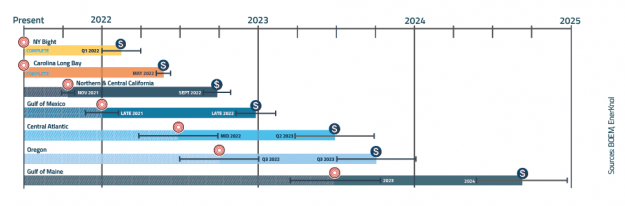
U.S. offshore wind is gaining traction with new milestones spurred by state commitments of almost 40 gigawatts (GW) by 2040 and a federal goal of 30 GW by 2030. Recent developments include state-level project selections that could add more than 3.2 GW of new capacity, New Jersey’s proposal for a novel offshore wind transmission solution, and New York’s move to advance transmission technologies for offshore wind integration.
Federal and state government agencies across the U.S. are advancing climate measures for effective implementation of emissions-reduction strategies to progress towards ambitious goals. Federal actions include an executive order directing the federal government to use its procurement power to achieve net-zero emissions, stronger auto fuel standards, and a methane reduction proposal. Recent state actions range from New York’s plan to implement its landmark climate law to Colorado’s oil and gas emission standards, and a cap-and-invest program in Oregon.
The Connecticut Department of Energy and Environmental Protection on Jan. 6 announced the start of the process to develop the 2022 Comprehensive Energy Strategy (CES) to plan for the effective management of the state’s energy supply, distribution, and demand. The CES is expected to analyse Connecticut’s future energy needs, identify strategies to reduce cost for…...
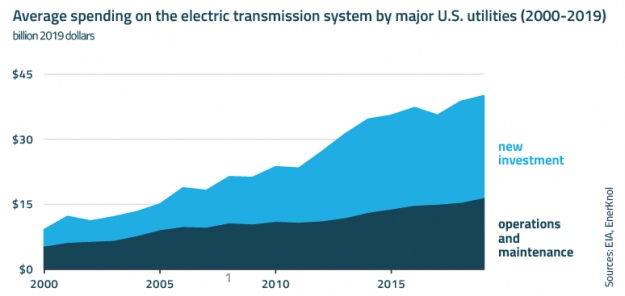
Regulators across the U.S. are accelerating electric transmission projects worth tens of billions of dollars to bring renewable power to consumers and make the grid more resilient against extreme weather events. Infrastructure updates have also garnered bipartisan support on the federal level, with more than $65 billion allocated for clean energy transmission and grid development in the Infrastructure Investment and Jobs Act enacted by the Congress last month.
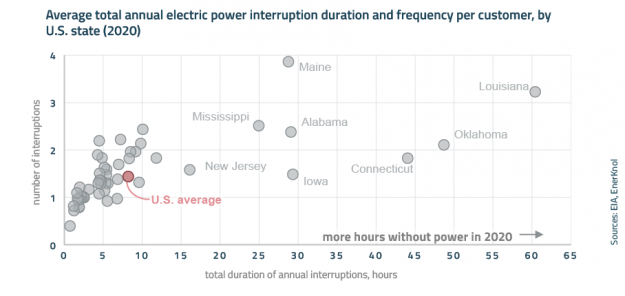
The growing incidence of extreme weather events has triggered regulatory and legislative efforts across the U.S. to improve the reliability and resilience of the energy system. Winter Storm Uri, which caused widespread outages in the South Central U.S. in February, prompted a regulatory upheaval in Texas, which suffered the brunt of the storm, leaving more than 4.5 million people without power. California has adopted measures to ensure reliability in the event of extreme weather in the summers of 2022 and 2023. Federal regulators have approved new cold weather electric reliability standards.
Interest in offshore wind energy has reached new levels driven by supportive federal action, ambitious state procurement targets, and evolving technology. Recent developments include federal approval of the second commercial-scale project, and plans to hold up to seven new lease sales by 2025 in the East Coast, as well as the West and Gulf Coasts. Despite the progress, the industry faces opposition with recent lawsuits challenging the approval of the nation’s first major offshore project, the 800-megawatt (MW) Vineyard Wind I venture, over its potential impact to the fishing industry and endangered species.