Court Cements Energy Storage

EnerKnol’s Visual Primer – Court Cements Energy Storage Access to Wholesale Markets, Expands Opportunities for Growth

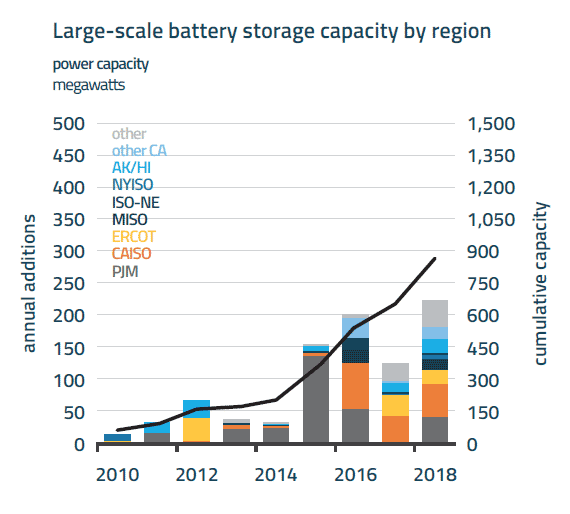
In a major victory for the energy storage industry, a federal court affirmed that battery installations connected to the distribution grid must have the opportunity to access wholesale power markets. The move comes as federal regulators are examining the growing interest in hybrid resources, with battery technology seen as an important tool in integrating other resources to the grid. The affirmation bodes well for expanding wholesale market access to distributed energy resources.

FERC Affirms Storage Market Participation Rule, Declining Requests for State Opt-Outs

Court Upholds FERC Rule to Expand Energy Storage Participation in Wholesale Power Markets

The U.S. Court of Appeals for the District of Columbia Circuit on July 10 upheld the Federal Energy Regulatory Commission’s energy storage order, rejecting arguments that the agency exceeded its jurisdiction by barring states from prohibiting behind-the-meter storage participation in wholesale markets. The commission adopted the landmark Order No. 841 in February 2018, directing grid…...

Electricity Demand Across Most of U.S.

NERC Anticipates Adequate Resources to Meet Summer Electricity Demand Across Most of U.S.

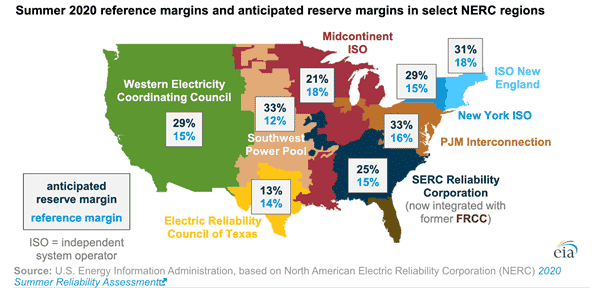
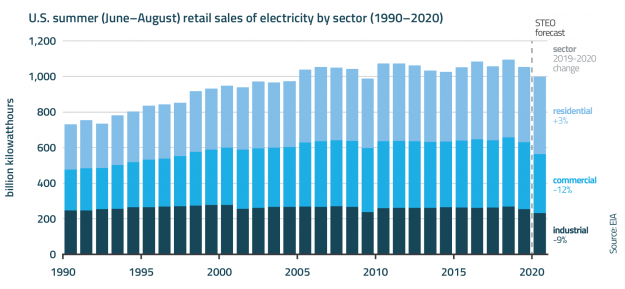
The North American Electric Reliability Corporation anticipates sufficient resources to meet this summer’s projected peak electricity demand in most areas of the U.S. despite the uncertainty caused by efforts to curb the spread of the COVID-19 pandemic, according to a July 7 report from the U.S. Energy Information Administration. The corporation, which oversees regional electric…...

Distributed Solar Faces New Challenge From Petition Seeking Federal Oversight of Net Metering

EnerKnol’s Visual Primer – Distributed Solar Faces New Challenge From Petition Seeking Federal Oversight of Net Metering

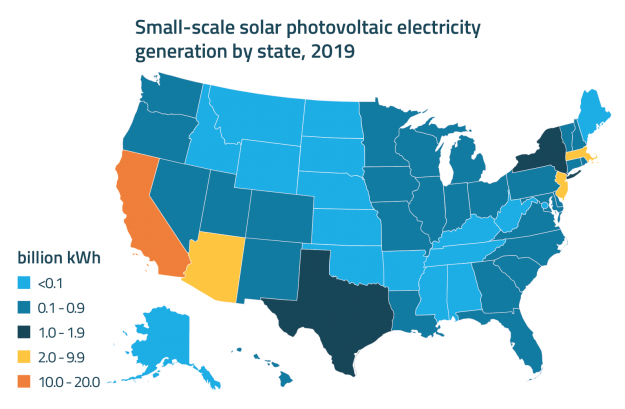
As states continue to reexamine net metering programs in the evolving distributed solar landscape, the industry faces a new challenge: a petition asking federal regulators to exercise jurisdiction over these state-administered programs that compensate behind-the-meter generation for grid-exported energy.

Maryland Regulator Establishes Pilot Program to Implement Multi-Year Utility Rate Plans

Wyoming Regulator Approves New Contract Term for PacifiCorp Under Federal Power Purchase Law

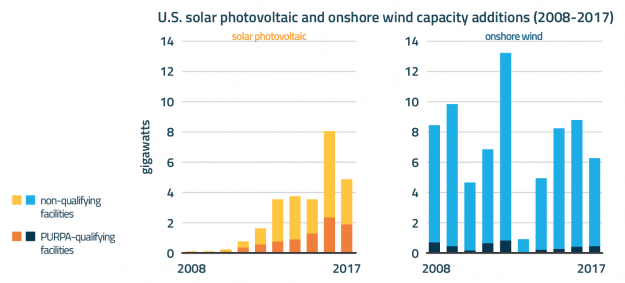
The Wyoming Public Service Commission approved a contract term of 15 years for Rocky Mountain Power’s power purchase contracts with independent electricity generators under the Public Utility Regulatory Policies Act 1978, or PURPA. The commission denied the company’s request to reduce the contract length to seven years, finding that there is no evidence that qualifying…...

Utility Regulators Focus on Assisting Customers, Rekindling Economy as COVID-19 Evolves

EnerKnol’s Visual Primer – Utility Regulators Focus on Assisting Customers, Rekindling Economy as COVID-19 Evolves

As the pandemic continues to unfold, utility regulators across the U.S. are focusing on the core issues of providing relief for the hardest-hit customers and reviving the economy with the help of utility initiatives. To date, several states have extended disconnection moratoriums and implemented customer relief programs, while others are examining how additional spending by the utilities could provide new jobs while minimizing customer bill impacts in the future.

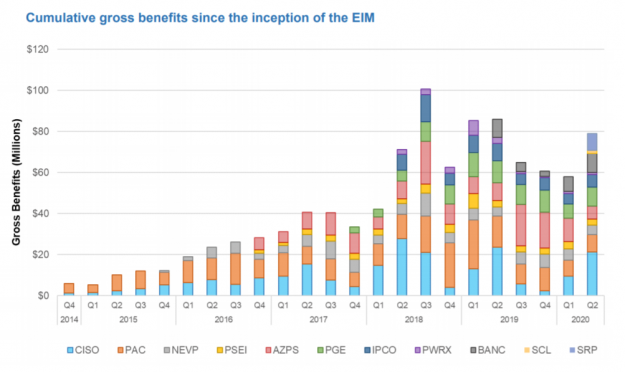
Southwest Power Pool Proposes Rules to Implement Western Power Market

FERC Approves New England Grid Operator’s Fuel Security Plan

The Federal Energy Regulatory Commission on June 18 approved the New England grid operator’s Inventoried Energy Program to compensate resources that provide fuel security during the winters of 2023-2024 and 2024-2025. The commission found that the program is a reasonable short-term solution that will help address winter energy security in light of the misaligned incentives…...

New England Wholesale Electricity Prices Dropped by 40 Percent During 2019-20 Winter

New England Wholesale Electricity Prices Dropped by 40 Percent During 2019-20 Winter: EIA

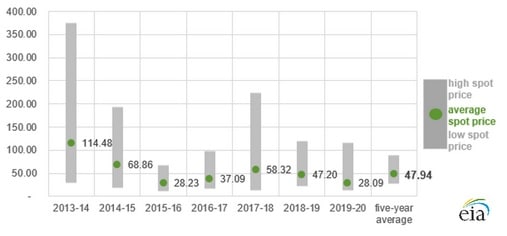
New England’s average wholesale electricity prices dropped by 40 percent to $28 per megawatthour during the 2019-2020 winter from $47 per megawatthour in the previous winter, according to a June 10 report from the U.S. Energy Information Administration. Natural gas-fired generators set the price of electricity more often compared with previous winters because of the…...

Georgia Power’s Fuel Rate Changes Expected to Reduce Annual Billings by $329 Million

New York Grid Operator Anticipates Adequate Resources to Meet Summer Electricity Demand

The New York Independent System Operator Inc. expects to have 41,319 megawatts of power capacity, including in-state generation, imports, and demand response to meet forecasted peak demand this summer, according to a May 28 press release. The grid operator anticipates a peak demand of 32,296 megawatts, which is 86 megawatts lower than the 2019 baseline…...

Midwest Grid Operator Prepared to Meet Summer Electricity Needs

The Midcontinent Independent System Operator Inc. anticipates summer power demand to peak at 125 gigawatts, with 152 gigawatts of available capacity to meet the need, according to an April 29 news release. The grid operator said that impacts to the outage schedule from COVID-19 have been minor and no reliability impacts are foreseen due to…...

States, Environmental Groups Challenge FERC Order on PJM Capacity Market Rules

States, Environmental Groups Challenge FERC Order on PJM Capacity Market Rules

New Jersey and Maryland filed a lawsuit with the D.C. Circuit Court of Appeals, challenging the Federal Energy Regulatory Commission’s order directing PJM Interconnection LLC to extend the minimum offer price rule, or MOPR, to state-subsidized resources, according to an April 27 news release. Several states have criticized the move, citing its potential to harm…...

New England Grid Operator Proposes Market-Based Solution to Energy Security Challenges

EnerKnol’s Visual Primer – New England Grid Operator Proposes Market-Based Solution to Energy Security Challenges

The New England grid operator has proposed a long-term, market-based solution to the region’s energy security problem as the power generation fleet moves towards a mix of energy-limited resources. With the retirement of resources with stored fuel, the system is increasingly reliant on facilities that run on just-in-time natural gas deliveries and weather-dependent wind and solar energy. To address the ensuing challenge, the grid operator proposes to improve the current market structure by creating incentives for the region’s fleet to invest in the energy supply arrangements and technologies on which the region depends.