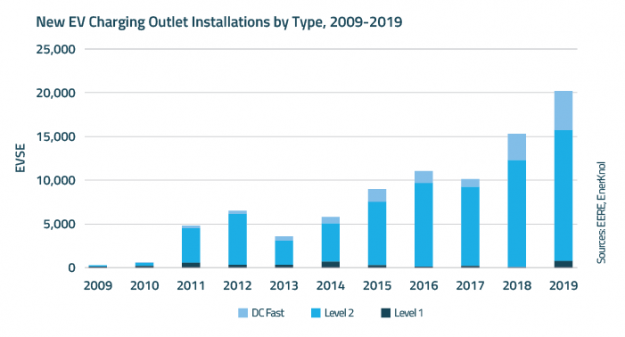
Transportation electrification is gaining momentum across the U.S. as states and utilities continue to implement measures to boost electric vehicle (EV) adoption and expand charging infrastructure. Recent actions range from California’s vehicle-grid integration strategy to Pennsylvania’s rulemaking proposal for a light-duty EV requirement, and a utility-coalition plan for a seamless charging network.
The Federal Energy Regulatory Commission on March 5 announced that it will hold a technical conference in June to discuss the threat posed by climate change and extreme weather events on electric system reliability. The agency announced a proceeding to examine the issue following prolonged power outages across Texas and the south-central U.S. during the…...
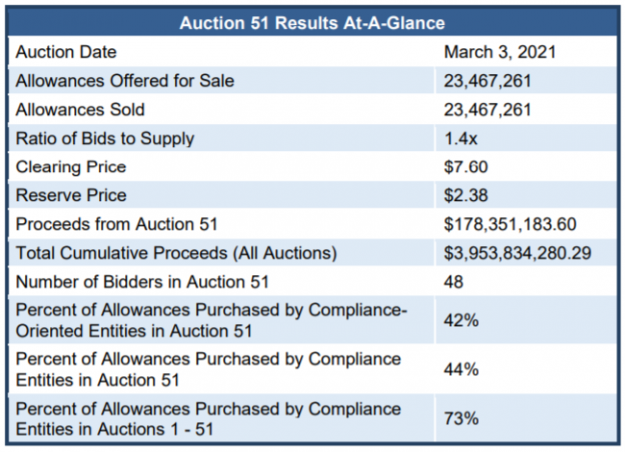
The 51st quarterly carbon auction of the Regional Greenhouse Gas Initiative, or RGGI, the nation’s first market-based program to cut power sector emissions, sold all of the nearly 23.5 million permits offered for sale at a price of $7.60 per allowance, according to the auction results released on March 5. This is the first auction…...
Innovations in energy planning continue to emerge as state regulators devise programs and explore solutions that effectively meet customer needs and support policy goals. Recent state initiatives range from New York’s efforts to align gas planning with climate goals, to Maine’s investigation into the future design of the grid to accommodate growing renewables, and California’s transmission planning guidance to achieve ambitious decarbonization goals.
Net metering policies continue to evolve as state regulators seek to make rate structures more equitable to address cross-subsidy issues arising from the growing penetration of distributed solar generation. Net energy metering (NEM), which credits customer generators for grid-exported power, has been a key component of the policy framework to spur investment in customer-sited renewable energy facilities, including solar and energy storage systems. Successors to original tariffs are considering a range of factors including avoided utility costs, value to the grid, cost-shifting, and energy demand.
The Connecticut Public Utilities Regulatory Authority on Feb. 10 established a residential renewable energy program that will replace current net metering, as well as the residential solar incentive program starting January 1, 2022. The initiative creates tariff options for residential customers to buy products generated from a Class I renewable energy source located on their…...
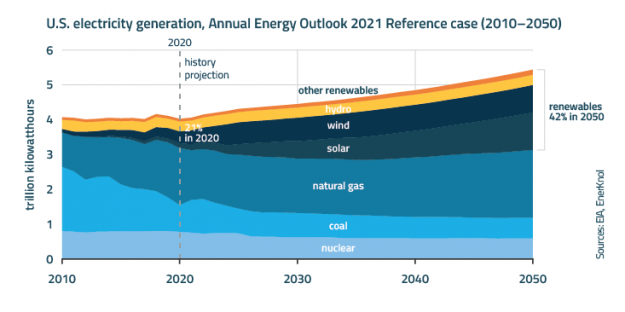
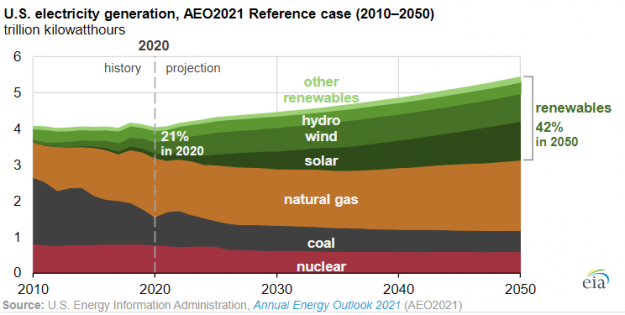
The share of renewables in the U.S. power generation mix is expected to rise from 21 percent in 2020 to 42 percent in 2050, according to the U.S. Energy Information Administration’s 2021 annual outlook. The agency projects that renewable energy, driven by wind and solar power, will surpass natural gas to become the predominant source…...
Delaware Governor John Carney, a Democrat, signed legislation on Feb. 10 which increases the state’s renewable portfolio standard for regulated utilities to 40 percent by 2035, up from the prior target of 25 percent by 2025. The bill also raises the solar carve-out to 10 percent by 2035, nearly tripling the previous level of 3.5…...
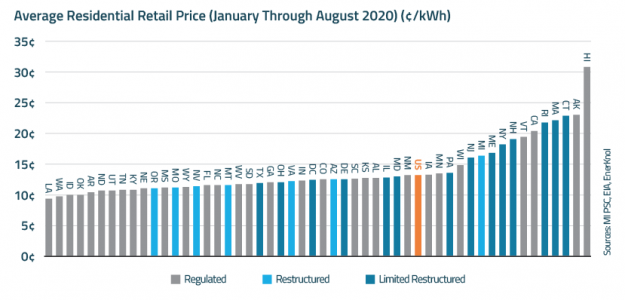
Interest in retail electric competition has been growing as innovative sources of energy production emerge, giving consumers an active role in managing their power supply. This has led to increased oversight as policymakers and regulators explore reforms to enhance customer protections while encouraging the development of a competitive market.
The Michigan Public Service Commission on Feb. 4 established a workgroup to analyze rate design options for distributed energy resources. The commission also adopted a definition for utility pilot projects and criteria for pilot program reviews under the MI Power Grid initiative, the state’s grid modernization effort intended to maximize the benefits of the shift…...
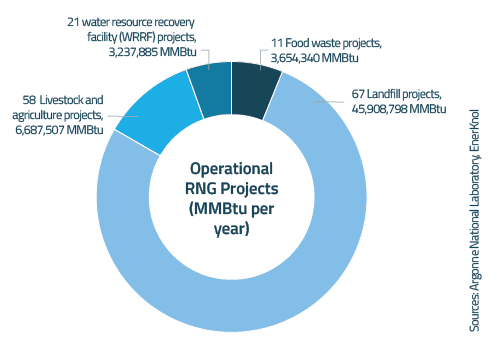
U.S. state regulators and utilities alike are exploring the use of renewable natural gas (RNG) due to its environmental benefits to displace fossil fuels and to support the transition to a low-carbon energy economy. RNG is pipeline-quality methane produced from biomass that is sourced from livestock operations, landfills, and other organic waste.
U.S. President Joe Biden signed an executive order on Jan. 27 that calls for a review of siting and permitting process on public lands and waters to increase renewable energy production with a goal of doubling offshore wind energy by 2030. The order also directs the U.S. Interior Department to pause new oil and gas…...