New Jersey Board Approves Clean Energy Initiatives, Including 3-Gigawatt Community Solar Expansion
Related Research


The EnerKnol Week Ahead is back to give you the key energy policy events happening next week, all powered by the EnerKnol Platform. Coming up, the California Energy Commission discusses its draft 2025 Building Energy Action Plan to support decarbonization of existing buildings; Utah regulators consider requirements for providing electric service to large load customers; and the Maryland Public Service Commission takes action to advance transmission-connected energy storage projects.
California EC
Colorado PUC
EIA
FERC
Maryland PSC
Mississippi PSC
Montana PSC
Utah PSC
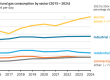
The U.S. Energy Information Administration will issue its Monthly Energy Review, providing data on energy production, consumption, prices, trade, and emissions. Electricity consumption is expected to grow by 1 percent in 2026 and 3 percent in 2027, marking the strongest four-year period of growth since the turn of the century, according to the agency’s latest short term outlook. The forecasted increase in electricity consumption is largely attributed to growing power demand in the commercial and industrial sectors.
The Federal Energy Regulatory Commission will hold scoping sessions to discuss issues and concerns to be considered in the environmental assessment for TC Energy’s proposed Maysville Project, which is designed to supply 340,000 dekatherms per day of natural gas transportation capacity to the East Kentucky Power Cooperative’s Hugh L. Spurlock Power Station. The project consists of 42 miles of new 30-inch-diameter natural gas pipeline in Rowan, Fleming, and Mason counties in Kentucky, with a proposed tie-in to the Columbia Gulf Mainline.
The Mississippi Public Service Commission will host the Energy Workforce & Education Summit, bringing together leaders from education, industry, and workforce development to address the evolving needs of Mississippi’s energy sector and explore strategies for preparing the next generation of skilled workers. The summit will highlight workforce development and collaboration, including a panel of leaders sharing innovative training models.
The New York State Energy Research and Development Authority seeks applications from manufacturers and vendors for the first phase of its new incentive program aimed at expanding the use of advanced clean heating and cooling solutions. The program builds on the success and lessons from the New York City Housing Authority Clean Heat for All Pilot and aims to make plug-and-play retrofit solutions more affordable. The open enrollment opportunity consists of two concurrent phases. Under Phase 1, manufacturers and vendors of packaged window heat pumps that meet a rigorous set of technical and performance criteria can apply to qualify their products through the program. Once qualified, participants may apply under Phase 2, which involves installation and demonstration in multifamily buildings. READ MORE
New York’s electric utilities are required to file a comprehensive managed charging report with the New York Public Service Commission in conjunction with their managed charging implementation plan filings. This report will serve as the basis for a review of the utilities’ light-duty electric vehicle managed charging programs. The utilities had requested the commission to initiate a process to reauthorize the programs beyond the original Dec. 31, 2025 end date until a comprehensive review could be completed. They stated that extending the programs would prevent a pause that could create customer and market uncertainty. READ MORE
The Maryland Public Service Commission seeks comments on the implementation of energy storage-related provisions in the 2025 Next Generation Energy Act. The law requires the commission to issue at least two solicitations for a cumulative 1,600 megawatts of front-of-the-meter, transmission-connected energy storage, with each device having a minimum four-hour duration. The first round was issued on Dec. 24, 2025, with applications due by March 2, 2026. The second 800-megawatt solicitation must be issued by Jan. 1, 2027. Electricity suppliers will be responsible for purchasing storage capacity credits at a monthly fixed price schedule proportional to their capacity obligations. PJM capacity market revenue earned by projects will be transmitted to the commission and held in escrow for distribution to electric companies, in order to be refunded or credited to customers. Electric companies are required to jointly select an escrow administrator in consultation with the commission. Cost recovery shall occur through a non-bypassable surcharge added to base distribution or supply rates. The commission seeks stakeholder comments on the implementation of these requirements.
The Colorado Public Utilities Commission will hold an in-person public comment hearing concerning Xcel Energy’s siting permit appeals for Segment 5 of its “Colorado Power Pathway” transmission project. The system, spanning twelve counties primarily in eastern Colorado, includes approximately 550 miles of new double-circuit transmission line, as well as new substations and equipment additions or expansion of four existing substations. The project represents an investment of approximately $1.7 billion to improve the state’s electric grid and enable future renewable energy development. It is expected to accommodate approximately 5,500 megawatts of new generation that Xcel Energy plans to add through 2030 to meet the state’s growing electricity needs.
The Montana Public Service Commission will hold public meetings to discuss NorthWestern Corporation’s draft 2026 integrated resource plan, IRP, outlining the company’s 20-year strategy to meet customer needs. The IRP examines long-term scenarios, evaluating how changes in fuel prices, environmental rules, technology costs, and electricity demand could shape its resource portfolio. Across the Western Interconnection, electricity demand is projected to rise more than 30 percent by 2035, driven by data centers, electrification, and steady native load growth. The 2026 IRP identifies a near-term capacity need emerging in the winter of 2027, driven by expiring contracts and rising demand. The plan highlights the need to prepare for broader structural changes, including the future of the Colstrip coal plant. Modeling results indicate that keeping Colstrip operating through 2042 remains the lowest-cost and lowest-risk option, though the company notes uncertainty around future EPA mercury and greenhouse gas regulations.
The Utah Public Service Commission will hold a virtual scheduling conference to discuss its rule on large load service requirements and an investigation into Rocky Mountain Power’s line extension policy for large loads. The commission initiated the rulemaking last year to implement Senate Bill 132, which established requirements for providing service to large-scale electric loads, and adopted a new rule effective Jan. 1, 2026. The commission subsequently decided to consider potential amendments after receiving additional stakeholder comments. The commission also announced it is consolidating the rulemaking with an investigatory docket initiated in 2024 regarding the utility’s line extension policy for large loads, finding that the issues involved are closely related and that consolidating the proceedings will best serve the interests of parties and stakeholders. The conference will address the schedule for the investigation and the process for potential rule amendments. 25-R318-01
The California Energy Commission will hold a workshop to discuss the draft 2025 California Building Energy Action Plan, providing a multi-agency perspective on achieving greater decarbonization of existing buildings by improving energy efficiency, reducing overall energy consumption, and supporting strategies such as load flexibility. The commission originally published the California Existing Building Energy Efficiency Action Plan in 2015, and subsequently updated the plan in 2016, 2019, and 2022. The draft 2025 plan addresses statutory requirements established by several legislative measures including SB 350, enacted in 2015, directing the commission to update its existing buildings strategies in furtherance of achieving a doubling of energy efficiency savings by 2030. 23-DECARB-03