U.S. Energy Department Announces $1.9 Billion for Grid Upgrades
Related Research



The EnerKnol Week Ahead is back to give you the key energy policy events happening next week, all powered by the EnerKnol Platform. Coming up, the Federal Energy Regulatory Commission is set to hold the third meeting of the Federal-State Current Issues Collaborative, established to coordinate on topics that impact state and federal regulatory jurisdictions; Washington proposes updates to its Clean Fuel Standard to support emissions reductions in “hard-to-decarbonize” sectors such as aviation and heavy-duty trucking; and Colorado regulators consider changes to gas pipeline safety rules, including the use of advanced leak detection technologies.
California EC
CARB
Colorado PUC
EIA
FERC
New York PSC
Pennsylvania DEP
Washington ECY
The Federal Energy Regulatory Commission will hold the third public meeting of the Federal and State Current Issues Collaborative, established in March 2024, to explore cross-jurisdictional issues relevant to FERC and state utility commissions. The initiative is intended to address a broad range of topics that impact specific state and federal regulatory jurisdictions, including electric reliability, resource adequacy, natural gas-electric coordination, and wholesale and retail markets. The meeting will focus on the role of states in regional transmission organization governance, including resource adequacy.
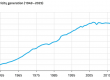
The U.S. Energy Information Administration will issue its Monthly Energy Review, providing data on energy production, consumption, prices, and trade. The U.S. electric power sector is expected to generate 124 billion kilowatthours of electricity from solar energy this summer, an increase of 34 percent from the same period last year. The agency expects solar energy generation to exceed hydropower generation by around 50 percent during this summer. Last summer, solar generation surpassed hydropower for the first time, by 15 percent.
The Pennsylvania Department of Environmental Protection is due to receive comments on a proposed state plan concerning guidelines for greenhouse gas emissions from existing crude oil and natural gas facilities. The proposal follows a 2024 rule issued by the U.S. Environmental Protection Agency, which established presumptive performance standards to limit methane emissions from designated facilities in the crude oil and natural gas source categories that were in operation on or before Dec. 6, 2022. Under the Clean Air Act, states are required to submit plans to the agency to establish, implement, and enforce performance standards for existing sources of designated pollutants for which emission guidelines have been issued.
The New York Public Service Commission seeks comments on a proposal to establish new electric and gas rate plans for Central Hudson Gas & Electric Corporation for three years beginning July 1, 2025. The proposal would result in an increase in revenues for the company’s electric and gas delivery services. For electricity, the proposal would increase annual delivery revenues by approximately $29.7 million in the first year, $31.6 million in the second year, and $34.5 million in the third year. For gas, the proposal would result in increases of $14.5 million, $15.9 million, and $17.5 million in the respective rate years. The proposed revenue requirements reflect a return on equity of 9.5 percent. 24-E-0461
The California Energy Commission will host a workshop to discuss the state of the market for firm zero-carbon resources as a way to support reliability and the potential of hydrogen for the power and transportation sectors. The session will feature panels covering a range of topics including technology development, market trends, and technical analysis. The workshop will inform the development of the 2025 Integrated Energy Policy Report’s chapters on firm zero-carbon technologies and hydrogen. This report is prepared every two years to provide assessments and forecasts of energy supply, production, transportation, delivery and distribution, demand, and prices. 25-IEPR-04
The Colorado Public Utilities Commission is due to receive responses to initial comments on proposed revisions to gas pipeline safety rules. The commission is proposing changes in accordance with legislation enacted in April requiring the use of advanced leak detection technologies and establishing timelines for operators to address identified leaks. The proposed rules place new emphasis on establishing criteria surrounding leak classification, leak survey intervals, repair timelines, and on accountability for meeting these criteria. While continuing to prioritize public safety, the proposed rules acknowledge state law that recognizes improved environmental protection through advanced leak detection and repair. 25R-0280GPS
The California Air Resources Board, along with other state agencies, will hold a public session to gather input on additional actions to advance the adoption of zero emission vehicles across the state. The session will engage stakeholders on strategies related to infrastructure development, incentive design, partnerships, and emissions reductions. The initiative follows a June 2025 executive order issued by Governor Gavin Newsom in response to federal actions threatening California’s Clean Air Act waivers. The order directed CARB, the California Energy Commission, and other agencies to develop and submit policy recommendations to expand light-, medium-, and heavy-duty ZEV adoption statewide.
The Washington Department of Ecology invites comments on proposed updates to the state’s Clean Fuel Standard aimed at reducing transportation sector emissions and incentivizing the production of low-carbon and renewable alternatives. The rulemaking proposal promotes the use of sustainable aviation fuels – low-carbon, non-petroleum alternatives that reduce carbon emissions. The proposal would also strengthen incentives for investing in charging infrastructure for zero-emission heavy-duty trucks. The department is considering additional changes based on lessons from the program’s first two years, best practices used in other states, and feedback gathered during the rule development process. The rulemaking is separate from changes required under House Bill 1409, enacted in May, which strengthened the program to require a 45 percent reduction in the carbon intensity of transportation fuels by 2038, relative to 2017 levels, up from the prior target of 20 percent by 2034. READ MORE