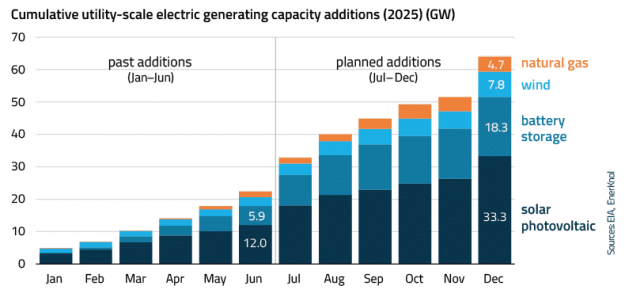
Regulators across the U.S. are advancing new policies to update electric system planning frameworks, strengthen grid reliability and resilience, and better integrate clean energy and emerging technologies.
The U.S. Energy Department on Oct. 16 released its Fusion Science and Technology Roadmap, outlining a national strategy to speed up the transition of fusion energy from research to commercial deployment within the next decade. The plan defines DOE’s Build–Innovate–Grow framework to align public funding with private sector innovation to deliver fusion-generated electricity to the…...
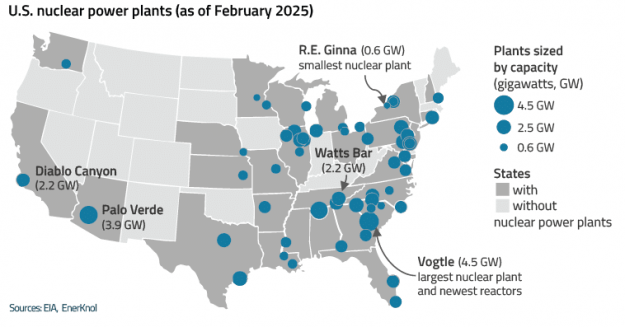
Federal and state actions reflect a concerted effort to maintain the existing nuclear fleet while advancing new reactor and fusion technologies, shaping the pace of nuclear energy deployment.
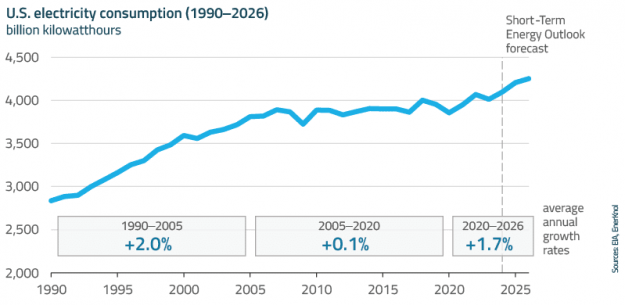
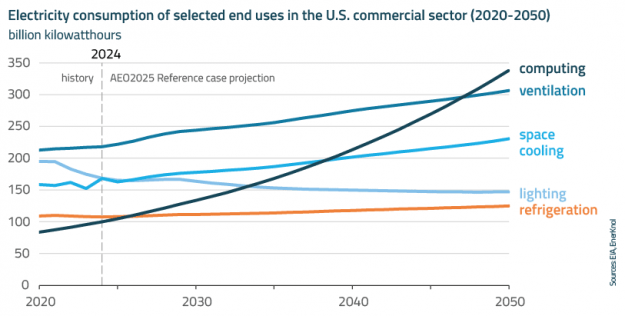
Several U.S. states have enacted or are considering legislation to manage the electricity costs and infrastructure impacts of large-load customers, particularly data centers. These energy-intensive facilities are expected to consume up to 12 percent of total U.S. electricity by 2028, up from 4.4 percent in 2023, according to the U.S. Energy Department.
The U.S. Energy Department on July 16 announced a pilot program to fast-track the expansion of advanced nuclear reactors and support domestic nuclear fuel supply chains. The department issued a request for applications from qualified U.S. businesses to construct and operate nuclear fuel production lines through its authorization process. This initiative aims to cut U.S…....
State regulators are modernizing long-term resource planning frameworks for electric utilities to ensure greater flexibility, transparency, and alignment with evolving technologies, climate goals, and policy priorities. Integrated resource plans (IRPs) provide a structured approach to identify the optimal mix of generation, storage, and demand-side resources needed to deliver reliable and affordable electricity to customers over a long-term planning horizon.
The U.S. is undergoing a broad nuclear energy revival as federal and state actions set the stage for expanding new generation to meet surging electricity demand driven by AI, electrification, and industrial growth. Nuclear power is rapidly gaining prominence as a reliable, dispatchable, zero-emission energy source critical to strengthen grid stability.