Expanding Retail Electricity Market Prompts Tighter Oversight From States

EnerKnol’s Visual Primer – Expanding Retail Electricity Market Prompts Tighter Oversight From States

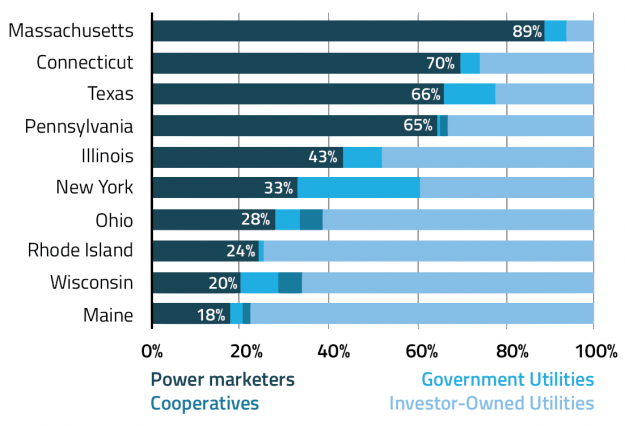
An increasing number of electricity customers are gaining access to the competitive retail market, giving them a broader range of choices in suppliers of electric power. In a bid to ensure a more competitive and transparent market, states are strengthening rules on marketing by suppliers. Among recent actions, New York is examining the status of cybersecurity in the retail access industry, while Maryland is considering enhancements to the competitive market and customer choice framework.
Surging Crude Exports Boost U.S. Role in Global Market

EnerKnol’s Visual Primer – Surging Crude Exports Boost U.S. Role in Global Market

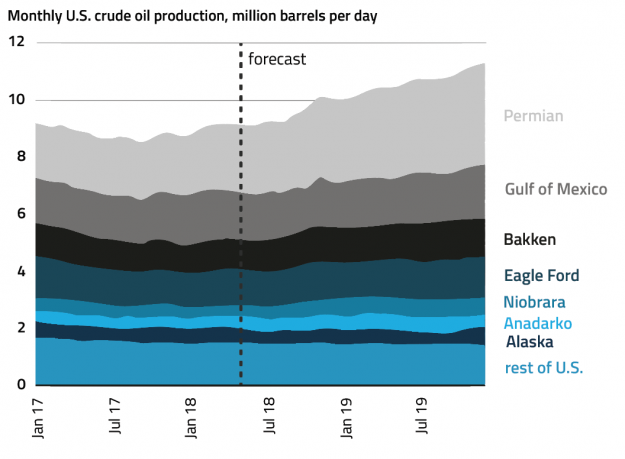
U.S. crude oil exports are growing and reaching an increasing number destinations since the removal of the export ban in December 2015. Exports almost doubled from 2016 to 2017, thanks to growing U.S. production, expansions in pipeline and export infrastructure, and a wider discount of the domestic crude oil prices to international prices. U.S. production surpassed that of Russia in June and August, for the first time since 1999, after beating Saudi Arabia in February. Several pro-oil policies implemented recently by the Trump Administration seek to continue the bullish trend.

California’s 100 Percent Zero-Carbon Goal Hinges on Energy Storage

EnerKnol’s Visual Primer – California’s 100 Percent Zero-Carbon Goal Hinges on Energy Storage

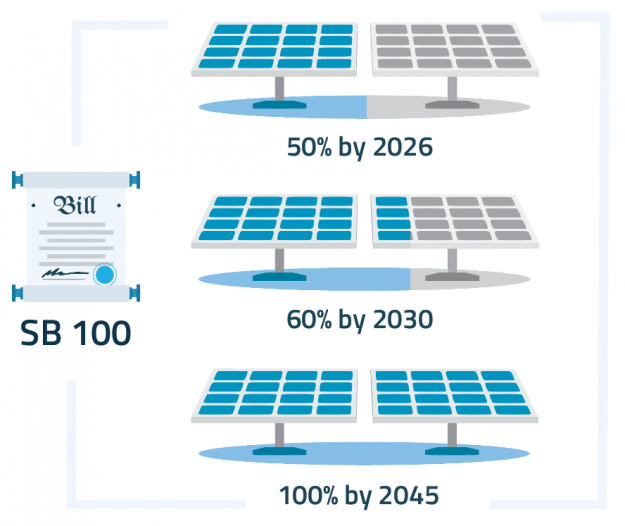
California has enacted legislation that reinforces the state’s clean energy leadership with a goal of procuring 100 percent of the state’s electricity from renewable and zero-carbon resources by 2045. California’s move is historic in that it represents the world’s fifth-largest economy having established a renown in the international climate arena. The Golden State has accelerated the growth of its solar and wind industries but success likely depends on whether storage systems can supplant natural gas that provides about a third of the state’s electricity. Earlier this year, California became the first U.S. state to mandate solar rooftop panels on new homes. To achieve its 2030 goal of five million zero emission vehicles, California recently enacted a law to assess charging infrastructure buildout.

Massachusetts Solar Credit Market Overhaul Signals Predictability, Revenue Certainty

EnerKnol’s Visual Primer – Massachusetts Solar Credit Market Overhaul Signals Predictability, Revenue Certainty

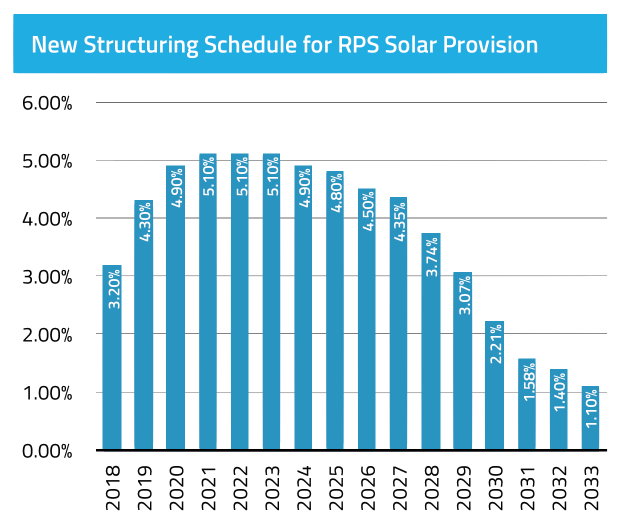
All six states in New England have Renewable Portfolio Standards (RPS) that drive the market for solar renewable energy credits (SRECs). Massachusetts installed 1.6 GW of solar as of December 2017, the most in the New England region, largely thanks to its SREC I and II programs. The state is currently implementing a long-term, sustainable solar incentive called the Solar Massachusetts Renewable Target (SMART) program, replacing the SREC II program set to conclude in 2018.

Illinois Gears up for Gigawatt-Scale Solar Market

EnerKnol’s Visual Primer – Illinois Gears up for Gigawatt-Scale Solar Market

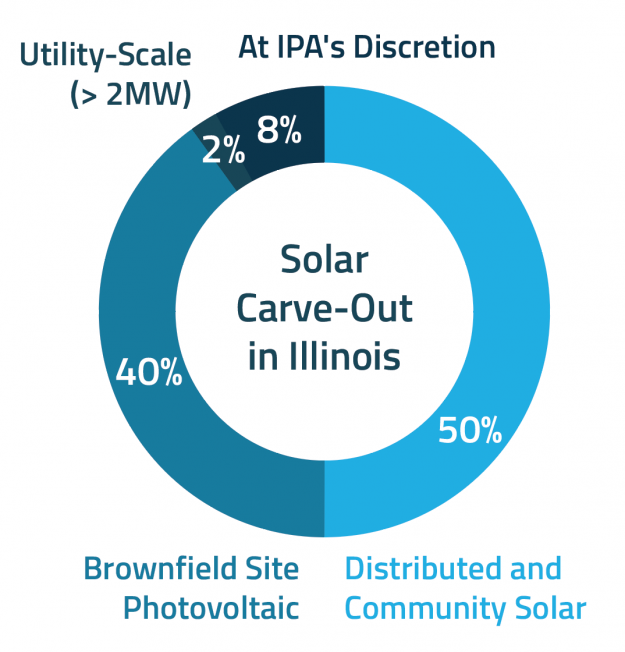
The Illinois Power Agency finalized its first long-term renewable procurement plan, mapping an ambitious path to reach the goal of 25 percent by 2025, following structural changes to the state’s Renewable Portfolio Standard to enable a reliable funding mechanism. The plan lays out a framework for a new adjustable block program, community solar generation, and a low-income solar program, outlining procurement of 666 megawatts of solar.

New England Power Grid Sees No End to Worsening Winter Fuel Shortages

EnerKnol’s Visual Primer – New England Power Grid Sees No End to Worsening Winter Fuel Shortages

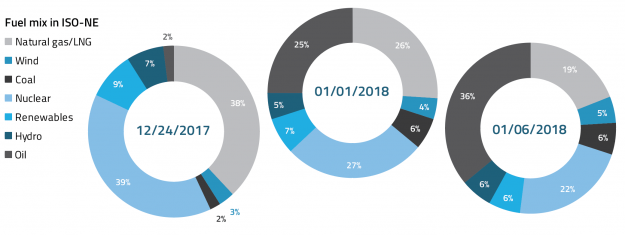
The New England grid operator has identified fuel security as the most pressing issue affecting regional reliability and energy affordability. Growing dependence on natural gas for power generation has been a concern, particularly during winter when natural gas is largely used for heating. The retirement of nuclear, coal, and oil powered plants has pushed the region to rely on costly, carbon-intensive oil-fired units to meet peak demand.

Six Policies Pushing Hawaii Towards 100 Percent Renewables

EnerKnol’s Visual Primer – Six Policies Pushing Hawaii Towards 100 Percent Renewables

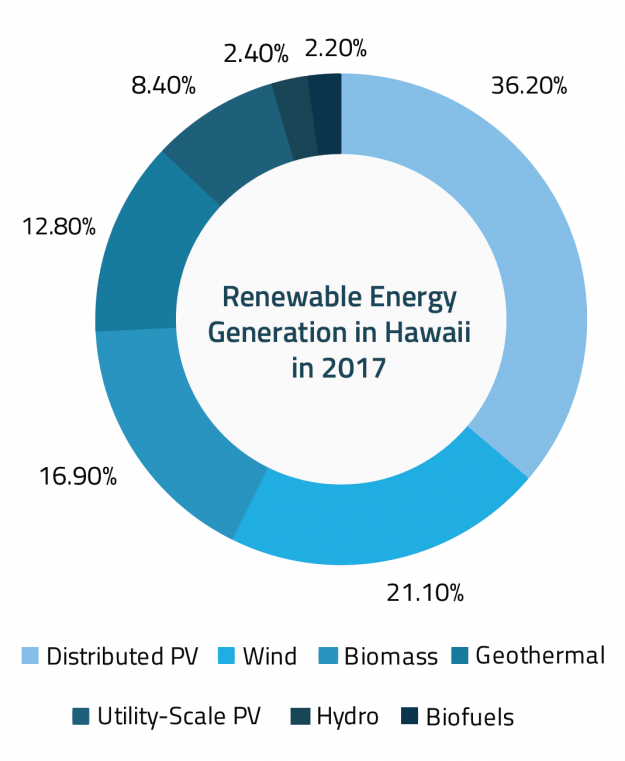
Over the past four months, Hawaii has established performance-based ratemaking, initiated a microgrid tariff proceeding, unveiled a grid planning proposal, and enacted three bills on climate including a framework for carbon credits to fund carbon mitigation projects. The island is also exploring an electric vehicle roadmap.

Eastern States Unleash New Momentum for U.S. Offshore Wind

EnerKnol’s Visual Primer – Eastern States Unleash New Momentum for U.S. Offshore Wind

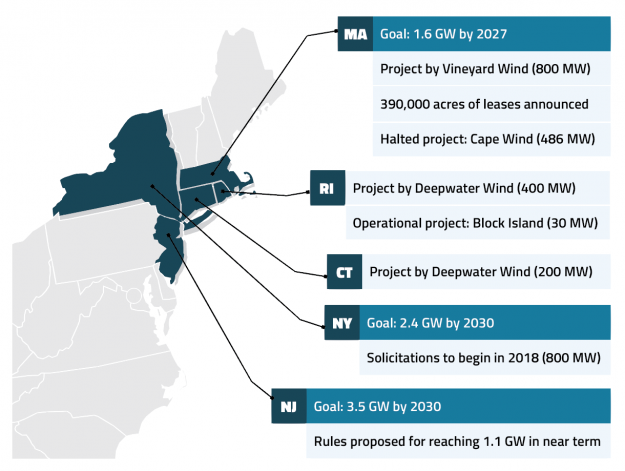
The U.S. offshore wind industry is picking up pace as eastern states are pushing aggressive wind energy procurement goals. Massachusetts, Rhode Island, and Connecticut recently contracted for offshore wind capacity totaling 1.4 gigawatts. New York and New Jersey are making progress towards project solicitations.

New Jersey Solar Credit Market is in for Overhaul under New Incentive Program

EnerKnol’s Visual Primer – New Jersey Solar Credit Market is in for Overhaul under New Incentive Program

New Jersey has enacted legislation expanding the state’s renewable portfolio standard (RPS) to 50 percent by 2030 and phasing out the solar renewable energy certificate (SREC) program by 2021 to establish a new or modified framework to support solar development. The move addresses an impending oversupply of SRECs, providing a near-term boost to keep the solar industry growth while the state crafts a long-term plan.

EnerKnol's Visual Primer - Battery Storage Catching up to Natural Gas as a Peaking Resource

EnerKnol’s Visual Primer – Battery Storage Catching up to Natural Gas as a Peaking Resource

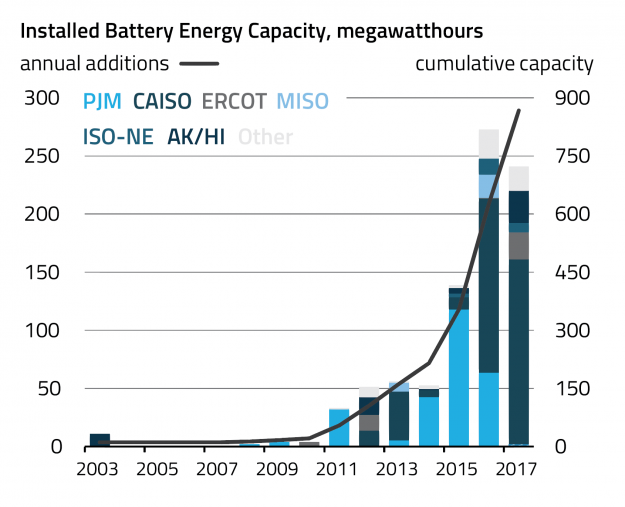
Growing large-scale deployments of energy storage systems, driven by declining costs and evolving technology, has opened an opportunity for these systems to compete with traditional natural gas peaker plants. Standalone storage makes for a resource-agnostic solution that would enable utilities to charge up as required using the available energy mix. As improvements in technology allow battery systems to provide power for longer periods, utilities will benefit as they must manage a growing share of renewables while meeting peak demand.

Utilities Adapt Resource Plans to Reap Economics of Renewables, Storage

EnerKnol’s Visual Primer – Utilities Adapt Resource Plans to Reap Economics of Renewables, Storage

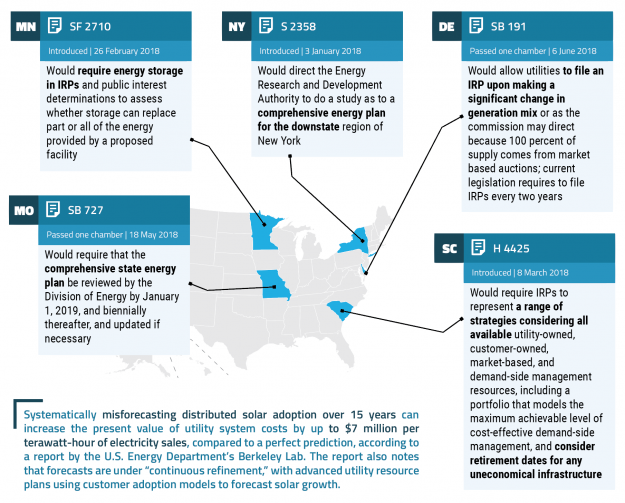
Electric utilities are striving to develop Integrated Resource Plans based on an evaluation of the full range of available supply and demand side options in a changing energy landscape that is becoming more complex and uncertain due to emerging trends. These include intermittent large-scale renewable energy, customer-sited distributed energy resources, energy efficiency, demand response, upgrades to aging infrastructure, and legislative clean energy mandates.

EnerKnol's Visual Primer - Smart Charging Boosts Role of Electric Vehicles in Balancing Evolving Power Grid

EnerKnol’s Visual Primer – Smart Charging Boosts Role of Electric Vehicles in Balancing Evolving Power Grid

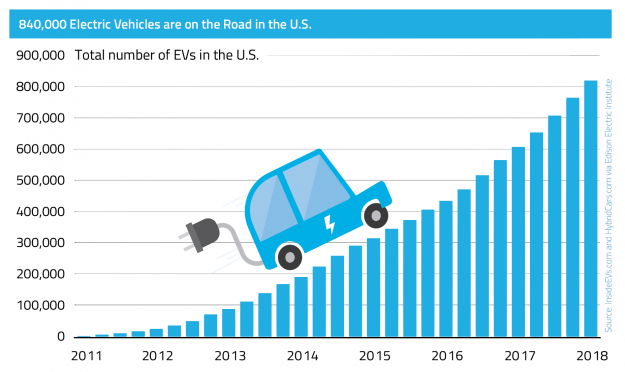
The smart grid evolution has unleashed opportunities for electric vehicles thanks to technologies that allow them to feed power back into the grid. Utilities and grid regulators are eyeing plug-ins as a flexible resource class helping address the intermittency of renewables and reduce peak power demand.