New York to Set Energy Storage Targets by Next Year

EnerKnol’s Visual Primer – New York to Set Energy Storage Targets by Next Year

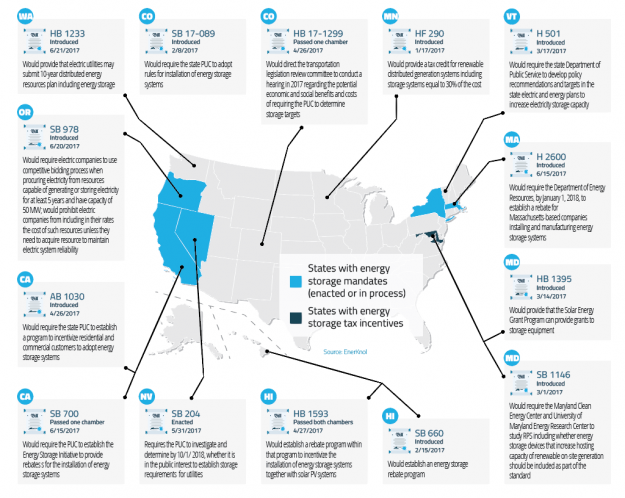
The New York state legislature has passed legislation to establish storage procurement targets through 2030. New York joins a growing list of states discussing energy storage targets and incentives driven by the prolific growth of distributed generation. The legislation will support the state's push towards its 50 percent renewables goal which provides opportunities for a diverse range of storage technologies.
DOE Grid Reliability Study to Examine Impact of Renewables on Baseload Generation

EnerKnol’s Visual Primer – DOE Grid Reliability Study to Examine Impact of Renewables on Baseload Generation

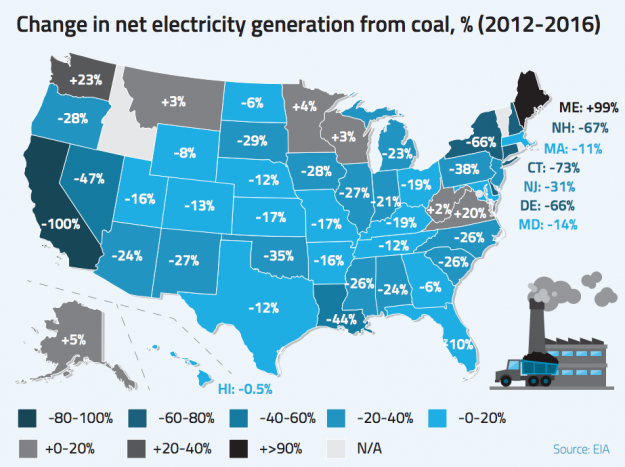
Energy Secretary Rick Perry’s upcoming grid reliability study is examining whether renewables are accelerating coal and nuclear retirements, while the trend is primarily driven by low natural gas prices and slow growth in electricity demand. Renewable energy growth is increasingly driven by costs, as these technologies have matured and attained scale.

Nevada Enacts Multiple Clean Energy Bills Preparing for Deregulation

EnerKnol’s Visual Primer – Nevada Enacts Multiple Clean Energy Bills Preparing for Deregulation

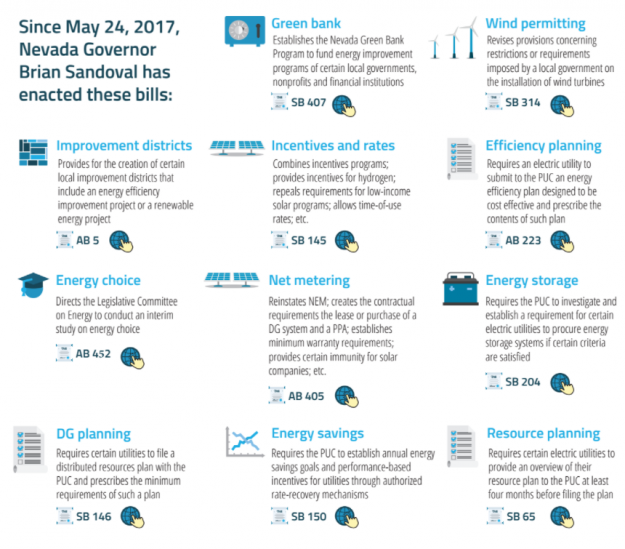
Nevada Governor Brian Sandoval has vetoed legislation that would have increased the state’s renewable portfolio standard (RPS) and created a community solar program. However, he approved a suite of nine clean energy bills, pushing the state policy towards clean energy. The legislation comes in anticipation of energy market restructuring through a ballot measure in 2018.

FERC Warns about Tighter Supplies in New England and Texas for Meeting Summer Demand

EnerKnol’s Visual Primer – FERC Warns about Tighter Supplies in New England and Texas for Meeting Summer Demand

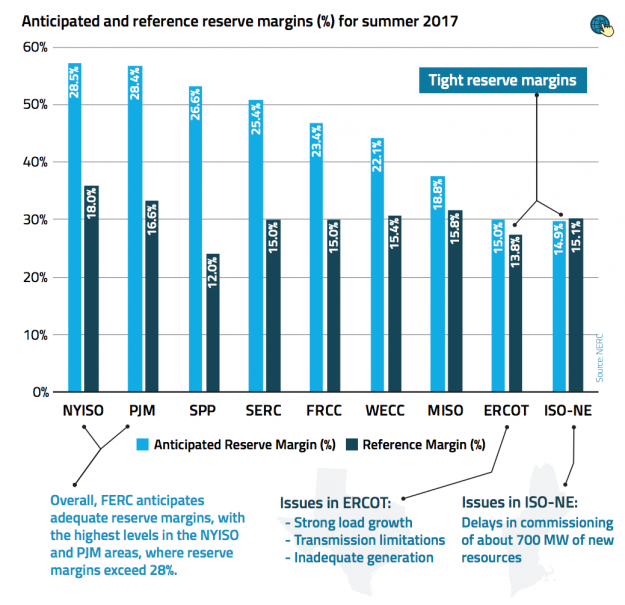
FERC’s 2017 summer assessment forecasts tighter supplies in New England and Texas while anticipating adequate summer capacity in most regions. Increased hydroelectric generation from heavy snowpack levels is expected to mitigate risks from limitations at the Aliso Canyon natural gas storage facility in Southern California. Natural gas futures prices are expected to rise due to lower storage inventories, decrease in production rates, and above normal temperatures.

Carbon Prices in RGGI Auction Slump to Lowest in Over Four Years, Reflecting Need for Reform

EnerKnol’s Visual Primer – Carbon Prices in RGGI Auction Slump to Lowest in Over Four Years, Reflecting Need for Reform

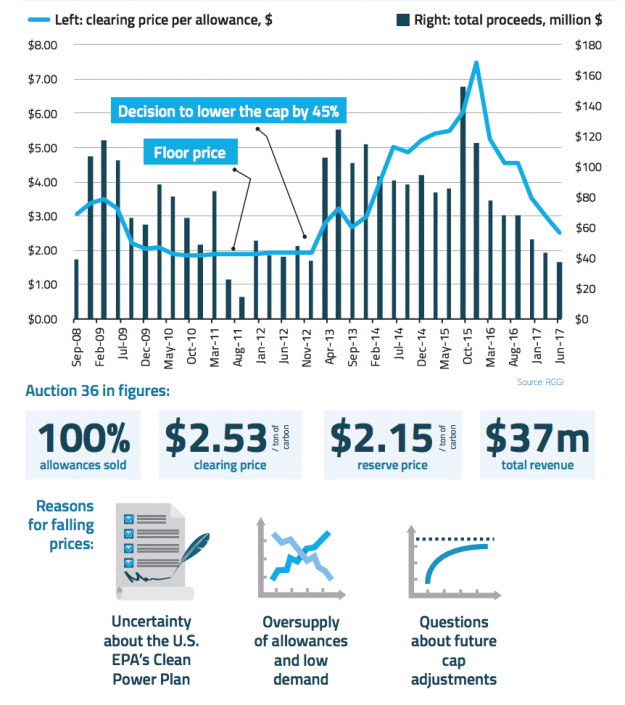
Clearing prices in the June 2017 RGGI auction dropped to their lowest level in over four years, marking a sharp turn from the December 2015 auction which had reached a record high. The decline in prices can be attributed to uncertainty about the RGGI program after 2020 with regard to the future value of emissions allowances, as well as uncertainty over the future of the Environmental Protection Agency's Clean Power Plan. RGGI’s emission cap must extend at least until 2030 to provide certainty for market participants who are bracing for the end of the program currently slated for the end of 2020.

State Legislation Update: 6/2017

EnerKnol’s Visual Primer – State Legislation Update: 6/2017

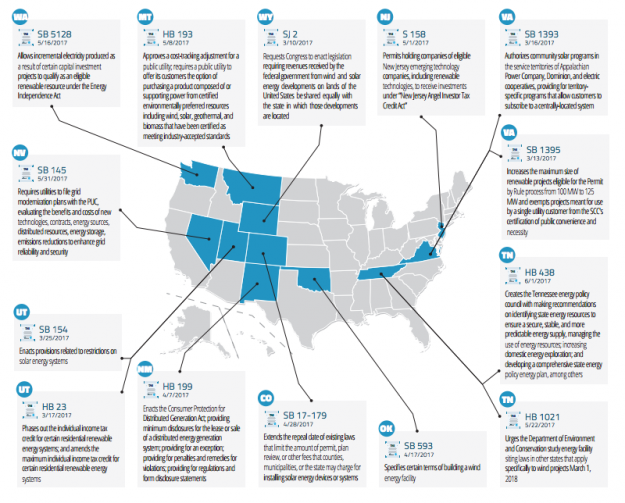
Legislation enacted across states in 2017 calls for greater diversity in power sources—from expanding renewables to supporting nuclear and natural gas infrastructure. However, there is a clear trend showing the intent to prioritize clean energy and climate policy. States in the forefront of grid modernization plans continue to support renewable development while others are following their models as a way to emulate effective policies.

Pennsylvania Joins Other States Exploring Options to Save Nuclear

EnerKnol’s Visual Primer – Pennsylvania Joins Other States Exploring Options to Save Nuclear

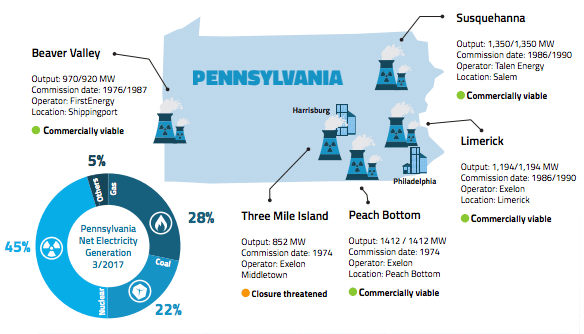
Multiple proposals to preserve and expand nuclear generation have emerged among states willing to do so. These include zero emission credits (ZEC), categorizing nuclear as an alternative or renewable energy source, easing the construction process, and establishing cost recovery mechanisms. A few states, particularly Oregon, Tennessee, and Washington have passed policies to foster small modular reactors. New York and Illinois, which have established ZEC programs, have sparked a national debate over the premature closure of their nuclear plants due to their inability to compete in wholesale markets.

Prices Fall in PJM's 100-Percent Capacity Resource Auction

EnerKnol’s Visual Primer – Prices Fall in PJM’s 100-Percent Capacity Resource Auction

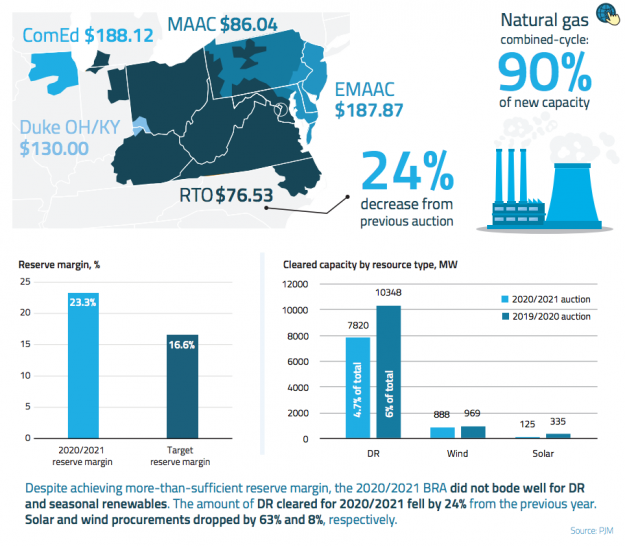
PJM’s 2017 capacity auction – the first one to apply the 100-percent Capacity Performance requirement – yielded a clearing price of $76.53/megawatt-day in most of PJM, about 24 percent lower than last year. Cleared capacity of seasonal resources like demand response, solar, and wind fell largely due to the new year-round performance requirement. Lower prices are attributed largely to lower natural-gas prices, lower demand forecasts, and new combined-cycle natural gas units clearing capacity in the auction.