Alternative energy

State Legislation Update: 6/2017

EnerKnol’s Visual Primer – State Legislation Update: 6/2017

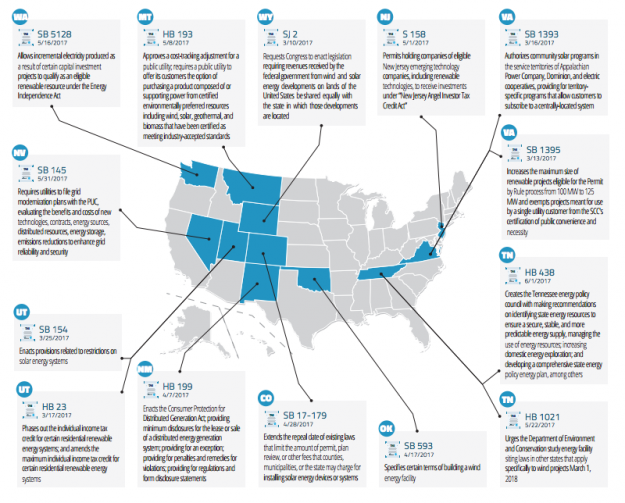
Legislation enacted across states in 2017 calls for greater diversity in power sources—from expanding renewables to supporting nuclear and natural gas infrastructure. However, there is a clear trend showing the intent to prioritize clean energy and climate policy. States in the forefront of grid modernization plans continue to support renewable development while others are following their models as a way to emulate effective policies.
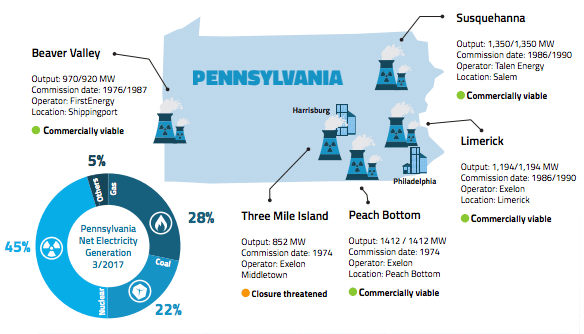
Pennsylvania Joins Other States Exploring Options to Save Nuclear

Multiple proposals to preserve and expand nuclear generation have emerged among states willing to do so. These include zero emission credits (ZEC), categorizing nuclear as an alternative or renewable energy source, easing the construction process, and establishing cost recovery mechanisms. A few states, particularly Oregon, Tennessee, and Washington have passed policies to foster small modular reactors. New York and Illinois, which have established ZEC programs, have sparked a national debate over the premature closure of their nuclear plants due to their inability to compete in wholesale markets.

This content requires that you purchase additional access. The price is $99.00.

Click here to checkout

Pennsylvania Joins Other States Exploring Options to Save Nuclear

EnerKnol’s Visual Primer – Pennsylvania Joins Other States Exploring Options to Save Nuclear

Multiple proposals to preserve and expand nuclear generation have emerged among states willing to do so. These include zero emission credits (ZEC), categorizing nuclear as an alternative or renewable energy source, easing the construction process, and establishing cost recovery mechanisms. A few states, particularly Oregon, Tennessee, and Washington have passed policies to foster small modular reactors. New York and Illinois, which have established ZEC programs, have sparked a national debate over the premature closure of their nuclear plants due to their inability to compete in wholesale markets.

Maryland Paves the Way for Large-Scale Offshore Wind Projects

The Maryland Public Service Commission has awarded offshore wind renewable energy credits to advance two large-scale offshore projects with a combined capacity of 368 MW, potentially outdoing the capacity of the 30 MW Block Island, the only operational offshore wind facility in the U.S. The extension of the wind PTC and the successful completion of the Block Island project have spurred more companies and states to increase their focus on offshore wind development. State policy shifts to advance offshore wind projects will likely provide the much-needed impetus for the U.S. offshore wind industry, which has been plagued by regulatory uncertainty, permitting hurdles, high infrastructure costs, and public resistance.

This content requires that you purchase additional access. The price is $99.00.

Click here to checkout

EnerKnol’s Visual Primer – Maryland Paves the Way for Large-Scale Offshore Wind Projects

The Maryland Public Service Commission has awarded offshore wind renewable energy credits to advance two large-scale offshore projects with a combined capacity of 368 MW, potentially outdoing the capacity of the 30 MW Block Island, the only operational offshore wind facility in the U.S. The extension of the wind PTC and the successful completion of the Block Island project have spurred more companies and states to increase their focus on offshore wind development. State policy shifts to advance offshore wind projects will likely provide the much-needed impetus for the U.S. offshore wind industry, which has been plagued by regulatory uncertainty, permitting hurdles, high infrastructure costs, and public resistance.

Virginia’s Legislative Package and Dominion’s IRP Reflect New Role for Clean Energy

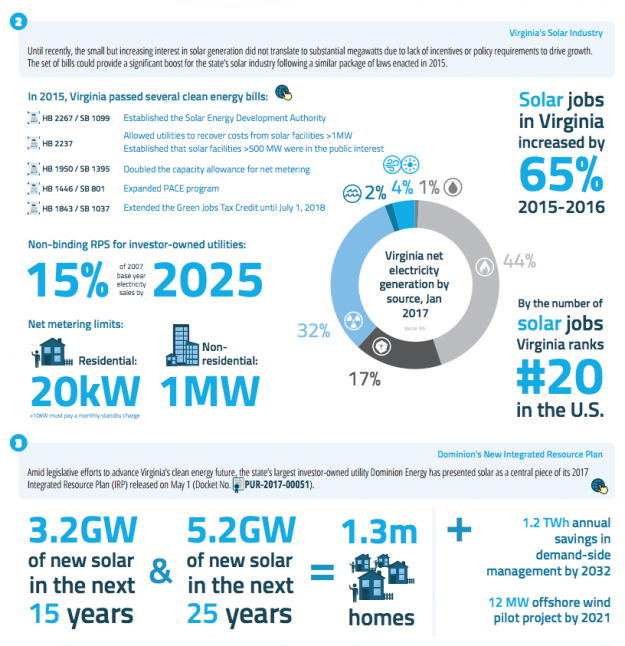
Virginia has enacted a suite of clean energy bills that will help expand renewable energy and energy efficiency across the state. The legislation increases opportunities for community solar, pumped storage, battery technologies, and green development zones, bringing a remarkable turn in a state that has generally lingered over clean energy development. Amid legislative efforts to advance Virginia’s clean energy future, the state’s largest utility Dominion Energy also presented solar as a central piece of its 2017 Integrated Resource Plan. The new legislative package and the underlying market developments set Virginia up for a sustainable energy policy that supports economic development.

This content requires that you purchase additional access. The price is $99.00.

Click here to checkout

Virginia's Legislative Package and Dominion's IRP Reflect New Role for Clean Energy

EnerKnol’s Visual Primer – Virginia’s Legislative Package and Dominion’s IRP Reflect New Role for Clean Energy

Virginia has enacted a suite of clean energy bills that will help expand renewable energy and energy efficiency across the state. The legislation increases opportunities for community solar, pumped storage, battery technologies, and green development zones, bringing a remarkable turn in a state that has generally lingered over clean energy development. Amid legislative efforts to advance Virginia’s clean energy future, the state’s largest utility Dominion Energy also presented solar as a central piece of its 2017 Integrated Resource Plan. The new legislative package and the underlying market developments set Virginia up for a sustainable energy policy that supports economic development.

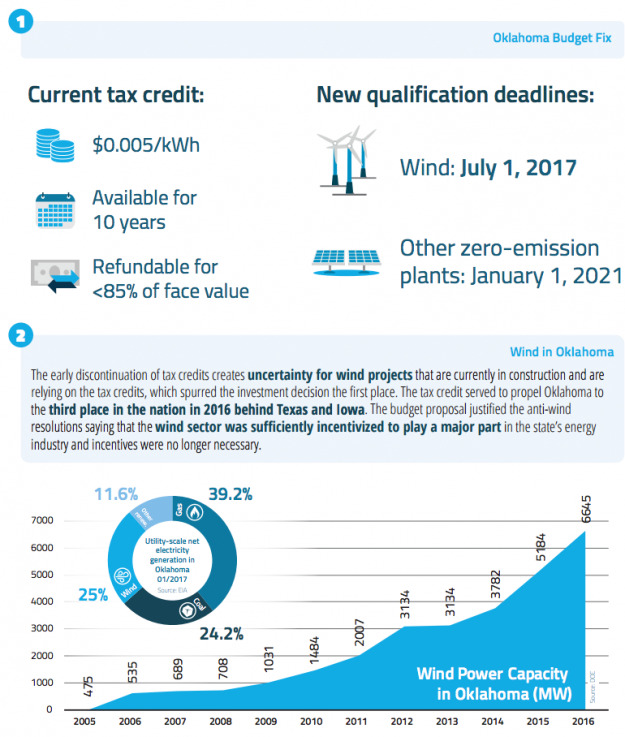
Early Ending of Tax Credits Casts Uncertainty over Oklahoma Wind Industry

Oklahoma has enacted legislation ending the state’s wind energy tax credits on July 1, 2017, more than three years ahead of the original schedule to help close a budget deficit. The early sunset of tax credits is unlikely to impact the budget outlook in the near term, but creates uncertainty for wind projects under construction. Addressing the state’s recurring budget deficits require a comprehensive economic plan and a long-term strategy to draw new investment and align revenues.

This content requires that you purchase additional access. The price is $99.00.

Click here to checkout

Early Ending of Tax Credits Casts Uncertainty over Oklahoma Wind Industry

EnerKnol’s Visual Primer – Early Ending of Tax Credits Casts Uncertainty over Oklahoma Wind Industry

Oklahoma has enacted legislation ending the state’s wind energy tax credits on July 1, 2017, more than three years ahead of the original schedule to help close a budget deficit. The early sunset of tax credits is unlikely to impact the budget outlook in the near term, but creates uncertainty for wind projects under construction. Addressing the state’s recurring budget deficits require a comprehensive economic plan and a long-term strategy to draw new investment and align revenues.

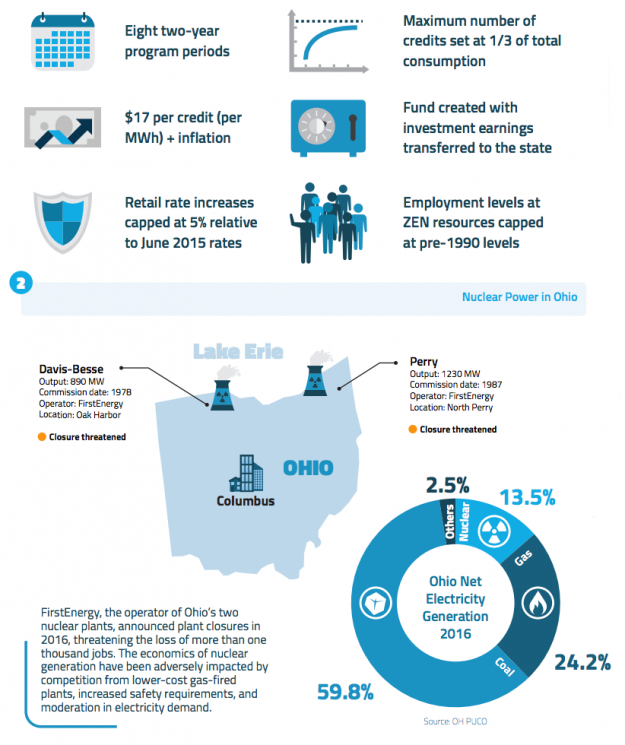
New Ohio Bill Adds to Nationwide Nuclear Subsidy Debate

Ohio SB 128 would create a zero-emissions nuclear resource program to subsidize the state’s nuclear plants for providing fuel diversity and environmental benefits. The proposal is similar to programs in New York and Illinois which are facing lawsuits for discriminating specific generating units and infringing on the Federal Energy Regulatory Commission’s authority over interstate electricity markets, underscoring the need for market-based solutions to drive the nuclear industry in future.

This content requires that you purchase additional access. The price is $99.00.

Click here to checkout

New Ohio Bill Adds to Nationwide Nuclear Subsidy Debate

EnerKnol’s Visual Primer – New Ohio Bill Adds to Nationwide Nuclear Subsidy Debate

Ohio SB 128 would create a zero-emissions nuclear resource program to subsidize the state’s nuclear plants for providing fuel diversity and environmental benefits. The proposal is similar to programs in New York and Illinois which are facing lawsuits for discriminating specific generating units and infringing on the Federal Energy Regulatory Commission’s authority over interstate electricity markets, underscoring the need for market-based solutions to drive the nuclear industry in future.

New York Begins Transition from Net Metering to Value-Based Compensation for DER

The New York State Public Service Commission has issued an order adopting a new Value Stack pricing mechanism to compensate distributed energy resources in a more accurate and granular manner. The order marks an important first step in moving beyond net metering to a compensation structure that considers location and environmental benefits that were previously not quantified.

This content requires that you purchase additional access. The price is $99.00.

Click here to checkout