California Commission Approves Nearly $6.9 Billion Revenue Requirement for SCE

Texas Regulator Advances Streamlined Broker Registration Process

The Public Utility Commission of Texas has voted to approve forms that will be used for electric broker registration, the first step in implementing Senate Bill 1497, which sets new rules for brokerage services in the state. New rules for broker registration empower the commission to hold brokers accountable with its customer protection provisions, disclosure requirements…

Southwest Power Pool Proposes Rules to Implement Western Power Market

Maryland Commission Paves Way for Multi-Year Rate Plans Tied to Performance-Based Goals

The Maryland Public Service Commission on Aug. 9 issued a decision to convene a working group tasked with developing a procedure for implementing a multi-year rate plan, an alternative rate-setting process that would extend utilities’ approved rates for up to three years. Multi-year plans can combine the stability of traditional ratemaking while allowing adjustments that…

Maine Governor Signs Bill Forming Post to Investigate Alternatives to Building Power Lines

Michigan Electricity Providers Pass Regulator Demand Test for 2022-2023

The Michigan Public Service Commission has concluded that electric providers in the state have demonstrated that they have adequate electricity supplies to meet the needs of their customers for the 2022-23 planning year, according to an August 8 press release. The annual review by the regulator aims to ensure long-term reliability by verifying electric providers’ energy supply arrangements.…

U.S. Energy Department Explores Use of Storage Technologies to Enhance Performance of Fossil-Fueled Power Plants

California Commission Incorporates GHG Metrics into Battery Incentive Program

The California Public Utilities Commission on Aug. 9 adopted reforms requiring eligible energy storage systems under the Self-Generation Incentive Program, or SGIP, to reduce greenhouse gas emissions. The changes call for a digitally accessible “GHG signal” that provides storage developers and customers with the information needed to charge during low- emission periods and discharge during…

Power Plant 9 8 2019

New England Fuel Security Plan to Take Effect as FERC Lacks Quorum

The ISO New England Inc.’s short-term program to compensate resources for maintaining inventoried energy during winters 2023/2024 and 2024/2025 became effective by operation of law because the Federal Energy Regulatory Commission lacked a quorum to act on the proposed reforms before the statutory deadline, according to an Aug. 6 notice. A resource is eligible to…

Solar Panels Wind Turbine 8 9 2019

New York Regulator Launches Resource Adequacy Review to Align With Clean Energy Goals

The New York Public Service Commission on Aug. 8 opened a proceeding to examine options to align the state’s resource adequacy programs with renewable energy and emissions reduction goals, while ensuring safe and adequate service at just and reasonable rates. New York enacted legislation last month, which requires a carbon-neutral power system by 2040 and…

Blog preview 2018 07 24111121

New Jersey Regulator Unveils Method to Determine Progress Toward Milestone for Solar Program Phase-Out

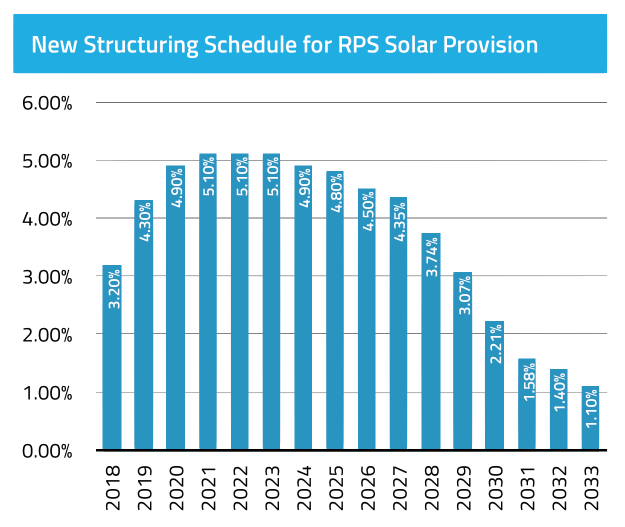
The New Jersey Board of Public Utilities on Aug. 8 proposed to amend the registration process for the Solar Renewable Energy Certificate, or SREC, program by including a step to determine when electricity sales from distributed solar reaches 5.1 percent, the threshold set by legislation enacted last year to phase out the program. The law…

SWEPCO Wins Arkansas Approval to Acquire 800 Megawatts of Wind Power

North Dakota Regulator Endorses Xcel’s 150-Megawatt Wind Power Contract With Condition to Return REC Benefits to Customers

The North Dakota Public Service Commission on Aug. 5 conditionally granted Northern States Power Company’s request for a determination of prudence for its contract to buy 151 megawatts of wind-generated power from Dakota Range III LLP. The agency ordered that customers should receive financial compensation for the renewable energy certificates, or RECs, associated with the…

New Jersey Examines Resource Adequacy Alternatives to Advance Clean Energy Goals

North Carolina Regulator Clears Duke Energy’s 600-Megawatt Renewable Program for Large Users

The North Carolina Utilities Commission on Aug. 5 approved tariff revisions filed by Duke  Energy Carolinas LLC and Duke Energy Progress LLC to implement the Green Source Advantage Program, which allows for the direct procurement of new renewable energy resources by large nonresidential customers. The commission approved the program with changes in February and directed…

West Virginia Regulator Orders Cost Adjustments Slashing Gas Bills For 95 Percent of Customers

West Virginia Regulator Expects Lower Utility Bills for 90 Percent of Natural Gas Customers

The West Virginia Public  Service Commission expects lower gas utility bills for the upcoming heating season, based on an initial review of utilities’ annual adjustments to the purchased gas portion of their rates, according to an Aug. 5 press release. Utilities that serve over 91 percent of the natural gas customers in the state have…

Coal Plant 8 7 2019

Virginia Regulator Partly Approves Dominion’s Rate Rider to Fund Environmental Projects

The Virginia State Corporation Commission on Aug. 5 granted Dominion Energy Inc.’s request for a new rate adjustment clause to recover a portion of the costs incurred to comply with state and federal environmental regulations. The agency approved cost recovery for certain environmental projects, including cleaner disposal of coal ash, at Dominion’s coal-fired power plants.…

Blog preview 2019 08 06

EnerKnol’s Visual Primer – Offshore Wind Farms Spin Up as States Double Commitments

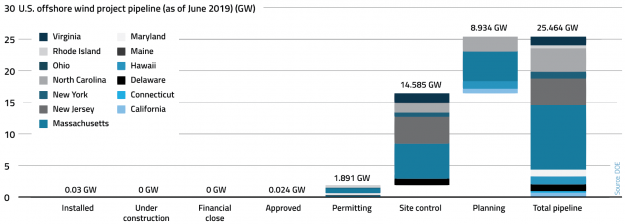
Competition among U.S. states eager to take the lead in the nation's still nascent offshore wind sector is fueling growth and bringing the industry to new highs. Turning these goals into reality will be no small feat, as the targets are several hundred times the current installed capacity. Still, this hasn’t dissuaded states from doubling down on offshore wind commitments.