The Electric Reliability Council of Texas Inc. on March 12 held an urgent Board of Directors meeting in which invoice payouts for market participants and settlements across Feb. 19 – March 8 were divulged. From Feb. 13 – 19, the state of Texas was plagued with near-unprecedented grid infrastructure failures due to extreme winter weather…....
The California Public Utilities Commission on March 5 released a proposal detailing utility programs to manage energy supply during peak hours so as to ensure reliability in the event of extreme heat in the summers of 2021 and 2022. The proposal is the latest in a series of actions under a proceeding that was opened…...
The Missouri Public Service Commission on Feb. 25 opened an investigation into the state’s electric and natural gas utilities’ preparedness and response to the mid-February winter storm that resulted in rolling blackouts and natural gas price spikes. The commission’s Regulatory Analysis and Customer Experience Departments, in collaboration with agencies within its Industry Analysis and Financial…...
The widespread power outages across Texas during the extreme winter weather conditions brought about by a polar vortex in mid-February has raised questions about the reliability of the power grid operated by the Electric Reliability Council of Texas Inc. (ERCOT). The grid operator, which manages about 90 percent of the state’s electric load, reported that 48.6 percent of generation was forced out at the highest point due to the winter storm.
The Texas Public Utilities Commission on Feb. 24 launched an investigation into retail electric suppliers’ business practices following complaints of skyrocketing bills for plans with pricing indexed to the wholesale rate in the aftermath of sweeping power outages caused by extreme winter weather conditions. Although indexed plans are allowed under law, an influx of complaints…...
Innovations in energy planning continue to emerge as state regulators devise programs and explore solutions that effectively meet customer needs and support policy goals. Recent state initiatives range from New York’s efforts to align gas planning with climate goals, to Maine’s investigation into the future design of the grid to accommodate growing renewables, and California’s transmission planning guidance to achieve ambitious decarbonization goals.
Net metering policies continue to evolve as state regulators seek to make rate structures more equitable to address cross-subsidy issues arising from the growing penetration of distributed solar generation. Net energy metering (NEM), which credits customer generators for grid-exported power, has been a key component of the policy framework to spur investment in customer-sited renewable energy facilities, including solar and energy storage systems. Successors to original tariffs are considering a range of factors including avoided utility costs, value to the grid, cost-shifting, and energy demand.
Interest in retail electric competition has been growing as innovative sources of energy production emerge, giving consumers an active role in managing their power supply. This has led to increased oversight as policymakers and regulators explore reforms to enhance customer protections while encouraging the development of a competitive market.
The Michigan Public Service Commission on Feb. 4 established a workgroup to analyze rate design options for distributed energy resources. The commission also adopted a definition for utility pilot projects and criteria for pilot program reviews under the MI Power Grid initiative, the state’s grid modernization effort intended to maximize the benefits of the shift…...
Energy storage initiatives are moving forward at a swift pace to complement clean energy policies as batteries can facilitate the integration of diverse generation technologies and address grid stability. With improving economics, there is a growing discussion on the role of energy storage as a grid asset to foster reliability and optimize renewables to meet ambitious clean energy goals.
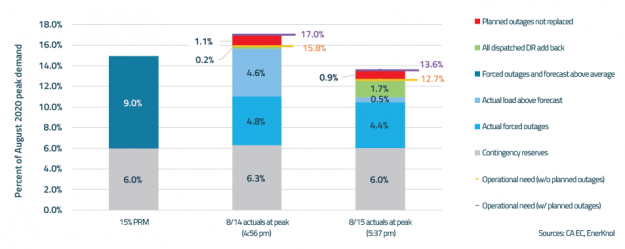
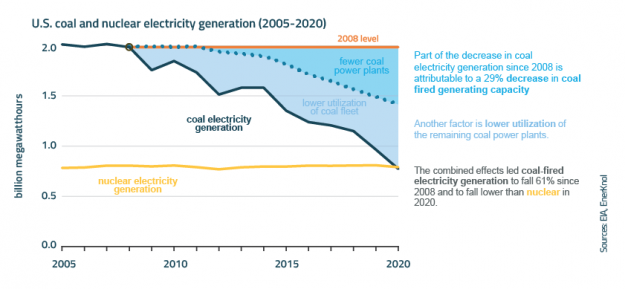
Several states are rethinking the resource adequacy paradigm as the electric resource mix changes through the addition of more intermittent resources to replace retiring coal-fired capacity and meet state decarbonization goals. Resource adequacy initiatives are intended to ensure that the planned resource mix is sufficient to meet the future system capacity needs and maintain grid reliability.
The Oregon Public Utility Commission opened an investigation into resource adequacy in the state to address the growing concerns over the level of capacity in the region, according to a Jan. 7 notice. Reports and studies from various organizations including Northwest Power and Conservation Council, Energy+Environmental Economics(E3), Pacific Northwest Utilities Conference Committee, and the California…...