U.S. Energy Related Emissions

U.S. Energy-Related Emissions Rise After Four Years Amid Higher Natural Gas, Petroleum Use: EIA

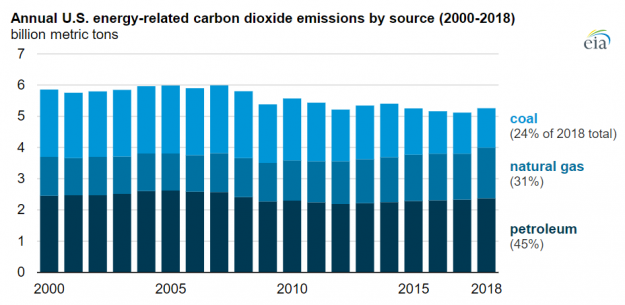
U.S. energy sector carbon emissions rose by 2.7 percent last year compared to 2017, reaching 5.27 billion metric tons, according to a Nov. 26 report from the U.S. Energy Information Administration. Emissions in 2018 rose for the first time since 2014, driven by higher natural consumption to meet demand during extreme weather conditions and transportation-related…

South Dakota’s First Large-Scale Solar Farm Wins Regulatory Approval

Ohio Commission Rejects AEP’s Request to Charge Customers for 400 Megawatts of Solar Projects

The Public Utilities Commission of Ohio on Nov. 21 denied a request by American Electric Power to impose a non-bypassable charge on its customers to support two solar power projects totaling 400 megawatts, finding that the utility failed to demonstrate the need for the new generation based on resource planning projections. The agency noted that…

Arizona Law Prevents Local Restrictions on Natural Gas Use in Buildings

National Grid Reaches Deal to End New York Gas Service Moratorium, Pays $36 Million in Penalties

Democratic Governor Andrew Cuomo on Nov. 25 announced a settlement with National Grid plc to immediately lift the moratorium on gas service in Long Island, Queens and Brooklyn. The move follows Cuomo’s notification earlier this month threatening to revoke National Grid’s operating license over its inability to provide reliable supply. The utility committed to short-term…

President Biden Issues Executive Order to Promote Clean Energy

U.S. Lawmaker Proposes Bill to Achieve Net-Zero Emissions by 2050

U.S. House Representative Donald McEachin, a Democrat representing Virginia, introduced legislation on Nov. 21 that would set a nationwide goal of achieving a 100 percent clean energy economy by 2050. The bill, which has over 150 co-sponsors, calls on federal agencies to use their existing authorities to reach the net-zero carbon goal while remaining technology-neutral. The…

Blog preview 2019 11 20

EnerKnol’s Visual Primer – Community Choice Aggregation Expands in U.S. Amid Renewable Energy Push

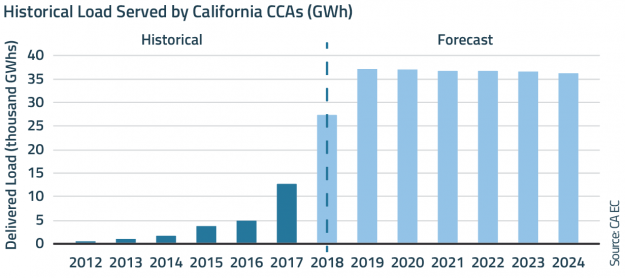
Community choice aggregation has existed for over two decades, but it has gained popularity in recent years, driven by competitive rates, consumer interest in controlling their electricity source, and the desire for renewable energy options. The procurement model allows local governments to buy power on behalf of their communities, tailoring their purchases to meet customer preferences.

New York Outlines Roadmap for 10 Gigawatts of Distributed Solar by 2030

New York’s Distributed Solar Capacity Exceeds 2 Gigawatts Thanks to NY Sun Program: NYSERDA Report

New York installed 934 megawatts of distributed capacity through Sept. 30, with an additional 1,053 megawatts in the pipeline under the NY Sun program, a $1 billion initiative to expand solar capacity through the strategic use of public funds to build a self-sustaining market, according to a Nov. 14 report from the New York State…

California Adopts New Standard Contracts for Small Generators Under Federal Power Purchase Law

Ohio Solar REC Prices Slumped As Much As 25 Percent in 2018: Report

The compliance obligations under Ohio’s renewable portfolio standard continue to shift from electric distribution companies to competitive retail suppliers, who were responsible for 78 percent of the requirements, up from 77 percent in the prior year, according to a Nov. 13 draft annual report by the Ohio Public Utilities Commission staff. Electric distribution utilities accounted…

Solar Panels 11 13 2019

Maine Utilities, Solar Developers Seek Rule Changes to Tackle Influx of Grid Connection Requests

A coalition of investor-owned utilities and renewable energy developers on Nov. 11 asked the Maine Public Utilities Commission for temporary rule changes to resolve issues arising from the growth in interconnection activity after the state passed a law in June that expands opportunities to invest in solar power and distributed generation.  The legislation led to…

Wind Turbine Solar Panels 10 4 2019

California Approves Purchase of 3.3 Gigawatts of New Resources to Avoid Impending Power Capacity Shortfall

The California Public Utilities Commission voted to authorize the procurement of 3.3 gigawatts of new, non-emitting electricity resources by 2023 to forestall potential resource adequacy shortages starting in 2021, according to a Nov. 7 news release. The order also seeks to keep some natural-gas-fired power plants open past their current 2020 closure dates by recommending…

IPL Wins Indiana Approval to Implement $1.2 Billion Grid Modernization Plan

Texas Grid Operator Prepared to Meet Winter, Spring Peak Demand

The Electric Reliability Council of Texas Inc. expects more than 82,000 megawatts of resource capacity to be available to meet the system-wide projected peak demand of 62,257 megawatts for the upcoming winter season from December through February 2020, according to a Nov. 7 announcement. The final resource adequacy assessment for winter season 2019-20 includes 136…

Western EIM 2019 Q3 Benefits

Western Power Market Delivers $800 Million in Benefits Over Five Years

The Western Energy Imbalance market generated about $65 million in savings in the third quarter of this year, with total benefits reaching about $801 million since its launch in November 2014, according to a Nov. 1 press release from the California Independent System Operator Corporation. The energy imbalance market is an automated system that secures…

repotcalifrps

California Report Shows Utilities on Track to Meet Renewable Energy Goals

The California Public Utilities Commission issued its annual Renewables Portfolio Standard (RPS) report showing that the program is on track and is helping to drive down renewable contract prices and increasing in-state procurement, according to a Nov. 1 press release. As of 2019, the state’s large investor-owned utilities have executed renewable electricity contracts necessary to…