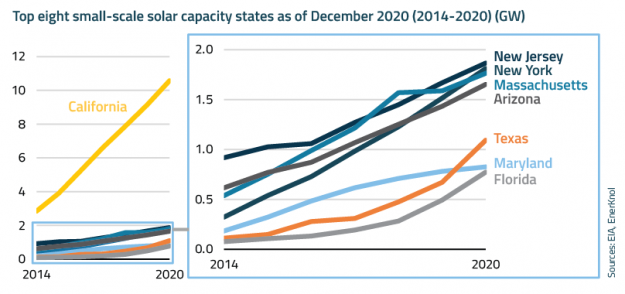
As the distributed solar landscape evolves, revisions and successors to net metering programs seek to ensure that the compensation rate and other and program elements avoid cost shifting to non-participating customers while supporting a value proposition for new solar customers.
Illinois Governor J. B. Pritzker, a Democrat, signed legislation on Sept. 15 that puts the state on the path to 100 percent clean energy by 2050. The law sets a goal of 50 percent renewable energy by 2040 and provides financial support for the states’ existing nuclear plants at risk of closure due to market…...
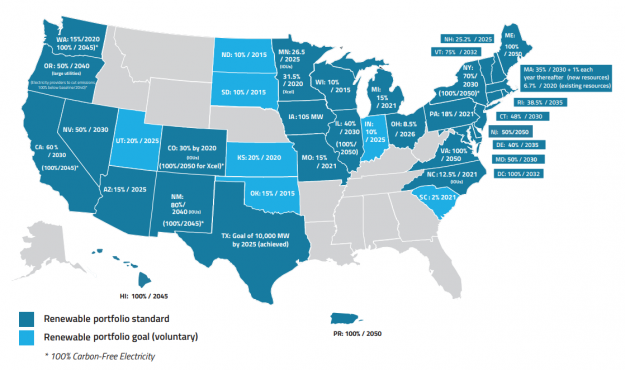
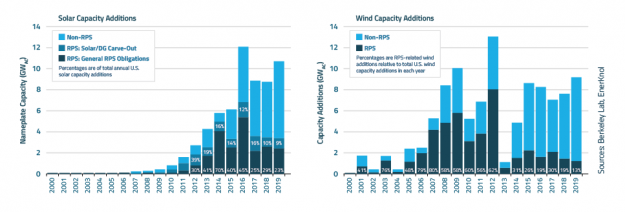
The expansion of renewable portfolio standards (RPS) has prompted several states to reshape their solar incentive programs. The market for solar renewable energy certificates (SRECs) is driven by solar carve-outs in RPS programs, which require utilities to procure a certain percentage of their electricity from renewable resources.
Amid the growing interest in clean energy, state and federal policy changes to utility power procurement rules under the Public Utility Regulatory Policies Act of 1978 (PURPA) are shaping the portfolios of small renewable power producers. PURPA, which has been a key driver of renewable generation in the U.S., sets requirements for utilities to purchase power from small independent electricity and cogeneration facilities.
A growing number of states are gearing up to leverage distributed energy resources (DER) to support grid operations amid clean energy and climate goals that require investments in and incentives for renewables and customer-sited generation.
As the retail energy marketplace evolves, state lawmakers and regulators are expanding their focus on the impacts to clean energy and long-term reliability, in addition to consumer protections and operational efficiencies.
The California Energy Commission on Aug. 11 adopted the 2022 Building Energy Efficiency Standards revising energy efficiency standards for newly constructed and renovated buildings as part of its three-year update cycle. The new code is estimated to provide $1.5 billion in consumer benefits and reduce greenhouse gas emissions by 10 million metric tons over the…...
The Bonneville Power Administration on July 29 released a draft decision to join the Western Energy Imbalance Market, or EIM, operated by the California Independent System Operator Corp., in March 2022 after a three-year evaluation of the market opportunity. The federal power marketing administration, which sells electricity from 31 federal dams and one nuclear plant…...
Oregon has embarked on a clean energy transition with the enactment of sweeping legislation that mandates carbon-free power by 2040, setting one of the most ambitious decarbonization timelines in the nation. The state’s carbon reduction efforts range from legislative measures to study renewable hydrogen and expand transportation electrification, to rulemaking for a climate protection plan, and investigation into resource adequacy.
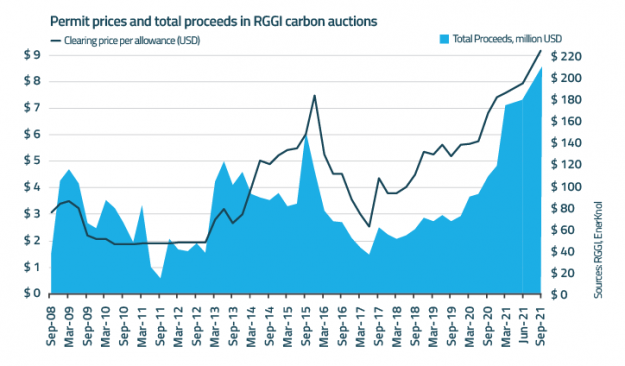
Emission trading is coming to prominence as a key market-based tool in state efforts to reduce greenhouse gases, including decarbonization of the electricity sector. Among recent actions Washington has enacted legislation to implement an economy-wide cap-and-invest system, becoming the second state to have a comprehensive carbon-pricing program, and Pennsylvania has adopted rulemaking for a carbon trading program covering the power sector.
Oregon Governor Kate Brown, a Democrat, signed legislation on July 19 requiring electricity providers to reduce greenhouse gas emissions associated with electricity sold to Oregon consumers to 80 percent below a 2010-2012 baseline of average emissions by 2030, 90 percent by 2035, and 100 percent by 2040. The law requires each electric company to develop…...